Also on YouTube Spotify Amazon Music
Roy Brindley is joined by Joao Da Mata, the racehorse owner who founded the International Racing Club and was a familiar voice on Saturday mornings on At The Races. Speaking from South Africa, where he has gone to watch his own horses run, Joao makes the case for racing there: prize money that still pays for months of training fees, and a horse bought for 5,000 rand that can win a Guineas. He takes Roy through the South African racing year, from the Cape season and the King’s Plate to the Highveld and the Hollywoodbets Durban July, and explains why the crowds have thinned. They talk about why racing has become “too vanilla”, weighing horses on race day, the 1 November change so that a horse’s racecard number now matches its starting stall, South Africa’s champion jockeys in Hong Kong, and Mike de Kock heading back to Dubai. Then the betting: World Pool, the placepot as the best way to introduce a friend to racing, South Africa’s percentage betting on the tote, and why Joao believes UK punters are not getting the right starting prices on South African racing.
Meet the guest
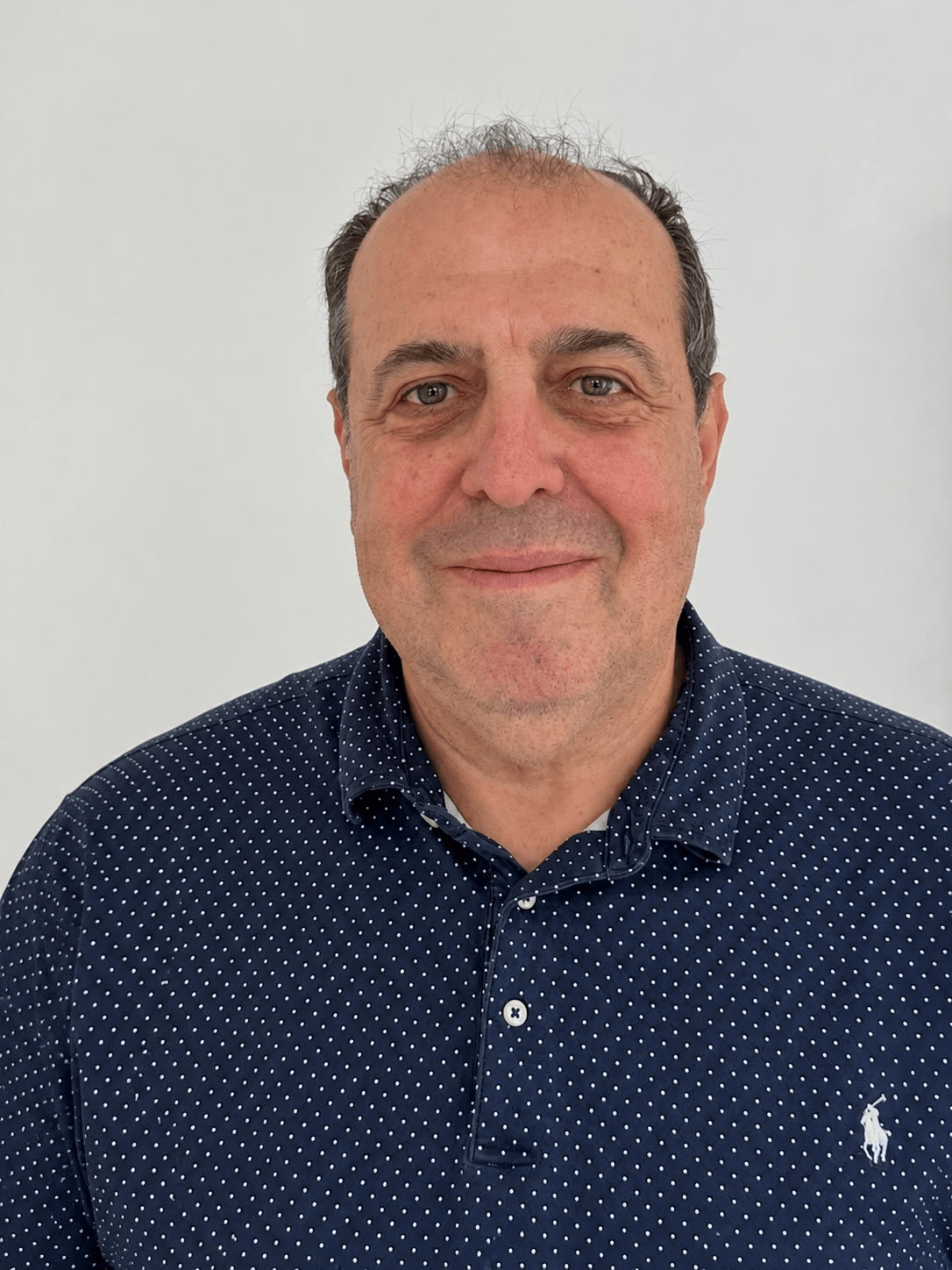
Joao Da Mata
Joao Da Mata is a racehorse owner who has lived in the UK for more than 20 years and races his horses in South Africa, his home country. He founded the International Racing Club syndicate in 2014 and now runs Glistian Events, which brings owners and racegoers from Britain to the races in South Africa. He co-hosts the South African racing podcast Oversskadovars and is perhaps best known to British racing fans as a Saturday morning pundit on At The Races (now Sky Sports Racing). He has also been a punter, a jockeys’ agent and a syndicate boss.
In this episode
Talking points
- A 5,000 rand horse can win a Guineas: you won’t win the 2000 Guineas with a £5,000 horse, but in South Africa a 5,000 rand horse can win their Guineas — Joao on why the economics of owning there are so different.
- Prize money that works: how do you make a million in racing? Start with two million. Joao explains how owning in South Africa can come close to paying its way, with prize money that still covers months of training fees.
- Why the racecourses are quiet: work, kids’ parties, the Springboks and the Premier League — Joao’s case that South Africa’s thin crowds are about time, not the product.
- Number one jumps from stall one: the 1 November change that means a runner’s racecard number now matches its starting stall at every South African track, and why that matters when you follow the racing from abroad.
- Mike de Kock heads back to Dubai: Joao on African horse sickness, months of quarantine and the export rules that have finally changed, clearing the way for de Kock to reopen his Meydan stable.
- The best way into racing: why Joao rates the placepot — South Africa’s Place Accumulator — as the perfect bet to introduce a friend to the sport, plus how percentage betting on the tote lets a fiver cover thousands of combinations.
Transcript
Roy: Hello guys, welcome to the Odds-On podcast brought to you by myself Roy On behalf of bestbettingsites.co.uk, delighted to be joined by South African horse racing expert, former At The Races / Sky Racing pundit Joao Da Mata. Hello, Joe.
Joao: Hello, Roy. So good to see you, my friend. How are you?
Roy: Yeah, all’s good, all’s good in the hood, all’s good in the hood. We’ve missed you, your dulcet tones on… On horse racing in the British Isles.
Joao: But
Roy: You’re UK-based, but you’re in South Africa right now. Is that correct?
Joao: Yeah, just on a little holiday, come to see some of my horses running. Yeah, still UK based… Still follow the racing everywhere, but… You know I’ve, I’ve got a nice stable of… Horses out in South Africa, so every now and then I’d come out and touch base with everyone.
Roy: Right, we’ll go the South African route shortly. You also was a… Syndicate manager or just a racehorse owner in the UK up until… International Racing Club.
Joao: Yeah, we started off as the International Racing Club. We did quite well, We had horses with Tony Carroll. We did very well, actually. But It’s such a hard gig, that. And As you know prizemoney is really, really tough. And… Yeah, it was it was just a very competitive market. And also I ran the syndicate; to be fair, I ran the syndicate as a non-profit. So, what I mean by that is I wasn’t selling 50 million shares at 50 quid and buying horses for 20 grand, you know, it was like basically… Yeah, whatever a syndicate member put in, I’d also put in. We were like for like. There was not management fee or anything like that, so Yeah, it doesn’t really work out.
Roy: Your colours were fantastic. They were the South African flag, basically just draped around a jockey. They’re the most distinctive colours I’d ever seen. What was that standing dish that kept winning and winning at Brighton that you had?
Joao: Poetic Force.
Roy: Poetic Force, retired now?
Joao: Yeah. I’m not sure. I’m not involved anymore. We solely focus on…
Roy: Right
Joao: On having horses in South Africa. We do have we do have British clients. I’ve got some clients in the Cayman Islands etc, that they prefer to, at the moment, to come out here. Have a week of golf. Come to the racing, get the bottles of wine in at a pound a bottle or whatever it is. And have some sort of upside with the horses, you know? Look The prize money here is still very, very good. So even though as South Africans we’ve taken a hit on the prize money, just to put it into context, like You’re basically covering four months training fees For winning a maiden. Even in a weak centre. So… If you do what we do quite well, which we have done. You know we’ve Had over 100 winners in the last four years or whatever it is. We’ve won Group races, et cetera, et cetera. So it’s actually been quite good. You know, racing, there’s a saying in racing, isn’t there, Roy? How do you make a million in racing? You start with two million, right? But actually, to be fair like I’ve got all our stats and everything. We’ve come pretty close, last year to breaking even, the year before we showed a profit, which is very difficult to do in the UK.
Roy: That is
Joao: Well…
Roy: Remarkable. I mean, I mean yeah, but by…
Joao: No criticism.
Roy: Bri Sorry.
Joao: No criticism.
Roy: No but…
Joao: No criticism of UK racing, Don’t get me wrong. Like, Of course I’d love to win, I’d love to win the Derby, and I’d love to win the 2000 guineas, but the reality is… You can’t achieve that with… A Man on the street horse. Whereas over here you can.
Roy: That’s great stuff, because I was led to believe South African horse racing was in trouble.
Joao: It was.
Roy: Okay. What happened and where are we now?
Joao: It was. Well… It was in trouble because there’s a… I think in all, I mean, we’re witnessing this now in football in the UK, right? There’s a line that gets crossed where it stops being a sport and it becomes a business. And the longer we can keep… Or the wider we can keep those two poles apart. It’s okay to run a, some of it is a business, but it fundamentally it needs to be a sport Doesn’t it. So Horse racing Faces challenges all over the world. We’re not getting enough young people into the sport. Prize money is challenging, Betting is challenging as you know. All these checks and balances in place. You know, the whole structure of the sys… Of racing Across the world almost. Only in Hong Kong does it seem to be run really, really well. So, yes, I it’s a bit of a doldrum. We’ve got a couple of corporates involved. Specifically, quite a big corporate that, a little bit of asset stripping etc and that affected horse racing. But now we’ve got the right people on board… We’ve got the Heffer family with Hollywoodbets, and we’ve got the Oppenheimer family funding it, propping it up. Putting in the shortfall. And that’s created a buoyancy, but that’s the one side of it. The other side of it is… You Cannot, I don’t think, buy a horse for 5,000 pounds and win the 2000 Guineas. But you can buy a horse here for 5,000 rand and win our Guineas because The whole makeup of the sport is quite different, you know. Again, no insults meant to anyone but, It’s really difficult to turn down a phone call For two or three million quid right. It’s really difficult.
Roy: True.
Joao: Yeah, so if you love the sport like I do, I’ve been blessed to win Group 3s, Group 2s, Group 1s. I want to win those big races, and I want my clients to win those big races. So we’re hunting over here at the moment.
Roy: All right, bigger picture. UK clients that can come to South Africa enjoy the racehorse ownership experience with yourself and you know take them out and do the tourist thing, play some golf, etc, while they’re with you. Is that the plan? Is that how it works?
Joao: Well, that was always the plan. In fact, yeah, that’s right. Well the plan of the International Racing Club was actually to race… Totally internationally. Was to have horses in Australia Well not Japan, but Australia, France, England, the States and just find a band of merry men and women that wanted to just go around the world, it didn’t quite work out. But yes, so the focus now is on South Africa through our existing relationships over here. Again, I’m here now, I been here for a couple of weeks. I won’t be here much longer, but I’ll be here for a couple of weeks. We’re formulating more and more relationships with hotel groups, golf clubs, Wine farms, etc. So… Tying the whole lot in. The only I would go in inverted commas. Not like Joey did in Friends, by the way. I’m going to do both, is the 11-hour flight, but to be fair it is an overnight flight, so have a couple of have a couple of drinks, get on the flight, sleep and you don’t really notice that you’ve been on an 11-hour flight. I suppose that’s the thing, but You can still come out here with us. With you know, Glistian Events is what we’re called now. Even though we’re a horse racing business, we called Glistian Events. You can find us on the internet, for example. But you can come out here for seven days with flights, With accommodation and go to the races a couple of times, for about two grand, which isn’t, Which isn’t bad really to be fair.
Roy: How?
Joao: And
Roy: My ignorance here. First question Is horse racing in South Africa seasonal? Do you shut down for a winter period?
Joao: No, we don’t actually. So it is seasonal, but we don’t shut down. Because of the way the climate works over here. We’re just… Just right now. So we’re recording this in October. We’re just about to transition into the Cape season. So all of our focus from a horse racing perspective now, feature races, etc, etc. Will be in Cape Town. Highlighted by the King’s Plate. Which is a race, which either changes its name then depending on the monarchy, so it used to be the Queen’s Plate, now it’s the King’s Plate and that’ll be in early January. Then we have the Met. An we have probably, from just sort of mid-October onwards until about the end of January, February, The focus is on Cape Town. Then the focus will shift to Johannesburg in the Highveld. Because the Highveld winters are quite brutal, our grass grows very hard and… Our going goes very hard during the winter. So we don’t have a lot of racing up here during that period. We’ll kick off, We’ll have a big race now, the Summer Cup at the end of November. But most of the focus will be in Cape Town and then they’ll come to Jo’burg. From January, mid-January onwards, we start getting the Jo’burg season. And then for me, the pinnacle of South African racing is when the… Johannesburg horses, the cape horses, all converged down in Durban For the Durban season. And that’s where we have our biggest race, the Hollywoodbets Durban July. Which is now ten million rand race, which is, in sterling, not a lot of money, 400,000 rand but it’s, Or 400,000 pounds sorry. It is the biggest prize money race in Africa. But that that that season for racing purists is the best because, like I said, you could you get the competition from All parts of South Africa sort of… Congregating in Durban for a good two-and-a-half three months, yeah.
Roy: I’d imagine most of our listeners haven’t experienced South African horse racing firsthand. We used to have it on, on At The Races channel, yeah, later renamed to Sky Sports Racing. They can watch it.
Joao: Yeah.
Roy: With their bookmakers with the live footage they’ll get on there
Joao: Everywhere.
Roy: But, question that that Probably most of us won’t know. Attendances, What, What’s, you know… It. Are your racecourses packed? So Are they… Yeah.
Joao: Not at all.
Roy: Give me some of this.
Joao: Not at all, Not at all. For the full, For the King’s Plate, it will be full. For the Met it will be full. For the July, it will be full. For the Summer Cup, it will be full. When I say full, you’re talking 30,000, 40,000 people. But… I was at the races on Saturday, we had a runner on Saturday and we’ve got a runner this Sunday. And I would say they’d be less than 1,000 people on the racecourse. But You have to contextualize that. You know, The whole demographic has changed… Of The racegoer in South Africa. I’ve, I’ve Excuse me. It’s hard to explain Sort of very quickly how and why we’re in this situation. But the reality is In a country like South Africa, With 34% unemployment, For example, challenging transport situations, etc, etc. People can’t give up seven hours of their Saturday to go to the races. If you’re a young family, I don’t know your situation, Roy, but if you’re a young family over here your husband and wife are working 45 hours a week, They’ve got two kids, Those kids have probably got a birthday party at least every weekend. Then you add in the Springboks that are playing almost all the time now. Then you add in Premier League football, you add in all these things and quickly the weekend becomes quite full. Right? Let’s say you are an avid golfer… Right How do you fit in golf and racing on a Saturday? You just can’t. There’s just not enough… So. The people that like golf and like racing in the UK. There’s 300,000 people that like golf and 300,000 people that like racing. In South Africa there’s 60,000 people that like both. If that makes sense. So. Time is the killer here for attending racing. It’s not the product. It’s not the day out, it’s just time. There isn’t enough time.
Roy: Okay, first question then. Facilities, how would they compare?
Joao: Oh, very good, very good like obviously some of the courses are quite dated but no very very good And… And… Food’s good, food’s cheap. I’ve got a couple of private suites. So for our clients, we just hang out in my private suite. We’ve catered for them. And We provide drinks. When you rent a suite here you can bring your own food and you can bring your own booze in. You’re not tied into paying exorbitant prices. So All of these things do help in looking after clients I have to be honest. Facilities are very, very good.
Roy: That’s good to know. So the second one is, where does horse racing now stand? In South Africa, you mentioned the Springboks before. I mean… Premier League football seems to be the chosen betting medium now. But yeah, you’re a big, you know, you’re a rugby nation. You’re a cricket nation. Where does horse racing stand in the pecking order?
Joao: Yeah. In the pecking order, from a punting perspective, it’s dropped down quite a lot. I think Yeah, I don’t think we’ve bred enough people. Into the game. We haven’t introduced enough people into the game and I think our focus has been… Sort of incorrectly targeted. And Obviously, this is just my opinion, but I think When we were on telly, you and I, and Enzo and Boycie and all these guys. If you look back, it’s like people like John McCririck and all of those guys. They were there were characters that were opinionated. Were, dare I say it, even divisive. And I think the more vanilla has crept in, that’s what makes people switch off. Horse racing is entertainment, right? So If you want people to bet, they have to be entertained. So I think that’s where racing’s gone wrong over here. In the UK It’s obviously a different culture there with regards to betting. Everyone talks about how good Frankie was for riding seven winners on the day, but no one actually… I don’t think anyone’s ever analysed how many recreational punters he created over the next 30 years. That would just take seven-folds. And that kind of thing, you know. And I’m sure you’ve been to Galway Festival. You can walk into a betting shop and Father Patrick will be there. Writing his Yankee out, you know, so the culture is very, very different. South Africa has got a massive gambling culture definitely casinos Lottery. That kind of thing but horse racing has definitely dropped down. That’s because there’s no… There’s no storytelling, there’s no… There’s no education in this though. Nobody really… Sort of nailing their colours to the mast, if that makes sense. So We run a podcast every year. I don’t know if I’ve actually told you, but we have a podcast every year. And. There are a lot of podcasts in South Africa, but our podcast has really grown. Numbers-wise quite well. I’m not sure if you… If I’m allowed to mention it or not. But
Roy: Go for it.
Joao: Oh. Go for it. Right. So we have a podcast called Oversskadovars, which I will send you a link to. But… Well, our creed in that podcast was quite similar to what we had On those Saturday mornings. Weird experts in the field giving their opinion but What I did is I created a podcast with myself. A bookmaker. A jockey and or trainer. And quite often you get three views in a race. And that’s what the punter really wants to hear. He doesn’t want to hear. Oh, this thing’s even money, I think it’ll win, I think it’ll run well. Do you know what I mean? So we’ve had instances where The bookmaker’s gone. I cannot have this thing. I don’t care. If I lose. Hundreds of thousands of rand, I can’t have this thing. And whether it wins or not, It’s not he’s not just saying it he’s saying I don’t like it because of this and that educates the public and sometimes just opens up the eyes and goes, Okay, I didn’t think of it like that at all. Or, you know, we’ve had jockeys on that have said, you know, like… I think it can win. But it really shouldn’t be even money, whatever you know so I think Circumnavigating all the way back. I think that’s the biggest criticism that I have of new people not coming into racing whether it be here or anywhere is that We don’t talk to them enough, we don’t tell them enough, we don’t educate them enough. And we don’t give them enough variants of viewpoints. I think it’s too vanilla.
Roy: Yeah So… Formula 1 would be… Probably my betting medium right now. But They do a great job of hyping it and packaging it and we get preview shows and we get qualifying shows and practice shows. And by the time the race comes around, we’re all so excited. Through What often ends up being an absolute 90 minutes combathon. But by the by, you won’t find any commentator there that says anything negative or anything controversial. Let’s face facts. Lance Stroll is useless. His teammate has out-qualified him in the last 70 races. He hasn’t finished the course in the last, but, you know, but notice, oh, well, Lance is facing a challenging time right now, but, you know, I’m sure.
Joao: Yeah. So
Roy: And I agree with you totally.
Joao: Yeah.
Roy: They don’t court controversy.
Joao: You don’t have to be ugly. You don’t have to be ugly.
Roy: No, you don’t have to court controversy, no.
Roy: Really? So you’re ahead of us.
Joao: Yep. We’re ahead in some aspects and we’re behind in others, but yes, we weigh horses. That information gets disseminated, not in all jurisdictions by the way — it’s about to change from November the first. Because we’ve also got two powerhouses here. There’s been a massive shift. I’ve been advocating this for years now. There’s been a massive shift here in that they’re talking to each other. And on the 1st of November, we’re going to witness something amazing happen in South Africa. The weight and the dissemination of the information as well. So we have two, like I said, we have the Heffer family in Hollywoodbets and Race Coast on the one side and we have the Oppenheimers and 4Racing on the other. So if you’re watching a race from Cape Town, Roy, horse number one jumps from stall gate number one. If you’re…
Roy: American style.
Joao: Watching a race from Johannesburg, horse number one jumps from whatever the draw was that he got.
Roy: UK style.
Joao: Chaos. Chaos. Now, I’m not saying one’s better than the other. I’m definitely not saying that. I’m not even going to tell you what my preference is because it’s almost irrelevant in the context of what I’m about to say. If you’re a viewer of South African racing from anywhere in the world and you’re having a pint with your mate in Ireland, You want to be able to say, I’ll back the one over here, and you see him jump out of stall gate 1. You can’t the next day be having another pint with your mate and go, I’ll back number 1, and the horse jumps out of stall gate 9. It can’t be like that. We have to have a system. At least in the UK we have a system, it’s all the same. So they finally agreed and from the 1st of November, wherever you are in the world, if you’re watching and following South African racing, which we want you to do, Number one will jump from stall gate one. Simple as that.
Roy: How does that work for handicaps? I mean…
Joao: But
Roy: You know, number one is the top weight and stall one might be massively advantaged.
Joao: No, number one is… Traditionally, number one is the top weight. Right? That’s how we were all brought up. Correct? No one’s disputing that. But visually… I’m not going to say to you that I like the American style, where number one jumps from number one, whether it’s the top weight or not the top weight.
Roy: No, I agree with that, but horse trainers are going to deliberately enter horses into races knowing they’re going to be allocated top weight, knowing they could have a fantastic draw or a diabolical draw, particularly sprinters down a straight track where you know there’s huge biases.
Joao: Okay, but the draw system here is not the same as over there. So the way draws happen isn’t the same as over there. So here we… I’m going to tell you now. For example, are we still doing 48-hour declarations in England? I think we are, yeah.
Roy: Yep.
Joao: Well, I can tell you that The entries and the weights have already been allocated for a day — the 18th of October, at Fairview in South Africa.
Roy: So we’re talking, in nine to 10 days’ time.
Joao: And I can tell you that in race one, there are 41 entries. And all those draws have already been allocated.
Roy: Okay. I think what…
Joao: So when the final field gets declared — for example, when the final field gets declared, whoever accepts and doesn’t accept, so let’s say that number 41 accepts. Right? That’s the easiest way to explain this. Let’s say number 41 exists. Whatever happens in that race, they’ll also be drawn the widest, irrespective of its weight.
Roy: So we’ve got a race now where starting stall one, two, three, four, five represents top weight, second top weight, third top weight, and those drawn on the far side are all the bottom weights. And then there’s a track bias, which happens all the time in the UK, particularly in sprints on straight tracks. That’s mind blowing to me. I like the American style, but I mean, there they’re all level weights, you know.
Joao: No, no. Maybe I’m not articulating it properly. If the heavyweight draws number one, he will jump out of stall gate one. But if the lightweight draws number one, he will jump out of stall gate one. And if the heavyweight draws number five, he will jump out of stall gate five.
Roy: Okay, okay, okay. So, sorry, Joe, we’ve crossed wires. There is still a draw. Okay. And the race card will not display horses down the list starting from top weight all the way down to bottom weight.
Joao: It displays it from the draw.
Roy: Okay.
Joao: Problem solved. So if I look at…
Roy: Yes, okay.
Joao: Yeah, does that make sense?
Roy: Race card numbers. Got you. Okay.
Joao: Yeah, race card numbers, yes.
Roy: Yes, of course. So it’s a draw.
Joao: So
Roy: Your draw’s not dependent on your weight. Okay.
Joao: Correct, correct. So tomorrow there’s a D-Stakes at Durbanville, and let me just sign in, because this is informative for our viewers and avoids confusion. So tomorrow, race five, number one has got 61 and a half kilos, number two’s got 60 kilos, number three has got 65 kilos.
Roy: Okay.
Joao: And number eight’s also got 65 kilos, but number seven has only got 60 kilos.
Roy: I’m smiling because I’m just thinking Chester and vet certificates. It’s the longstanding joke with my friends — we have a spread about how many horses will be withdrawn with a self-certificate or a vet certificate in a sprint at Chester.
Joao: Well, that’s easy to fix, right? Stand me corrected because I’m pretty sure I’m spot on. There’s no such thing as withdrawing with a vet certificate, because if you withdraw with a vet certificate you can’t run for 10 days or two weeks. That’s what I’m not quite sure of. You can withdraw here with a stipes’ permission. In other words, you can enter a horse in a race, because our nominations are so far ahead of time. You can enter in a race and you can say, right, this is the race I wanted to run in, but I’m not sure if that race will happen in two weeks’ time, so I’m going to run it here. But by the time here is scheduled to happen, we will know if the race is happening in two weeks’ time. So I want permission to be able to scratch it from here to actually run it where I want. Then the stipendiary stewards give you that permission. But scratching here for the sake of scratching, or some made up — dare I say it — fitness issue, that’s a difficult thing.
Roy: Yeah, self-certificate. To be honest, I like that. I don’t necessarily think 10 or 14 days is long enough — if a horse isn’t fit sounds well enough to race then it needs a longer period than that to be right. Changing tack a little bit, and show my age now because I know a lot of people will remember this name, Michael
Joao: Correct.
Roy: Roberts, champion jockey in the UK in 1992, the first and only South African to be champion jockey. He turned his hand to training. I know that much, but I’ve not heard the name for a long time now.
Joao: Yeah, good trainer. Trained, arguably, one of the better horses we’ve had in the last six years. It’s called See It Again. He’s done reasonably well as a trainer. Yeah, he’s done well. He trains down in Durban. I’m not sure how big his string is. Really popular guy, lovely guy. I think we would have had more champions in England, to be honest. But our focus from a jockey’s perspective is to go to Hong Kong.
Roy: Yeah, I made a list before we spoke, and it’s quite remarkable. I’ve got Jeff Lloyd here who spent some time in the UK. I remember Basil Marcus, his brother Anton Marcus, Doug Whyte.
Joao: Yep.
Roy: I mean, they must have made a serious amount of money in Hong Kong back in the day, got back to South Africa and lived like kings for the rest of time. But how come South Africa’s produced so many champion jockeys in Hong Kong?
Joao: Well, obviously Zac Purton’s broken Dougie’s record now. And Joao Moreira did really well when he went there. And we have a system in South Africa, the South African Jockey Academy. We don’t do the pony riding and all that kind of stuff like happens in the UK. And you don’t get allocated to trainers. You actually go into an academy, with top professionals, et cetera. And you do like a four or five year stint there. Education, riding, et cetera. And the cream always rises to the top. Our racing is very competitive. I mean, you failed to mention Piere Strydom there, who did ride in the UK. He wasn’t ever champion in Hong Kong, and that’s because — he’s a good friend of mine — because he likes his golf. He was allergic to riding work in the mornings. He’s ridden 5,700 winners. Arguably the best we’ve ever produced in South Africa, even taking Muis Roberts, or Michael Roberts, into account. He was just a magician. He did ride in Hong Kong for a little bit, but he’s a bit of a homeboy. But yeah, listen, our academy is very good. And competition is tough over here. And the money is so good in Hong Kong. If you look at Douglas Whyte, Dougie was champion 13 times in Hong Kong. I think he’s the first person ever to be able to transition from jockey into trainer in the course of a few months, because he’s so loved by the Hong Kong public, and he’s doing quite well at training now. But I don’t know how much money that made — definitely telephone numbers.
Roy: Okay, switching from jockeys to trainers, and a name that we would’ve become very familiar with, maybe 10 years ago, maybe more. Mike de Kock had great success on the international stage.
Joao: De Kock, de Kock.
Roy: Got a bit quiet.
Joao: Not “the knock”, de Kock.
Roy: Okay, I stand corrected.
Joao: Okay. Yeah, yeah, yeah. And this is an over-18s podcast, isn’t it?
Roy: Sorry?
Joao: The podcast is over-18s.
Roy: Yeah, well, we gamble responsibly. So that is our audience. Yes.
Joao: Okay. There’s a darts player in Australia called Pusey, and he likes to call himself The Magnet. That’s his stage name and on the back of his T-shirt.
Roy: So, yeah, very good. Let’s move on. How is Mike, how’s Mike getting on?
Joao: Well, I can tell you exactly how he’s getting on. Brace yourselves. Because he’s coming back to Dubai. It was announced about 10 days ago, maybe two weeks ago. Why is your next question, so I’m just going to answer you. So we’ve got a problem in exporting our horses, right? And that problem’s been fixed over the last year. They’ve been trying to fix it for 10 years. So to get a horse from South Africa to Dubai used to be like a six-month journey. And you can’t take six months out of a quality racehorse. It just doesn’t work. So we have a figure called African horse sickness. And as a result of that, horses had to go into quarantine, multiple quarantines over here. Mauritius, then England, and then only to Dubai. So the whole journey was like six months, seven months, eight months sometimes. That’s fallen away now, the protocols have been lifted. The agreements have been put in place. And now Mike’s going to go back. They’ve been buying horses here, or horses that are performing well, and they’ve been approaching owners openly with horses in other yards because, obviously, you want to go there with X amount of horses. You don’t want to go there with four or five horses. You want to go there with 20 or 25 horses. So, for example, our highest-rated sprinter in South Africa was called Buffalo Storm Cody, who was trained by Tony Peter. He should be in Dubai, 100%. But Tony’s not going to be able to take him to Dubai because it wouldn’t make sense for Tony to go to Dubai with four or five horses, and for Candice Bass to go with two or three horses or whatever. So collectively as an industry everybody’s sort of working together, and all these horses are going to go to Mike de Kock. Mike’s going to go back to Dubai and stake his claim there again.
Roy: South African horses. I’ve got to say, I don’t know too much. I do know Mike de Kock did have great success out there in the desert. Characteristically Australia produces the best sprinters, unquestionably. Could you categorize a typical South African bred racehorse?
Joao: Yeah, our sprinters are very good. Our sprinters are very good and we’ve sold sprinters to Australia. We’ve won sprints in Australia. We’ve won sprints in Hong Kong. We sent the likes of J J The Jet Plane to Hong Kong. I think a good horse is a good horse, and we’ve got a good horse at the moment, a filly who went to the States, she’s winning big races. I think the top echelon can hold their own. But of course, with our population, we don’t have that many at the top. We need to get our population up. Our programme also isn’t as robust as, I would say, the UK programme is. We quite often have Group performers over 2,000 metres running in prep races over seven furlongs, because that’s the weight-for-age rights that they qualify for. So that needs to get addressed, and that’ll get fixed with population. But our horses could definitely hold their own across the distances. The only caveat I would say is that anything over ten furlongs, we now start to get into territory that we’re not very good at. And that’s just because most of our breeding is geared around the sprinter-miler type of resource. We don’t have a lot of Group races at all over 2,600, 2,800, 3,000, two miles. We don’t have that. So the further our horses go — we do have races over those distances, but we don’t have a lot of them. Up to 10 furlongs, our quality will hold itself internationally.
Roy: So we better wrap this up shortly, Joe. Don’t want to bore people to death, but I find it really fascinating talking to you. I was told that World Pool has come to the rescue pretty much of a lot of tote turnover on South African racing. It’s certainly done no harm to British racing. What are the World Pool races in Australia — could you tell us a little bit about those contests?
Joao: In South Africa, you mean?
Roy: Yeah. What did I say?
Joao: Australia.
Roy: Oh, dear.
Joao: Okay, yeah.
Roy: Apologies.
Joao: I’ll probably even do the accent. Yeah, so I don’t know it off by heart, but I know that the July is one, the Met is one, maybe the Summer Cup, etc. I think World Pool is fantastic. I really do. And obviously the money that comes in is great. The pools are some of the best of the day. I’d like to see some of that money — not going to prize money, this would be a bit controversial — I’d like to see some of that money going into education, to do with educating the man on the street, taking them away from the Yankee and the doubles and the trick scenes and whatever. I think the greatest bet to introduce somebody into racing, specifically somebody that’s not even aware that the sport exists, is what in England they call the placepot. We call it the Place Accumulator. It’s a very simple bet. You pick a horse that’s got to run in the money. It doesn’t have to win, it’s just got to run in the money. And in England it’s six, here it’s seven. If you can get all seven to run into the money, you’re going to have some sort of a return. So I think education — I love the World Pool, but I’d like to see more people getting involved if we taught them about the placepot. And then, globally speaking, on the tote, we do something in South Africa which every tote in the world should do. Everybody tells me it’s very complicated. It’s not very complicated at all. You’ve just got to have the appetite to do it. Are you familiar with tote betting?
Roy: Yeah.
Joao: Right, so — do they still have the Scoop6 thing?
Roy: Now, that I don’t know.
Joao: Not sure.
Roy: I’ve not really heard it mentioned. It had its golden period, but I’ve not heard it mentioned for quite a while.
Joao: For a while, yeah, it did, it did.
Roy: Yeah. If it does, the pools aren’t enormous anymore.
Joao: Correct. Because it became prohibitive to play, in my opinion. So we have a system — and you can sometimes do it in the UK, but they still govern the way you do it. Let me explain. You take a placepot. Two selections by two is four, by two is eight. And then banker, banker, banker. So there’s eight permutations, correct?
Roy: Okay.
Joao: If you then add 10 in the next leg, there’s 800. And if you added 10 in the next leg, because you’re crazy, there’s 8,000. Right? In South Africa, no matter how much money you put in, you get a percentage.
Roy: A percentage of what?
Joao: Whatever the percentage is. So in the UK, you can only do that for 5p minimum or whatever. So with 8,000 selections, you would still have to lay out an obscene amount of money, right?
Roy: Okay.
Joao: But if you walk in with just a fiver, it would give you…
Roy: Oh. Okay.
Joao: 0.0000111, whatever, of the pool.
Roy: Okay.
Joao: To two seasoned punters like us, that sounds daft. But mathematically, it’s not. It’s exactly the same risk and reward.
Roy: Of course.
Joao: But what it does is it allows the man on the street to win, and to cover these options. No guy on the street that can only afford to lose five quid is going to be unhappy with winning 25 quid because he caught it. He might be a little bit aggrieved that if he’d spent the 8,000, he would have got the 250,000. But that’s not how people think, right? So we have that over here and it’s fantastic.
Roy: So it’s an affordable, entertaining bet. Do you know, when you walk into betting shops and you say, I’d like to have a bet on the horses, there’s no one there to actually hold your hand and help you and show you and explain what a placepot is, how it works.
Joao: And that’s it.
Roy: I had a friend. Bit of a story, but he stopped playing poker, had a few health issues, and he started having a bet on football. And listening to him, his experiences of walking into a betting shop for the first time age 40, asking questions behind the counter and getting, well, I don’t know…
Joao: Yeah.
Roy: Betting shops — in the UK, we’re going through a lot of turmoil, heartache, closures. What’s the typical South African betting shop like and how does it differ from what most of our viewers are going to know?
Joao: Our betting shops are much better than your betting shops, no doubt. We don’t have a lot — we’ve gone down to 400 or 500, whatever it is. But you can have a burger and chips. You can have a beer, just straight off the bat.
Roy: Sounds better already.
Joao: You can go hang out with your mates, talk a bit of rubbish, watch the racing, watch cricket on the other screen, have a burger, have a steak. Why not? I’ll tell you why not — because vanilla says you shouldn’t mix gambling and alcohol. Madness. We’re talking about adults here, right?
Roy: Yeah. Now, I was thinking this before. I’ve spent some time in France recently and you go past these PMUs, which basically means it’s a coffee shop and a bar and a tobacconist. And while you’re there, you can have a bet if you want, or eat your croissant or whatever. And I think instead of closing British betting shops, and all the jobs that are being lost, and they’re being taxed to death — let’s just change tack a little bit. Because next door to the betting shop, which is closing down, is the newsagents selling lottery tickets.
Joao: You used to be able to, in South Africa — obviously you still can — go to the tote. So let’s say you love a Thai restaurant, for example, Roy. They’d put a machine in your Thai restaurant and pay you 2% of turnover.
Roy: That would work. But we’d have conflict with the lottery, so it wouldn’t get by.
Joao: Yeah, and listen, there’s always conflict, but what there isn’t is enough people. Imagine you visit a friend — it’s back to the percentage betting — and he goes, you know what, I could have caught the Scoop6 today, but I had to take these three or four horses out because I couldn’t afford it. Now they might turn around and say, well, why don’t you just form a syndicate? Effectively, that’s the same thing. So back to tote betting, South Africa’s got it pretty much spot on. You literally put in the amount that you want, and it gives you a percentage. And that gives you the thrill of watching the race. You don’t have to spend a lot. You’re still involved. You can still challenge yourself, study the racing or not, and it works. So World Pool, thumbs up. Percentage betting, thumbs up. Come out here.
Roy: I could talk to you for hours, Joe. I really could. I mean, just something that — we have bookmakers with satchels stood on stalls at racecourses still, just about. They’re more sort of commission agents now. And that is not a feature in South African horse racing.
Joao: No, no, we lost all of that. We lost all of that. There’s just no crowds. And even on a big race day, I would say — without quoting too many figures — King’s Plate Day, which is a really big day, or July Day, I would say 70% of the crowd don’t even know what a bookmaker with a satchel is. They’ll just be betting on their phones, right? And again, getting back to educating people, I think a journey could certainly be had just to get everybody to take a placepot. I harp on about it because it’s a great bet. It’s a simple bet. You don’t really want to tell somebody to back a winner, because it could have a stewards’ inquiry and the person goes, well, it won but I didn’t get paid, all this stuff. Just choose a horse, pick a number, pick a jockey, let it run in the first two or three, and see how you go. So that’s been very good. When I have people in my boxes that don’t know racing, I tell them, look, just have a placepot, pick a horse in every race, and I’ll go take the bet. I’ll say, right, all you’ve got to do all day is hope that all these run a place. That’s it.
Roy: Yeah, good introduction to racing. Going to keep them engaged for a long time, isn’t it?
Joao: Yeah, exactly.
Roy: And yeah, they’ll start to look at other aspects. Right, last question for you then. We’ve harped on about the tote a lot. So I presume that you can back fixed odds on South African horse racing, as a South African in South Africa.
Joao: Yeah, oof. We might have to do another podcast.
Roy: I’ve found a hot potato.
Joao: You’ve really touched a nerve now, because the guys in the UK are definitely not getting the right odds. That’s a fact. That’s a fact.
Roy: Okay. I’m intrigued. Are you saying the punter’s getting a raw deal, or there’s opportunity for the punter?
Joao: Oh, no. The punters are definitely getting a raw deal. I don’t want to mention the firms, but it’s not hard to work out. I walked into — I’m not going to mention the firm — but I walked into a shop in Basingstoke, maybe about eight months ago, actually to have a football bet. And when I walked in, there was a South African race, and there was a horse I knew, a really good horse. So I knew it could win, and I expected it to be short, right? It was about one minute to jump. I had £300 each way on it in the sportsbook. And it won. I wanted to collect, and they gave me back 300 and 27 quid. So I was like, that doesn’t make sense. I’m pretty sure that wasn’t right. Another firm in the UK returned 12s, and the horse started favourite in South Africa, for example.
Roy: Yeah, I don’t think that is…
Joao: Fixed odds.
Roy: South African centric. But I mean, you know, we’re still trying to understand where these SPs are now coming from in the UK.
Joao: I don’t know where they’re getting them from, because we have a very strong bookmakers’ presence in South Africa. They all follow each other here. It’s a very strong, very accurate market. And almost every day, when I look, I’m looking at big differences between the prices 10 minutes before the race in South Africa and the SP in the UK. Really different.
Roy: On greyhound racing, I’ve stood in a betting shop looking at the screen with the latest prices, with one phone in that hand, one in that hand, two different bookmaking companies. And there’s no two prices alike. I think more so than ever, you need to shop around. That’s the bottom line.
Joao: Yeah, between companies in the UK, I agree there’s a disparity. But over here the results, they’re pretty much all in line. So if a horse is given a price in South Africa, there’s no way that that horse can be far bigger in the UK. Well, it shouldn’t be, anyway. I don’t think it’s fair. Now they might be betting to different percentages over there, I’m not sure, but it just doesn’t sit well with me. And it didn’t at the time — I actually kicked up quite a bit of a stink about it.
Roy: Joe, no matter.
Joao: I’m not allowed back in the shop.
Roy: You’re not allowed back. And on that bombshell, Joe, it’s been an absolute pleasure, my friend.
Joao: Yeah.
Roy: Thank you for joining the Odds-On podcast at bestbettingsites.co.uk. I’m going to say it because we know it: gamble responsibly.
Joao: Yeah.
Roy: It’s great fun. It’s for 18s and over. And yeah, Joe, what can I say? I look forward to talking to you very soon.
Joao: Thank you. Thanks, Roy.
Roy: Thanks, my friend. You take care.
Read full transcript
Your hosts

Roy Brindley
Racing, Darts & F1Former greyhound trainer and professional gambler turned broadcaster, and a Sky Sports At The Races regular since 2012. Roy hosts Odds-On Interviews, sitting down with the biggest names in sport and betting for BestBettingSites.co.uk.
Read Roy’s profile