Also on YouTube Spotify Amazon Music
Roy Brindley is joined by Emmet Kennedy, the talkSPORT racing presenter and host of The Final Furlong Podcast. Emmet started in radio at 17 at Radio Kilkenny, and talkSPORT’s producers found him through his podcast. He remembers his mam working alone in an Irish betting shop the day Frankie Dettori rode the Magnificent Seven, and sneaking out of class to watch Istabraq win the Champion Hurdle. Then the bigger questions: how racing brings young people in, why it’s so hard to get a bet on, the case against dumbing racing down on TV, and why ITV wants horse racing while newspapers and broadcast TV lose their audience. Roy passes on Ed Nicholson’s idea of three racecards for three kinds of racegoer and adds one of his own, a video racecard. Emmet names his Irish trainer to follow, Danny McLoughlin, and picks three horses to follow through the jumps season: Moneygarrow for Dan Skelton, Le Frimeur for Harry Derham and Zanoosh for Colm Murphy. Recorded on 16 October 2026, so plans and prices may have moved on since.
Meet the guest
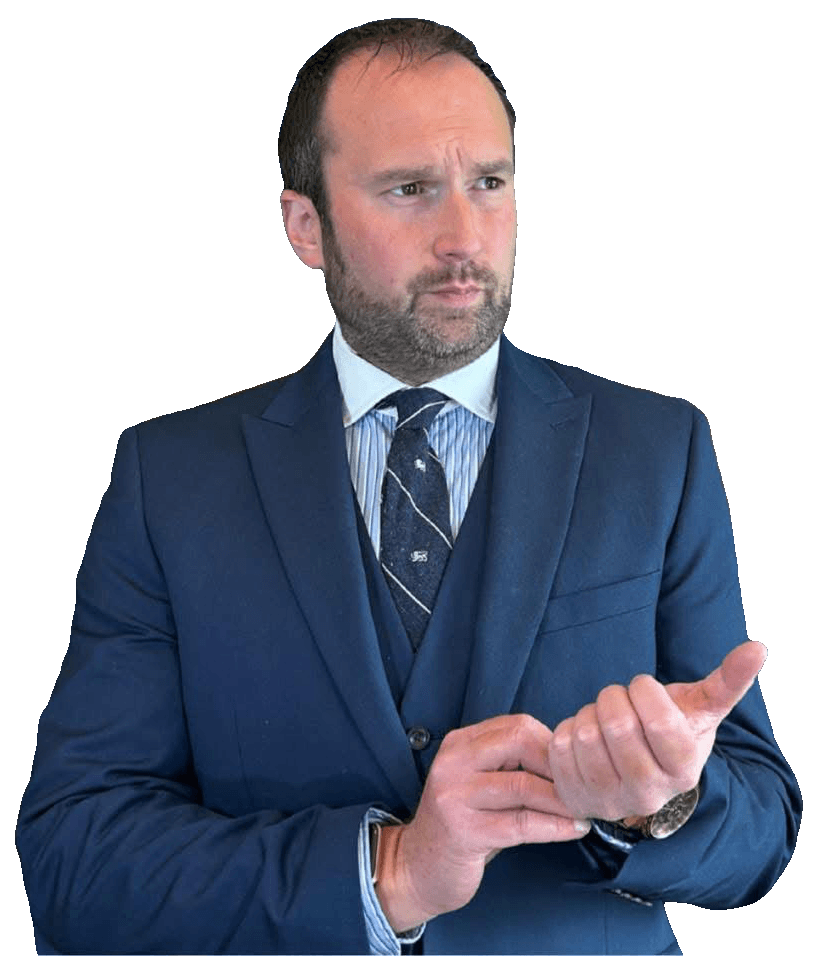
Emmet Kennedy
Emmet Kennedy is an Irish horse racing broadcaster from Kilkenny. He presents racing on talkSPORT and hosts The Final Furlong Podcast, which he also produces and owns. He started in radio at 17 at Radio Kilkenny and worked in music radio, including at 96FM, before talkSPORT’s producers heard the Final Furlong and offered him a role. He also does voice-over work, from a documentary with film-maker Jim Sheridan to in-flight announcements for an American airline, and has given talks at the Racing Media Academy.
In this episode
Talking points
- Frankie’s Seven in Mam’s shop: Emmet’s mam was the only one on duty in an Irish betting shop the day Frankie Dettori rode the Magnificent Seven — and a little old woman had a 20p Super Heinz on all seven rides.
- Skipping class for Istabraq: sneaking out of school to watch Istabraq win the Champion Hurdle, and the day the toughest teacher in the school sat down to watch it with them.
- Hard to get a bet on: racing pulls in millions of racegoers, yet it’s hard to get a bet on — Emmet on why the bookmakers that fund the sport won’t forget its leaders turning their backs on them.
- Don’t dumb it down: the case against talking down to the racing audience on TV, why ITV wants the sport, and Roy’s own idea for a video racecard alongside Ed Nicholson’s three-racecard plan.
- A trainer to follow: Emmet’s Irish trainer to follow is Danny McLoughlin, 24, Ireland’s youngest trainer, who had his first big winners this year from a famous old yard on the Curragh.
- Three horses for the jumps season: Moneygarrow for Dan Skelton, who could be dangerously well handicapped; Le Frimeur, Harry Derham’s first Grade 1 winner; and Zanoosh, Colm Murphy’s fast-improving mare with Cheltenham on the agenda.
Transcript
Roy: Well, hello, welcome to the Odds-On podcast brought to you by bestbettingsites.co.uk. My name’s Roy, and delighted to be joined by, well I don’t know how I’m going to best describe you, but I did make some notes Emmet. Of course, it is Emmet Kennedy. Irish horse racing face, host of the Final Furlong podcast, talkSPORT race day presenter, pundit, I dare say punter, and judged by your LinkedIn picture, candidate for the next 007.
Emmet: Oh God. Deary me.
Roy: Dashing. Absolutely dashing, my friend. 10 out of 10.
Emmet: Roy, that’s going on the LinkedIn profile now. Candidate for the next Bond. What’s the betting, what’s the betting on the betting sites that you’re with? But my likelihood…
Roy: Well, on a serious note… And we are going to get very horse racing heavy. But on a serious note, it does mention acting on your LinkedIn profile.
Emmet: Oh, voice acting. Yeah. Yeah.
Roy: Voice only. Okay. You’ve got a voice for TV. Right.
Emmet: Face for radio, voice for TV.
Roy: Give us some idea what you’ve done outside of horse racing, what you’ve lent your voice to.
Emmet: I did a documentary with Jim Sheridan, the Oscar-winning filmmaker, called The Search for Justice. Was it called Search for Justice, actually? It was about the murder of Sophie Toscan du Plantier, which was a really shocking event in Ireland back in the 90s. And I did a small voiceover for that. I did a voiceover for a video game that I don’t know if it actually did anything — it was during the height of the pandemic and I have no idea where it went. But I did it and provided my vocals for it. There was some other stuff that I did as well, like commercials for airliners. There was one, apparently I was the voice of the in-flight information in the cabin of an American airliner. And we were joking about what exactly that was. Like, was I the one you were hearing before the plane went down? I have no idea. But that was done as well. Again, don’t know if it’s still there or not, but it was provided at the time. So stuff like that, but mainly radio podcasts. I started in radio when I was seventeen, so I’ve been doing this for a long, long time.
Roy: Okay, great, because I wanted to ask you about your progression into horse racing and what came first. Was it broadcasting or was it horse racing?
Emmet: Yeah, it was broadcasting. I got into it when I was in school. I’m blessed that I got into it as early as I did. I did a musical, and in promotion for it back in transition year, we went into the radio station, Radio Kilkenny, to talk about it. I just fell in love with the place, Roy. Being in the studio, having listened to radio for years and particularly that radio station, because I’m from Kilkenny. Being in the studio and seeing how everything worked, and the producers talking to the presenter and everything beforehand, and the intoxicating effect of the on-air light going on. I loved it. And realised that’s what I wanted to do. And then a year later I was actually doing it, which was incredible.
Roy: That’s really interesting because I see you as a bit of a shooting star in the horse racing game. To clarify, you’ve got your own podcast, but you also do freelance work. TalkSPORT must be a big feather in your…
Emmet: Yeah.
Roy: In your cap. Most people in your line of work in horse racing have a background, have family connections. Do you have any of that at all?
Emmet: No. No, none whatsoever. My mother ran a bookmakers, and we’d talk an awful lot about horse racing when she would get home. She’d normally be exhausted because Mam would be the only person there. Mam was the only person on duty in that particular betting shop when Frankie rode the Magnificent Seven. And there was some little old woman — I remember my mother, God rest her, told me who this woman was — but she did like a 20 pence Super Heinz on all of Frankie’s selections, including Fujiyama Crest at 20s in the last race, and won an absolute fortune. Mam was delighted for this person, because Mam didn’t own the bookmakers, but the owner of the independent betting shop wasn’t too pleased. And all the punters were coming in and just throwing everything basically on Frankie in the next, Frankie in the next, Frankie in the next. So I remember that vividly, and then we’d bring the Lotto dockets home and I would help mark them off to see if the numbers came off or not. My uncles were big fans of racing as well. But in terms of me being in the industry, no. And you are right that there’s a lot of nepotism, I guess, is one way people would say it. I think a lot of things in life are — it’s not what you know, it’s who you know. And that’s definitely the way it is for a lot of producers, and it’s not so much that they’re giving the job to somebody because they’re like the daughter or the son of someone who’s famous. They’re there in front of them. And that’s a big way of getting an opportunity in this game. And if you can find somebody that you can rely on, then you’re going to tend to go back to them. But it did mean that when I was getting into broadcasting, there was really no way to get into racing. It’s quite remarkable that you and I are having this conversation if you think about it, because I’m in my 40s. You’re obviously in your early 40s as well, Roy. So we both remember the analogue world. This is technology that 24 years ago we couldn’t have talked on. This is a platform that we couldn’t have been on either. And all of that has led to the gatekeepers of yesteryear — for Channel 4 Racing, for the Racing Post, for all that — that’s gone, essentially. If you want to record a podcast now, and it’s good and you’re good at it, you can find your own audience, and then that can grow organically. And then those major broadcasters like ITV, like talkSPORT, will come to you. Which is what happened with me and talkSPORT. I didn’t get my talkSPORT position because I worked for a sister station of them. They had no idea of me from 96FM, which is a sister station of talkSPORT. The producers had heard the Final Furlong and came to me from that. So again, the gatekeeping that was there when you were starting out in poker, when I was starting out in radio — if that had continued, if these inventions had never been a thing, I would still be a radio presenter doing music radio, and being a fan of horse racing and talking about it on the pastimes. But because I was able to start a podcast and talk about something I really love, thankfully the opportunities have come my way.
Roy: Why did that love for horse racing — I mean, I used to get very excited when my father came back home from the dog track at night time with a race card and a wad of cash, or more often not, no cash. That brought me an interest in gambling. Your mother in the betting shop cheering on the old lady that’s got the Frankie money running, I could see how that excites you. But that is actually a world away from a real interest in horse racing. What’s your first recollection of going to the racetrack, and when did your love affair start?
Emmet: Oh, it was Graham Bradley winning the Thyestes Chase, and I can’t remember the name of the horse, but I remember that, and I remember the Thyestes and the crowd being mental. For a very brief period of time, I had done show jumping. I was awful at it. If you needed somebody to fall off a horse, I was the guy to go to. But I didn’t really enjoy it, to be honest, because I didn’t really like the people there. They were fine, but I felt out of place. I didn’t feel like I belonged in that world. But I loved the horses. I absolutely loved them, and I love animals. And so being around them and seeing their own unique personalities and the awesome power of them was intoxicating. And some of these horses were ex-racehorses that either had retired or weren’t good enough, and had been turned into cross-country horses. So I’d been around them before and had ridden them, badly. That gave me an appreciation of how difficult it is. I’ve never ridden in a race. I would have no idea what to do. But it gave me some idea about what jockeys were doing. I don’t know when I had my first — I’m guessing it was a Grand National. I’m almost certain I didn’t back the winner, but all the people who were there, who were much older than me, gave me the money because they were just being nice. I think I pointed out a horse, I liked his name. Again, I can’t tell you who it was, and that horse won, but I wasn’t the one who backed him. I do remember them throwing 50 pence pieces at me and loving that. I think it was Cheltenham that really did it for me though. And it was the biggest name of all, Istabraq. Just seeing him stride up the Cheltenham Hill in the Sun Alliance, and then a year later in the Champion Hurdle. That was pretty impressive. I would have been in school at the time. I remember when he was going for his third Champion Hurdle, sneaking out of class, finding a load of lads who were also desperate to try and find the Champion Hurdle. They were trying to get the radio commentary of the race. And I said, no, Hopper has a television — because this would have been pretty rare in the school — Hopper has a television with an aerial. So we went up to his office, snuck in, watched the race, and as the race is about to begin, the man who would go on to become the principal, but my geography teacher, who was probably the toughest of all the teachers, he bursts the door open: “What are you boys doing here?” And I went, we’re watching the Champion Hurdle, sir. And I was full sure we were going to get rollicked. He sat down beside us with Ted Brown, who was a bookmaker. And we all watched Istabraq win his third Champion Hurdle, pulling away from the field, and Ted Brown was looking at betting dockets — he was a maths teacher and a business teacher, and he was looking at a lot of betting dockets where he’d laid various different bets to teachers in the staff room. And fecking Emmery Dean’s after winning a lot of money and all this kind of stuff. Like, it was just, that was fun. And then I started going racing a bit more with friends and going to the bookmakers and watching racing, because you couldn’t really watch it on television. You could watch it on TV on a Saturday morning. You couldn’t get me out of bed on a weekday morning for school, Roy. My poor mother could not get me out of bed, but I’d be up set in the morning for The Morning Line. There was something about this sport that grabbed me from a very young age, and it’s hard to tell you what it was or why. Betting was obviously a big part of it, but it was Martin Pipe, Tony McCoy, horses like Stormez from back in the day that no one’s going to remember. But I remember that horse vividly. Tiny little thing, second in the National Hunt Chase. Sudden Shock of Jonjo O’Neill beat her that day. Solerina, Limestone Lad, Moscow Flyer, one of my favourite National Hunt horses. All those horses — the more those stars kept coming, the more addicted to racing I became.
Roy: I’d say you are an exception. I do think, having lived in Ireland now almost 30 years myself, that society here is far more open and accepting to gambling — let the youngster go and place a bet on the tote at some far-off dog track or whatever. But there’s definitely not enough of you, people that independently just took an interest in horse racing and suddenly got engrossed in it and appreciated the stars. How are we going to bring young people into horse racing, do you think? Because I don’t see — and I said to you earlier, I went to Punchestown this week — the average racegoer was aged somewhere between 70 and deceased, to be frank. I mean really, that’s where it’s at. What can we do to give a lot more people the exposure and enthusiasm you had as a young man?
Emmet: Well, it’s a really good question, but it’s also a very complicated one. I could probably give some sort of succinct, smart 60-second answer, but it’s not going to scratch the surface. It’s incredibly complicated. Like, how did I become a fan of racing? I’m not even sure I can tell you myself. I’ve met lots of young people who are fans of racing and they’re massive fans of it, and they have great knowledge and they’re really enthusiastic about it. You can go on Instagram and Raceday TV will pop up and you’ll see Frankie Foster talking to some young people, and there’s lots of them, and they’re all dolled up for the races. But that’s the point, isn’t it? How many of them can talk to you about the form? How many of them can talk to you about how many horses are there? And I’m not saying that in an accusatory tone. Royal Ascot is a social occasion really, Cheltenham is where you’re going to see the hardcore racing fans, but Royal Ascot will have a bigger attendance for the five days. But how many of them can tell you in depth about Scandinavia’s form? I don’t know. We’re in danger of the sport drifting to being a social pastime that people don’t have a hardcore fan base about. There’s lots of different positive metrics we can look at. It’s the second most attended outdoor sport in the UK. I hear that phrase often mentioned, but no context provided to it. The context is 14 million people went to the most popular, which is football last year. Two million people went to the third most popular, which is rugby. And over six million people went to horse racing last year. That’s a massive thing for racing to have that. It’s the fifth most watched sport in the United Kingdom. These are all positive metrics, but it’s incredibly difficult to get a bet on now. And people feel like they’re being alienated. The bookmaker has always been very happy to be the pantomime villain. But when racing so heavily depends on their funding, when its leaders turned their back on them when they needed them, that’s not something they’re gonna forget. And I don’t know how generous they’re going to be with racing going forward, certainly in Britain. And let’s be honest about it, Ireland is heavily dependent on the UK, and what happens there effectively happens here. I remember this debate going on in the early 2000s when I was getting into racing, feeling like I was being patronised or condescended to by older people talking about how we have to dumb down the sport to get people interested in it. And I was like, I don’t want that. I think if you talk about the sport with confidence, which is what Channel 4 Racing did — they talked about it with confidence, and they were effortlessly cool. And it’s easy to look back with rose-tinted glasses and think, oh, look how great it was then. I’m not talking about the gimmicks, I’m talking about the terminology and how they talked about the sport. They never made you feel like, oh, we have to talk down to you so you understand it. In fact, when I hear John Francome talk about racing, or Alastair Down, god rest him, it would make me go, I need to buy a book on Arkle. I need to read Vincent O’Brien’s autobiography. I need to read a book on the history of the sport, to understand these great horses that they’re talking about. And it seems to me the attitude now is, oh, don’t mention those horses because the Loose Women audience don’t understand what you’re talking about, so just try and lower it. And then every few days they’ll do something that’s actually a really insightful piece of insight — but that’s one segment that is excellent, from Ruby or from somebody else, and you don’t do that anywhere else on the show. Everything else is just, isn’t it a great day, and look how much fun the kids are having. And I don’t envy them, because they have an executive board to answer to and producers that have ideas about how to do the show, and they win awards, so obviously they feel that it’s working. But what is the net impact of that on the fans? It’s an incredibly complicated question to answer. And the other point to make, Roy, is when I was getting into racing, if you wanted to go see a horse race, you had to either go to the racecourse or you had to go to a bookmaker’s. You could theoretically subscribe to the racing channel, but it would cost you a fortune, and there was no Irish racing on it. So if you wanted to see an Irish novice hurdle, you had to go and see it, because that wasn’t going to be on RTÉ — they only turned up for the big race days. And even — was it 2005? — Irish racing still wasn’t on Sky. So how were we learning about these horses? Well, you were reading about them in the Racing Post, or you were going to a bookmaker’s. You had to go out there and see it. And in some ways, when you don’t see the massive attendances at the racecourses now, that might very well be because there is actually a gigantic fan base. There’s lots of people who talk about racing. I can see the metrics for myself. I know who interacts with the show and how popular it can be, especially when you talk about something like Cheltenham. They’re seeing it, they’re watching it, they’re learning about it, but they’re not necessarily going. And that’s got a lot to do with the cost of the race days as well. So in some ways, I think you have to make it a cheaper sport for people to go to so it’s more easily accessible. But you also have to accept that we’re in an era now where you and I can see each other over smartphone technology that didn’t exist 24 years ago, and that means how people consume information or their entertainment is also very different from what it used to be back then.
Roy: Where do you see yourself in this with your podcast, which is excellent — I’ve seen a fair few episodes now, you get interesting guests and you’re horse racing heavy. I think your audience might be more so for… Well, obviously your audience isn’t for the newcomer. With the greatest respect, you are a horse racing podcast, that’s it, top and bottom. Where do you see yourself in the order of things now, as things have changed, as people are now watching remotely, as people aren’t going to courses and they are consuming more and more social media?
Emmet: That’s a really good question. I’m not sure how to answer that. I love doing the content for talkSPORT because it means we’re covering the races live, and there’s a real intoxicating thrill to that. To give you an example, we covered the Juddmonte International this year, and in my head, Constitution River was absolutely going to beat Ombudsman. There was going to be a titanic tussle between those two, and that is not how that race panned out. And it’s fun to react to that, that racing can give you those unexpected stories. When it does play out the way you thought, like Scandinavia beating Trawlerman in the Gold Cup, there’s a sense of, I got it right and I’m delighted. But it’s the fact that it keeps you guessing and keeps you thinking. So I love to be able to bring those races live. I’m blessed to be able to do that, and talkSPORT has a real commitment to horse racing, which is fantastic. But I also really like doing these shows, doing the podcasts, and the fact that you can talk to an engaged audience. You are right about that — we’re not talking to the newbie. There could be somebody who starts watching the show who has only just got into racing, and I’ll often see a comment or get an email from somebody who will ask a question: what does this phrase mean? Or why did you say this? And they don’t have the historical context of it. And I’m happy to engage with that conversation. But the audience that we’re talking to — if you’re clicking on my video, you’re clicking on it because you’re a racing fan. So I don’t need to dumb down the content, I need to engage with you on a level that is right and proper. The show that I just did before this one was a RaceiQ special with Laura Joy. And I know a fair bit about racing, but even Laura was making my head go. There’s an enormous amount of in-depth information there, and I love all of that. So from my perspective, for the show, it needs to be: how do we convey the most information that’s accurate, with the best opinions, in the most informative and fun way? And you’re very good at that in talking about poker. You were effortless at doing poker punditry, and I’m not just saying that because we’re on the show together. Some people are really good at that, and for some people that’s what they want. Other people will think, I don’t want to hear sound effects, or sarcastic comments, or questioning whether a trainer is as good as they once were. Some people want it to just be by the numbers, and that’s fine, there’s plenty of content out there for that. But what I keep seeing is more and more horse racing podcasts emerging, which I think is brilliant, because the rising tide lifts all ships. But what I also see is what would be considered legacy media dwindling, and its influence dwindling. And that’s the fascinating thing about the worlds that you and I occupy now. If we were to go back to the beginning of the millennium, the most compelling establishment media is print media and broadcast television, and broadcast radio for that matter, and film studios. Well, Warner Brothers Studios has just been bought out by Paramount, which is a significantly smaller studio. MGM is owned by Amazon Prime. Netflix is going to buy someone. Netflix didn’t exist back in the year 2000. The Daily Mirror in 2004 had a daily circulation of 1.9 million copies, which they would have been freaking out about, because it was two or three million in the 90s. It was 280,000 in 2024, and it continues to decline. That’s not a go at the Daily Mirror, by the way, that is the prism of all print media across the board. It declines from 2018, 20% year on year. So all of those print media titles that you and I know will not exist in their current format in less than 10 years. How many of them can successfully transition to digital? Every time I click on an article in The Guardian it’s telling me to donate to them. That doesn’t sound to me like a company that’s thriving. There’s a major print media sports publication in the UK, and every time I go on X there’s another person leaving it. Broadcast television is in a spiral of decline. The only thing the broadcast TV networks can rely on is live sport. That’s why ITV wants horse racing so much, because it’s the fifth most watched sport in the UK. They’re not doing it because they’re friends of racing or they’re doing us a favour. They’re doing it because we’re a guaranteed audience for them, and they need that. If you had 17 million people watching EastEnders in 2004, and you’re spending more money to make that show now, but you’re now getting four million viewers, that’s a law of diminishing returns. Coronation Street is exactly the same. All of those recorded, scripted shows are dramatically declining in ratings, because you and I don’t have to sit back and wait for the TV to tell us what to watch. We can go on Apple TV and watch a prestige show instantly, and binge-watch it whenever we want. And by the way, all of the major streaming sites, including YouTube, are investing in live sports coverage. So the one thing the broadcast networks can actually rely on to get people to watch, they have to compete with the streaming services to get the rights for in the first place. So, very long-winded tangent from me, but it’s to try and say, where do I see myself now? I see myself as a guy who sees that legacy media as it was — and I’ll just make this very small point about radio. Radio is bizarrely immune from this and I don’t really understand why. I remember “Video Killed the Radio Star” and all that narrative about how MTV was going to kill radio, and then CDs, and then the iPod. 90% of the British population listened to the radio in 2004. 86% listen to it now — which is a significantly higher audience in real terms, because Britain has more people in it in 2024 than it did in 2004. Same for Ireland. So it’s now record-high listenership. That’s not to say everything is perfect in the world of radio, it’s not. But there’s bigger audience retention in that format than there is for broadcast television and print media. Channel 4 will not be a terrestrial broadcaster from, I think, 2032. They’re pivoting to being a digital streaming platform only. So where do I see myself? I see myself as a guy who’s aware of this stuff, trying to put myself in a position to circumvent it. But I’m also very much aware that there’s a lot of people, friends of mine, who work in media and are really good at what they do, and they don’t know what’s going on or the direction it’s going in. If you’ve been working in television and you’ve got into the position of being a senior producer or a director, you’ve probably worked in television for 20, 30, 40 years. Well, you don’t want to hear this, and you don’t want to see it either, because you spent your entire life working in that industry to get there. So where do I see myself? Trying to occupy both worlds in the safest way possible, while also trying to see where this whole thing plays out.
Roy: You’ve got me thinking. I spoke to Ed Nicholson. I don’t know if you know Ed. He’s the PR guy for Unibet.
Emmet: Yeah. Yeah, class act.
Roy: Yeah, the guy behind the Champion Hurdle and a lot of the major races that company sponsors. He had an idea which I thought was excellent, which was: when you have a race meeting, people have purchased tickets in advance. Send those people the racecard a day or two ahead of time, and make three versions of the racecard. For want of a better word, one for dummies, let’s call it the novice racegoers. One for the regular racegoer but no expert, and one for aficionados. I thought that was excellent. But just talking to you now — why can’t we make short video presentations as part of a racecard? So not only are people looking at the print version of the card, they can click on certain features and get an expert like yourself to say, “comes from the so-and-so stable, does really well with this type of horse, seems to want the soft going, everything looks good for him.” Just short little clips, because people aren’t reading, you’re so right, they’re just consuming. And I think, in terms of horse racing, without mentioning any names, there’s a few — I wouldn’t even call them black sheep — there’s a few people masquerading as, that are lining their own pockets, shall we say. It’s that sort of thing. Where might you see us being in five or ten years’ time?
Emmet: Yeah, that’s a really good idea. That’s a really good idea. You’ve actually just hit on a format there that could be… I want to patent that very quickly.
Roy: We’ll talk about that one day. We’ll keep that up our sleeves and we’ll sell that on to the relevant people.
Emmet: Well, you have hit on a brand idea that… Racecourses are going to have to figure out a different way, with the greatest of respect, to get the information out to people. And if you think about the logic of someone going to the races — the days of buying the Racing Post the morning of, and then that’s where you learn the race, that’s over. You know the day before. You might be reading it on racingpost.com — by the way, I’m not having a go at that brand, I’m just saying print media is dead. So there’s no point in persisting with this anymore. So how do we get that information out there? It wouldn’t necessarily be easy, but I can guarantee you that you would have far better impact putting out some sort of succinct 20-minute audio or video podcast previewing a day’s racing than a newsletter for that same thing. And yet all of those racecourses will agree to, oh yeah, newsletters are great. Who’s reading that stuff? No one is reading that stuff. But if you can do a short, sharp, succinct podcast where you and an expert take you through the seven races on the card, maybe you talk to the winning trainer of the race last year, or the trainer of the favourite — it takes a lot of logistical effort to put that stuff together, but you absolutely could. That’s one of the things that’s kind of exciting about this period of time. I’ve done talks at the Racing Media Academy for the last two years, and I’ve talked to 15 young people. That’s another reason why I’d get optimistic about the current state of things. Both years, there are 15 young people standing in front of you, and those 15 either want to work in racing or in media, and they feel like this is the right way to do it. And most of the people who go to that go on to get opportunities in the industry. They all look at it in a very different way, but these are all 15 people who have grown up in the digital world. You and I grew up in the analogue world. Ed would have grown up in the analogue world. And I think we should be very grateful for that. It’s fantastic that we can think back to the years when the only people who had mobile phones were people of influence, and in order to know where you were going you had to ask somebody or get out the map. We didn’t have Siri to just tell us “turn left here.” But that also means the level of information and how you process it is different. And so one of the problems of British racing — and it’s the Barry Hearn line, where he was asked, will you ever get involved in British racing the way you had with other sports? And he said no, because it’s a basket case. You can listen to that and go, oh, he was just being funny, or wasn’t that rude. I think he was being truthful, actually. There’s a lot of truth in that statement. There’s too many organisations that are all out for their own self-interest, and none of them have any interest in really collaborating with one another, Roy. Because if they do, they have to compromise. And it’s not in their interest to compromise. If they have shareholders, you have to do what’s best for the shareholders in the next 12 months, not what’s best for the sport in the next 12 years. And so when you’ve got so many different interested parties who are all out for themselves, and they realise there’s a risk of the pie getting smaller, you could look at something like, oh, but look, there’s six million people going racing, but only two go to rugby. Oh, look, World Pool is pumping in all this money and it’s fantastic, we can be global. And then forget about the daily racegoer. It’s multi-layered, the problems that face the sport. And it does require strong leadership from a regulatory standpoint to get everybody together, knock heads together, and have a focused vision that everybody can agree on to work towards. But from our perspective of covering the sport, I think we need to be fluid, and be aware that the landscape of broadcasting is changing, and be open to ideas like Ed’s idea, like your idea, like the ideas that I have on the podcast and on radio. Because there’s an audience out there. It’s not easy to get someone’s attention. It’s very easy to lose it. And once you get it — maybe we should be confident in ourselves. I mean, why does Constitution Hill get so much coverage? Because whenever you talk about them, people click. So if the data is telling you people are interested in Constitution Hill, then it’s going to be an overload of people writing articles and doing podcasts about Constitution Hill. Then the hardcore fan goes, oh, I’m bored of this, I don’t want to hear about this, I want to see the horse race. But it’s the two worlds, and marrying those two and making it work.
Roy: We’ve gone very industry, haven’t we? Your ear is to the ground, you’re a regular racegoer, so let’s go a different route with this. I want from you, if you can, an Irish trainer to follow, an up-and-comer. And similarly, jockeys — anyone really taken your eye, who you think has got a lot of talent, is going places, just needs the break, and they could be the next big thing?
Emmet: The jockey is a harder one to answer because there’s quite a few that I like, and I don’t want to leave anybody out. The trainer is a really easy one. Danny McLoughlin. First of all, he’s a lovely fella — I think you’ve met Danny as well. Being nice goes a long way, but it’s not going to be the thing that defines it. You either have it or you don’t, and Danny does. His entire life is racing, he didn’t go to college, left school pretty early, because he realised this is what he wanted to do. And I really admire that. I really admire somebody who decides, I’m not going to do this the conventional way, I’m going to do it my own way. The stable he has is a legacy stable, a pretty prestigious yard on the Curragh, and he runs it beautifully. He’s got well over 40 horses, he’s won his first group race this season, his first black type race this season. He had a 1-2 in a listed race. He’s won a Group 3, Group 2. He’s doing this with horses that aren’t being bought for the megabucks at Tattersalls Book 1. But you can be absolutely certain that the success Danny has had this year means that the people who buy those high-priced horses at Tattersalls Book 1 will be coming Danny’s way, and they should be. He’s going to go right to the top.
Roy: Legacy stable — whose yard is he in?
Emmet: I was just thinking that actually.
Roy: Dermot Weld?
Emmet: No, no, it’s not Dermot Weld’s yard. It’s a famous one — I’ve been there, I’m trying to think of the old trainer that had it. But he’s a very impressive individual.
Roy: No.
Emmet: Difficult world to navigate. Being a trainer is 24-7, non-stop. And Danny’s a young guy, Danny’s only 24, and his entire life is just…
Roy: Wow.
Emmet: Racing. And he’s just a lovely fella. You could go up to him in the parade ring at the Curragh before a race where he has a runner, and the man will talk to you. There’s no arrogance about him, there’s no rudeness about him. He’s very good, he’s very savvy, and he’s a guy who’s very easy to root for, but he’s also exceptionally good at what he does.
Roy: Superb. Jockeys?
Emmet: The jockey angle is a little bit more difficult, to be honest.
Roy: I often marvel — marvel’s not the right word, but — so many outstanding apprentices come around, Jamie Powell is a case in point.
Emmet: Yeah.
Roy: You know, they have a great time riding out their claim, and then suddenly, boom, off the cliff, and they reappear riding mid-winter at Southwell or Lingfield, on the all-weather. Why is it so few champion apprentices go on to greatness?
Emmet: Well, it’s the same in the UK, it’s the same in both countries. It kind of chews them up and spits them out, it feels that way sometimes. They burn through the claim, they’re riding winners left, right, and centre, and then now you’ve got to go do it on your own, and it doesn’t quite work. And it’s sad, because there are lots of champion apprentices that we can look at who were doing it left, right, and centre. I remember having very in-depth conversations about this about Billy Loughnane, because we were calling him Billy the Kid. We cover a lot of mid-week racing, and that means we’re covering, quite frankly, moderate racing — a lot of all-weather racing as well as the small jumps meetings. And so we were watching Billy for the last few years, and as a young fella coming through you couldn’t be anything but impressed with him — his riding style, his temperament, pace, position, awareness. Everything was there. In the back of your mind was this fear: I’ve seen this before, guys who are really good, and they just can’t quite get over the hill. I spoke to a few different jockeys about him, and they were saying, no, he’ll make it, because he has the support system around him, the right people, and he doesn’t have the temperament that means he’s going to go off and go mad. Being a jockey is insane. You’re starving yourself. It’s the Tony McCoy autobiography where he would lick the Tayto and put it back in the bag. How depressing is that? I used to work in a bar when I was in school, and there was a jockey who came in, a very famous flat jockey. He ordered a round of drinks for him, his wife, his friend and his wife. And they were all having alcohol, and he was having a hot blackcurrant. How depressing is that? You can’t be in good form when you’re licking Taytos and drinking a hot blackcurrant because you have to starve yourself to do this. And then you’re at risk of serious injury, and someone’s screaming and roaring abuse at you because their fiver was lost on a 2/1 shot that actually had no chance in the first place. Everything is their fault. It’s very, very tough to do that job. Not to say they’re immune from criticism, because they’re not. But I think you need a lot to go right — the right people around you, the right temperament, the ability, and then you need to get the chances. A lot of things have to go right to make it. And it obviously has for Billy, but to be fair he also has the ability. He’s a really, really class jockey, and it’s great to see him do it. But to get a Billy Loughnane, you probably have to have 50 people who didn’t make it in order to get that one Billy, maybe 100.
Roy: Your personal preference: jumps or flat?
Emmet: If you asked me in the summer I would have absolutely said the flat. Such a cop-out answer. I remember, at one point during the flat season, I was talking to somebody who I really like, and they said, “I think you’re starting to prefer flat racing.” And I thought, I think I am too, you know. I was waxing lyrical about this horse and that horse. And now, as we’re coming towards the jump season, I can’t wait for the National Hunt season. Can Gaelic Warrior retain his Gold Cup? And all the other plot lines. I love both. But maybe the reason is that the flat season is just long enough — it works just long enough and then it’s done. I don’t think there should be summer jumps racing. I’m not saying people shouldn’t be allowed to earn money — if you’re a jumps jockey it would be pretty brutal to not be able to work for a living in the summer, so something would have to be done about that. But summer jumps is just not a product that suits. I have no interest in watching it, from a personal preference. I’m all about flat racing during the flat season, and I’m very excited for the Breeders’ Cup. But then, as soon as the Breeders’ Cup is done, my mindset will instantly be: winter game now, jumps racing. And then by the time we’re at Aintree, I’ll already be thinking about who’s going to win the classics. So I love both codes, but it’s hard to have a preference for one over the other.
Roy: Okay, that’s the right answer, because my final question to you is — longer term, festival season, Dublin, Cheltenham, obviously Punchestown. Could you give us three horses? Let’s go for a hurdler, a jumper, and something progressing from maybe the National Hunt flat game, to follow, that our viewers could say, I see where he’s coming from.
Emmet: Well, the first one is Moneygarrow for Dan Skelton. I’d have him in mind for a handicap hurdle. I hope they don’t go novice chasing with him — they might do. But I thought he had an outstanding chance in the Albert Bartlett. I wrote a piece about him, and then he was backed from 50s into 10s I think, and then drifted on the day of the race in the Albert Bartlett novice hurdle. We call that the potato race, because they’re a crisp company. I think that’s a crazy race, it’s utter madness. Everybody’s entitled to their opinion, and Aidan O’Brien has said we need to encourage more people to express their opinions in racing. That’s one of the problems with the sport, that we don’t encourage them to do that enough, and then have a pop at them when they do it. Well, I think the Albert Bartlett is an insane race, and the people who say that’s the one that should be kept in and the Baring Bingham should be got rid of — you’re a lunatic. That’s utter madness. He travelled so well in that race, so, so well, and rounds the final turn and it’s, how far is he going to win by, Roy? How far is Moneygarrow going to win this race? Pffff, empties out. He just didn’t come up the hill and didn’t stay the three miles. But I think he’d be a certainty if they got him into the Martin Pipe. He’s still off a mark of either 130 or 133. He’s dangerously well handicapped. I’d really like him to be a Coral Cup horse. Moneygarrow is very, very high on the shortlist. And that’s either going to work out brilliantly, or I’m going to be crying into a coffee. Of the others, I suppose I should go for more high-profile ones. I think Harry Derham’s Le Frimeur.
Roy: No, no, absolutely. This is fantastic. It’s very easy to say, this is going to retain the Gold Cup, or I think he’ll progress. No — you’ve just unearthed one there that, I’ve got to say, Cheltenham was a long time ago now, and that went in your notebook immediately, and six, eight months later, oh yeah, that was the horse. So yeah, please, more of the same.
Emmet: Yeah, I’d highly recommend, if you haven’t done it — if you’re a jumps fan watching this, just watch back Cheltenham. Don’t read about it, watch it back, and don’t remind yourself before, just watch it. Just see how the horses travel. See if there’s something pops out at you, because he definitely does in my mind. So Moneygarrow would be very high on the shortlist. I think Punchestown form should be treated with a bit of caution — not that it doesn’t matter, because it does, Punchestown’s a fantastic festival, but it’s end of the season, the ground is very different, the pace of the races can be different to how they’re run in the UK. So you can often forgive a horse a performance. But what Le Frimeur did for Harry Derham — there’s another trainer. He was an apprentice of Paul Nicholls, his assistant trainer, young man, obviously a jockey as well. He’s going places, very far, and Le Frimeur was his first Grade 1 winner. I’d have thought the conventional wisdom would be to go novice chasing with him. He was incredibly impressive in the three-mile Grade 1 novice hurdle at Punchestown, and I’ll give myself a pat on the back for tipping him for that race, because he was crazy odds. But that’s the reason why I don’t think it was a fluke. He beat Zanoosh — she’s a very, very talented mare, won five in a row including a Grade 1 at Fairyhouse — he blew her away, left her standing. The Souede and Munir team already have the second favourite for the Stayers’ Hurdle in Jasmin De Vaux, who has to come back from an injury. And I think it’s really interesting that Le Frimeur is staying over hurdles. The favourite for the Stayers’ is The New Lion, and if Dan Skelton can get him to stay — if going up to three miles actually unlocks improvement in him, then nobody will be able to stop him this season. But there has to be a slight doubt about whether he really stays. So he’s a fascinating horse, and he’s gone to about 15/2, whereas Le Frimeur is about 16/1 still for the Stayers’ Hurdle. So he’s interesting. And the other one is Zanoosh. Now, somebody told me the other day she’s going novice chasing. If she goes novice chasing, she’ll be a serious contender against Dinoblue in the Mares’ Chase. But I kind of hope they keep her over hurdles, because I think there’s a lot more there from her, and I do think she could be a Mares’ Hurdle contender. But either way, Cheltenham should be on the agenda for her this season. She’s a fast-improving horse for Colm Murphy, and Colm Murphy’s deadly with those kind of horses, particularly getting them to the big Grade 1s. So Le Frimeur, Zanoosh and Moneygarrow would be the three I’d put forward.
Roy: You’ve just reminded me and our viewers why people should tune into the Odds-On podcast, I think, and also, vitally, the Final Furlong podcast, because there’s a lot of knowledge and expertise there. I’ve really enjoyed our chat, Emmet. Thank you so much. Best of luck moving forward — I think you’re going to be around for a while, and I hope you do find where the future is. You’re most definitely right, the print media’s on its way out. So best of luck indeed, let’s have a profitable Cheltenham, and we’re going to talk to you again very soon.
Emmet: I thoroughly enjoyed this conversation, Roy. I always enjoy chatting to you, but this is a different format for the two of us. I think the last time we did it was commentating on a final table of the Irish Poker Open a few years ago. So it’s a different broadcast format, but I thoroughly enjoyed it. Thank you very much for inviting me on.
Roy: It’s been cool. Thank you so much, friend. Take care. This has been the Odds-On podcast brought to you by bestbettingsites.co.uk. Please always gamble responsibly. And we’ll see you next time around. Until then, be lucky.
Read full transcript
Your hosts

Roy Brindley
Racing, Darts & F1Former greyhound trainer and professional gambler turned broadcaster, and a Sky Sports At The Races regular since 2012. Roy hosts Odds-On Interviews, sitting down with the biggest names in sport and betting for BestBettingSites.co.uk.
Read Roy’s profile