Also on YouTube Spotify Amazon Music
Ed Nicholson returns for the second part of his conversation with Roy Brindley. The Unibet racing chief and race day presenter at Chester and Chepstow explains what that job involves, and why Aidan O’Brien calls a run at Chester “two races in one” for a Derby horse. He tells the story behind the Unibet Champion Hurdle and its Road to Cheltenham series, signing Nicky Henderson as Unibet’s ambassador — and the gilet Nicky wears at home but never on the racecourse — and looks ahead to the race’s 100th year. Then the money: why a tax rise on online casino hits the budget bookmakers spend on racing, why Unibet stopped sponsoring the Morgiana, and whether million-pound yearlings really prove the sport is healthy. Roy finishes by handing Ed £100 million to promote racing, and Ed explains exactly how he’d spend it. This is part two of Roy’s conversation with Ed; part one is Episode 6.
Meet the guest
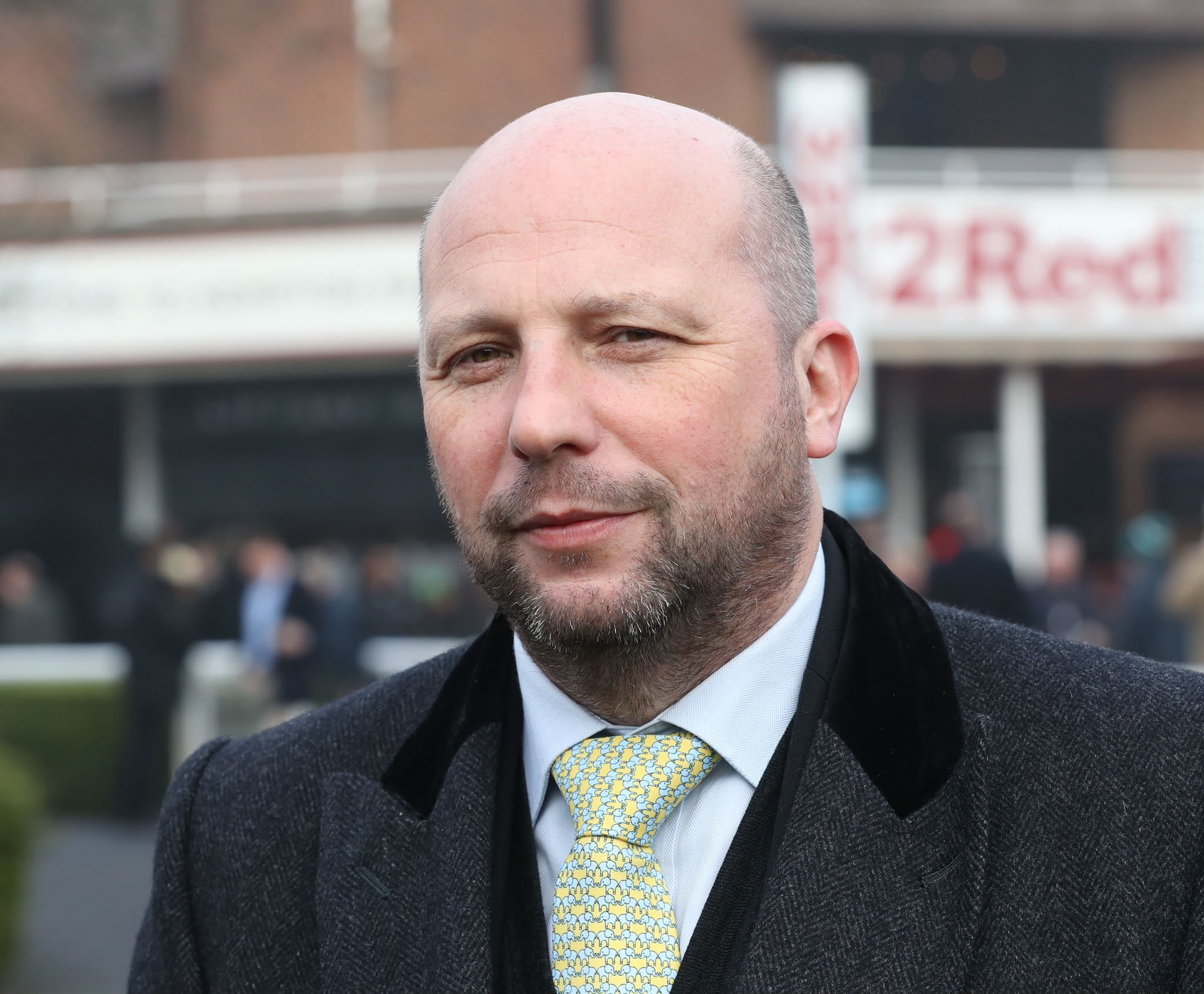
Ed Nicholson
Ed Nicholson has worked in the betting industry for almost 35 years, with Ladbrokes, 888 and Unibet. He joined Unibet as head of marketing to launch the brand in the UK in 2013, became its head of racing a few years later and now looks after its racing communications and sponsorship, including the Unibet Champion Hurdle and the Road to Cheltenham series. He is also the race day presenter at Chester and Chepstow, and sometimes Bath, and was a presenter on At The Races (now Sky Sports Racing).
In this episode
Talking points
- Two races in one: as Chester’s race day presenter, Ed explains why Aidan O’Brien sends his Derby horses there — the tight turns and the crowd so close the jockeys can smell what they’re eating, all perfect schooling for Epsom.
- Nicky Henderson’s gilet: how Henderson became Unibet’s ambassador alongside the Champion Hurdle sponsorship, and the branded gilet he wears at home but never, ever on the racecourse.
- The Champion Hurdle at 100: the race turns 100 in 2027, and Ed lays out the plans — a parade of past heroes, a trophy tour and a gathering of winning jockeys.
- Why a casino tax hits racing: most online bookmakers make their profits from casino, not sport — so when online casino tax doubled, the budget that funds racing sponsorship felt it too.
- Million-pound yearlings: Roy plays devil’s advocate — if yearlings sell for a million each, how can racing be short of money? Ed explains why the sales ring tells only part of the story.
- £100 million to fix racing: handed the budget, Ed explains how he’d spend it — a digital racecard tailored to beginners, regulars and experts, and why he always asks taxi drivers what racegoers really moan about.
Transcript
Roy: Hello guys, Roy here from BestBettingSites for the Odds-On podcast, brought to you by bestbettingsites.co.uk. Once again, delighted to be joined by Ed Nicholson, who currently works for Unibet, a very very popular and familiar figure at racecourses. Ed, welcome back.
Ed: Thanks Roy, looking forward to this, Second conversation, good the first one was really good.
Roy: Yeah, so… Strikes me is you wear two hats now. One is as a race day presenter, like the compere type character. What race courses do you do that at, and what does that involve?
Ed: Yeah, on my spare time, so I take days off or they’re at the weekends, like so Chester, a lot of their race meetings are at weekends, so that fits in really nicely. And then Chepstow, I do, and then occasionally at Bath as well. So, I do, I enjoy them. I used to be a presenter on, on Sky Sports Racing, which was called At The Races. And I missed the television work and talking about racing and betting. And it was just a way to continue that really. It’s funny because I went into back into marketing Having, in the first episode we talked about doing a bit of PR myself, setting up a PR company, and I went back into marketing management with 888. And so Following that… I wasn’t doing any racing whatsoever. I was just doing the general marketing management. And it was just a way of keeping in with racing. And then… Just, as it happened, with My career has gone in that path where… I’m now doing racing as part of my main job as well. So I am kind of intoxicated with horse racing at the moment.
Roy: What does your day… I mean, you’re the guy, basically, to explain With a microphone. You’re introducing winners as they come into the winner’s enclosure.
Ed: Yep.
Roy: What other the announcements do you make, do you interview connections post race pre-race etc?
Ed: Yep. Yeah, I mean, first of all, it depends on what the racecourse wants for me to do. They’re my boss and I take direction from them. And then it’s left up to me to implement those directions. So at some courses, I don’t I don’t talk too much and at other courses I talk more about the entertainment side of things. So, for example, Chester is very much a racecourse that’s there for the racing, but also for the social side. A lot of people only go once a year. Their biggest meetings tend to be their summer meetings on a Saturday. For the Ladies’ Day or the Gentlemen’s Day, rather than their Boodles May Festival, which is their best racing days. Derby winners and Oaks winners come from those three days. In fact, the winners of the Irish Derby and the French Derby ran there this year and the English Derby the year before. So it changes depending on the audience and the tone. So I’ll be talking about kind of, you know, there being you know half-a-ton of horse flesh reaching 40-miles-an-hour talking about, you know, 700 muscles in a racehorse body. All that sort of thing, 205 bones, and just kind of explaining what the red hoods are and the different pieces of equipment are. If a horse gets on his toes or makes a noise, what they’re doing. And then at the same time… I’ll be talking a little bit about the form, just like a line or two about the form and the betting. And before racing, I’ll be interviewing the sponsors, interviewing key individuals. And… We have a preview, Which I do with Martin Dwyer, going through each race. And then after the race I talk to the winning jockey or the winning owner or the winning trainer, depending what I think the angle is for story. And then we go through the race, which is run on TV. I’ve got an earphone in with the director, and we work out where we’re going and what we’re doing, and then we link in with other races. So, on a Saturday, on a busy Saturday… We’ll link into the racing at Ascot, or, This weekend it was Ayr, which was interesting because they had problems with their timing, so we had to be very careful. And it’s like a full show. So it differs from one place to another. But generally speaking, A race day presenter, I like to say it’s a bit like being a conductor of an orchestra. Like you’re all there with the baton, and you’re bringing everybody in at the right time. So the announcements for the BHA, you have to announce the non-runners, some tracks I have to do it, other tracks there are officials that do it in the broadcast bay. Any Rule 4s, any withdrawals, any non-runners. We had a selling race recently at Chester, have to inform everybody about that and pass it over to the auctioneer, and try to explain why it’s a selling race and how different that is. So, yeah, I try to entertain, educate and inform. When I’m talking about the race to race.
Roy: Selling races. They were a big thing when I was in, when I was a lad.
Ed: Yeah.
Roy: They’re very rare now. I certainly didn’t know Chester staged selling races. And that’s… Quite amazing because like you say, Chester’s got Derby and Oaks trials. And also stages selling races. I’ve got to ask, and I’m going off-script here a little bit. But, to me, when it comes to Derby trials, the obvious place is Lingfield, because it’s got the undulations; it’s very very similar to Epsom. And yet Chester… For want of a better word, a small little dog track-sized venue, quirky, always on the, but gets all the best horses. How do they achieve that?
Ed: Well, I’d say it’s a really good question. And it’s a question that I’ve asked Aidan O’Brien and Ryan Moore and other experts, and it’s because Chester fits in nicely with the calendar. So it links in just perfectly if you want to run a horse in the Derby or the French Derby. But also… Is Two races in one. So as you start your three-year-old career having been a two-year-old, as you know If you’re not a sprint two-year-old… And you’re a middle-distance two-year-old, you probably won’t be over raced as a two-year-old because you’re… Expert, your areas to make money and to become a proven horse, is your three-year-old career. So you’re still relatively inexperienced, and you’ve got to learn quickly on the job. Because… As you know, back in the day, the Derby was… You know the race to win. But now that the season goes all the way through to October. The Breeders’ Cup. And foreign races, so The horses are not being… Kind of taught at the very early stages of April, March. They’re kind of learning on the job. So Aidan O’Brien’s actually said… That coming to Chester is like having two races in one. First of all you have the race. So you have a race, but then you learn about the balancing of the horse, how the horse quickens off a bend. And also… And this is a point I hadn’t really thought about, they’re very close To the crowd. Martin Dwyer always tells me that not only can you hear the crowd, you can smell what they’re eating. You’re so close. I think that’s why Aidan O’Brien likes to bring his classic. Potential classic horses there, because They have to experience the atmosphere and be able to cope with it when they get to Epsom. And we’ve seen in the past how some horses just explode with all the razzmatazz At Epsom, and if you go to Chester, they just learn a little bit more before they go to the Derby and to the French Derby. And it’s been very successful recently. I mean, as I say, Constitution River,
Roy: Oh
Ed: Benvenuto Cellini, Lambourn, they’ve all, they’ve all won there in the last couple of years. And Aidan O’Brien… There were eight listed and group races at the Boodles May Festival this year, and he won, sorry, there were five listed and Group races, and He won all five. So he brings his, he brings his best horses over.
Roy: It really does. Okay, let’s put your… Full-time job, cap on. Just remind me, what is your official job title at Unibet?
Ed: Well, like I came in as head of marketing in the UK. My job was to launch Unibet into the UK in 2012, which we did do in 2013. Unibet was a big sports company around the globe, Established in 1997. But although it was based in the UK, we didn’t really have a UK offering. So My job was to come in and… Try to bring everything together behind the scenes. The boring stuff that no one really talks about: bringing everything in, marketing it, and trying to get the customers. But then over the years, it’s slightly changed, and because of the way that we looked at things, because of the companies we bought. We bought Stan James, which had very good association with racing and racing assets. We bought 32Red, which also had a lot of racing assets. We kind of developed a strategy that linked in very closely to racing, which then meant we had more budget and money to kind of put into racing. So racing became quite a big part of the portfolio at the time. I’m talking 2016-17. So I became head of racing. And So my job is not to do with making odds, it’s to do with everything else really. To do with the sponsorship, marketing, PR, internal comms. Operations, dealing with the sportsbook team and trying to come up with different angles. Different technical aspects, what you see on the website. We might come up with three or four different Books like a racing bet builder. We’ve just launched, it might and I don’t do that but I work with the team that do it, but my main job is… Is if you see Unibet off the… Website that’s mostly what I do.
Roy: You’ve done a good job. I’m not blowing your trumpet. But I mean…
Ed: Like you
Roy: It’s taken a while. I know I’ve seen some of your tweets. You’ve often got frustrated. But I do think it’s now called the Unibet Champion Hurdle. Where in the…
Ed: Yeah.
Roy: It just got called the Champion Hurdle. I do believe the Stayers’ Hurdle was totally messed up when Ladbrokes became involved, and it become the World Hurdle, which was nonsense. Yeah, the frustrations on Twitter. I think often you see the Racing Post will send a tweet out, an X, sorry. And once again, just call it the Champion Hurdle, not the Unibet Champion Hurdle. But That’s the race you’re most synonymous with. But you come up with a Road to Cheltenham idea, which I thought was quite brilliant. How does that work?
Ed: Yeah, well, we… When we had the… The Champion Hurdle the Unibet Champion Hurdle was there and it had two or three races with it as the commercial deal with The Jockey Club, It was agreed. So we had the Greatwood Hurdle, which is the Unibet Greatwood Hurdle, which is the Sunday of the three-day meeting in November. And we also had at the time the Haydock Park Champion Hurdle Trial, which no longer exists. And that We thought, well, what can we do to make it more of a series and a narrative? And market. So I was very keen for, and obviously, as I said earlier on, it became… Quite part of our strategy, racing became part of our commercial strategy as well as our marketing strategy which came out of the commercial strategy. And so we I thought it would be good to have a Road to Cheltenham. It kind of existed in and a smaller way before I started. But I kind of extended it. So we sponsored. I think seven in total of all the top two-mile Races over hurdles. From October to… The Unibet Champion Hurdle in march. So it was a way that people could set their horse on a Road to Cheltenham. So, the Elite Hurdle was the Unibet Elite Hurdle in October. I mentioned the Haydock race, we had the Greatwood, we had the International, which we renamed to be called the Unibet Hurdle And that went, and we’ve re-changed that, so instead of being in December, that’s now in January. And we then, so we had a we had races every month. We had races, which we did a lot of content, lot of PR, lot of marketing for. But then we had to have something in between those. So I just thought, well there’s one guy who is synonymous with Cheltenham in the UK. There’s one guy that’s synonymous with the Champion Hurdle it’s Nicky Henderson. So I approached Nicky, through a third party, and he kindly agreed, after a few meetings, that he would come on board as our ambassador. And then within a year we saw that it was getting plenty of coverage, so we sponsored the stable. So we now, you know for the I think it’s been 10 years. I spoke to Nicky last week and… He was busy writing his brochure for this coming season. He was keen for me to kind of highlight the relationship with Unibet. Because things in sponsorship and marketing, in fact, a trainer said this to me when I first started, that you know you don’t deserve to be called the sponsor of a race Until you’ve done it for a long time. And although I fundamentally disagree with that, I kind of understood what he said. Literally, we’ve been it, you know longevity is a big thing in any in anything, whether you’re working out who’s a legend or whether the sponsorship has worked. And we’re now sponsored the Champion Hurdle, this will be our 10th year in march. It’s the 100th year of the Champion Hurdle and Unibet’s 10th year of sponsoring it and it’s the 10th year of Unibet sponsoring Nicky Henderson. And over those years… The two have dovetailed each other. So obviously we get blogs, we get videos, we get promotions, and we’ve been very lucky. I mean we’ve had Constitution Hill with Nicky. We’ve had Altior, we’ve had Shiskin, We had the back end of Sprinter Sacre coming back. So we have been quite lucky with our sponsorships. But we’ve maximized it, and we also get the branding of the jockey with the Unibet across the silks. And then we’ve also done a deal with Nico de Boinville where he wears the Unibet On his breeches and on the top of his t-shirt. And Then with Nicky, all his horses… Carry the Unibet logo on there, on their, on their racing gear. So whether it’s a whether it’s a groom with a jacket or whether it’s a… A horse with a rug, it’s got Unibet on it. And that works really well for outside of TV on the racecourse as well, because everybody wants to go to Seven Barrows and video Nicky. And Nicky is such a great personality. We don’t ask Nicky to wear… Unibet on the course, because that’s not Nicky. Literally, that would be pathetic, you know literally Nicky, I don’t want turning up in a Unibet gilet on the course at Cheltenham, because he’s a smart, sophisticated racing legend. But when he’s at home, and he’s wearing his Unibet gilet… That’s where we get the publicity and it’s become a bit synonymous and like, I get ribbed about it, that, you know, the Nicky Henderson, Unibet gilet is… Is one of the one of the kind of things you see on Twitter quite often. But I’m very proud of that, actually, because it’s obviously worked. And we’ve obviously helped, I think it’s definitely helped us over the years, Our association with Nicky, and the Road to Cheltenham and the Unibet Champion Hurdle.
Roy: 100th Champion Hurdle, I had no idea. So, Big plans? Any plans? Going to make a special occasion for us all?
Ed: Yeah, yeah. Well You can imagine that we’ve been talking about this with the Jockey Club for or since the day after Cheltenham Festival finished in 2026. There’s a book coming out. It’s being launched on the 15th of October. 100 pages of 100 years of Cheltenham, Unibet Champion Hurdle. Obviously, it looks at the years before. I think there’s only been three sponsors for the Champion Hurdle. Smurfit and Waterford Crystal And us. Stan James as well, but Stan James is part of the same company. As us, and it looks at all the heroes of the 100 years, so it’s a real… Chris Pitt, the racing historian, has written it. And I’ve got a chapter on the 10 years since Unibet sponsored it. And there’s a launch at the Cheltenham Literature week, which is I think on the 15th of October. Where Nicky and… Rishi Persad and… A few other people are going to be. Talking about their experiences of the Champion Hurdle over the last hundred years. We’ve also got a new logo, there was talk of the Champion Hurdle Trophy going on, like a tour around the UK. I don’t know whether that’s happened or not, but so we were talking about that. And there’s going to be a great big dinner, or sorry, a lunch, I should say, For every living jockey that’s won the Champion Hurdle to come and celebrate with the Jockey Club and Unibet. So there’s quite a few things that are happening, but that won’t be towards the end of the year, I don’t think.
Roy: I love those luncheons. And I remember two, one for the Grand National. And another one that was done by the BBC who… Broadcast the Grand National back in a day, I think about 1990 or something, and They covered every living Grand National winner and either got them to the course or went to the stables or the field to see them. Now, Ed, please try and do that because I would love to see some of those. Binocular, I don’t actually know if he’s still with us.
Ed: Yep.
Roy: Didn’t he pass on recently? I think he did, didn’t he?
Ed: Not too sure. Not too sure.
Roy: I mean, Binocular bought me a house, I mean…
Ed: There will be lots of them. Yeah, well, I think I’m right in saying that with the retired racehorses organisation, the RoR, we’re we are going to have a parade of past Champion Hurdle winners at the festival. So that is something we’ve… We’ve already discussed, but yeah it’s Yeah, I think people love that. I love that, when I was there, the Grand National one you’re talking about. I remember Standing and watching these heroes. You know walking by it and Yeah, we’re definitely going to be doing that as well. But I think that’s going to happen on Champion Hurdle Day.
Roy: That is sweet. That’s good news. Okay, let’s change codes then to flat racing, because it’s not just the jumps you sponsor. Seems like you’ve got a great association with Kempton Park. And do you still sponsor Richard Hannon Jr.?
Ed: Yeah, we’ve just stopped sponsoring Richard Hannon. That was only last year. Well, this year is the first year We haven’t sponsored him for about six years. That was always good fun. And once again, we were lucky. We sponsored him during the time of when he won the 1000 Guineas. And he had some good runners In the Derby. Mojo Star I think was a horse that was comes to mind. But we yeah, we sponsor Kempton. We’ve been there for… A number of years as their official betting partner on the all-weather. We did sponsor the Winter Festival there a few years ago. With, once again it worked out quite well, because Might Bite won the 32Red King George. And Buveur d’Air won the Unibet Christmas Hurdle, the two grade one races on the card. So that was brilliant, because it just kind of brought it all together. And Kempton works out quite well. We originally sponsored Kempton on the all-weather, to kind of Do a little bit of… Marketing to the casino side of the business. But obviously there’s been a lot of regulation and legislation which has meant that’s now more difficult, but we still kept the association. And I think we just went past 2,000 races that we sponsored at Kempton since we started the association. We’re, we’re up to about 3,600 races we’ve sponsored Since we launched in 2013. And that’s on 26 different racecourses. And, but a number of them have been at… Kempton. But we sponsored the Lincoln, We sponsored Stewards’ Cup, we sponsored Cheltenham. We sponsored the Sprint Cup under 32Red, that was a grade one. And we sponsored… Numerous grade twos, grade threes and lots of handicaps. We were official betting partner at Goodwood For three, four years. And that was great fun as well, getting the brand across and doing lots of social media. And I must, I must mention our sponsorship in Ireland, we used to sponsor the Irish Gold Cup before It was made, kind of one, of the big races at the end the festival, at the beginning of February. Dublin Racing Festival and that was always, that was always what we’d hoped to do. And we sponsored that thinking, knowing that Pat Keogh, the chief executive at Punch… Leopardstown was gonna do this festival. But unfortunately, we sponsored it for three years, and then we didn’t sponsor it, and the very next year the Dublin Racing Festival began and the new sponsors got a lot of publicity. But yeah, that was really, I really loved going to Leopardstown, and we sponsored the Morgiana, Which has been farmed by Willie Mullins for 10 years, and we just stopped that this year as well; with all the difficulties we’re facing as an industry, we had to make some difficult decisions. I had to make some difficult decisions in terms of… The racing budget and so, for the first time in 10 years, we won’t be sponsoring. I think it’s actually more than that. Maybe it’s 13 years. We won’t be sponsoring the Unibet Morgiana, which… You know, was won by Lossiemouth last year, went on to win the Unibet Champion Hurdle. And it’s been won by some really good horses.
Roy: Yeah, okay. You’ve touched on something there, the state of horse racing, the income it has, tax implications. Every major traditional bookmaker, by that I mean Shops, companies we’ve known to have a high street presence, so your Ladbrokes, Coral, William Hills, etc, Betfred Job cuts, warnings, You don’t have any betting shops, but you’ve got the same tax implications. I mean, how’s business for Unibet? What’s your predictions, and are you too gonna have to really sort of tighten your belt?
Ed: Yeah, well, I mean the first thing to say is that most online bookmakers they’re, the majority of their profits come from the casino side of the business rather than the sports business. We were slightly different insofar as we spent a lot of… Money and resource in racing, as I’ve been mentioning, in terms of Unibet and sponsorship. We know we have a… I think we have the biggest sponsorship portfolio of any bookmaker, and therefore you can imagine that comes with a marketing budget to match. I think… That over the last few years it’s been getting tougher for, just generally speaking racing, as other sports proliferate and the ability to place bets on sports Becomes easier as well as obviously the casino side of the business. But we’ve tried to keep up to speed with that, and try to offer new products, and as I say, keep on getting our name across in the racing world. But what’s happened recently, with the taxation doubling on casino, obviously doesn’t help. Because it’s not so much not affecting racing (I think a lot of people in racing thought well that’s great, they’ve not touched racing), but they Those guys didn’t really understand that I get my money to put into racing through the profits that we get on the casino business. So that had an effect. The proliferation of unregulated betting. And the ease at which it seems to have developed over the last few years through marketing and advertising channels Has not helped. We’ve seen that with many CEO’s of big… Corporate organisations writing letters to the PM, to media like the Racing Post and they telling their story much better than I could. And you know the cost of delivering betting shops, which obviously Unibet don’t have, is going up with the cost that we’re seeing as a society. And The media rights doesn’t help there or doesn’t help with us. So racing is a relatively expensive product. People that kind of… Don’t want to really listen to that. Think, you know, being a bookmaker is a license to print money, is the… The cost associated with preparing a racing product is quite, is getting it’s getting larger, We’re certainly seeing issues with the affordability Process and what that being, that what how that’s developed over the last… Two years or so that hasn’t helped. And obviously That has, I think… Accelerated people maybe be looking at other options. Such as unregulated markets. So There’s a lot of small things, when added together, make it more and more difficult for Betting companies in relation to racing. And that’s certainly what we’re seeing. Hopefully we’ll see, we’ve seen a few shoots of recovery Very recently. Racing’s Going back up a little bit. But not as much as we kind of Thought at the beginning of the year. So we’ll just watch and see how that goes. Terrestrial TV is still very important to get Marketing of racing out there. Obviously, bookmakers can do the very best to try to promote it themselves, like we do through various podcasts we have with Racing Post etc. And try to stimulate turnover on racing. I mean the bigger impact as a racing fan, is the effect it will have on the levy. Which obviously is where the prize money Comes from. And that will be a bigger story to come I think in the next couple of years, if the racing turnover and the profitability within racing continues to kind of Not to accelerate as everyone’s expecting it to. So yeah I think it’s watch this space. I think the new government is very interesting. I think that’s one of the issues we’ve got is that there’s been a change of… Kind of personnel at the top of government In the areas that we concentrate in, so gambling, racing, so obviously there are people that… Are constant behind the scenes, such as advisors. But you’re getting new people in these positions, and we’re having to keep on Not me, but our body, The Betting and Gaming Council, have to keep on kind of explaining the situation to these new incumbents, to explain how much betting and racing bring to community, bring to… The government through Tax, levies and bring work to a great number of people throughout the UK and ultimately you know tax revenues, monies to government. So I think there’s still a long way to go. But it’s you know, it has been difficult over the last few years.
Roy: I’m gonna… Play devil’s advocate here and try and look at it from the outside Your concern is obviously less betting turnover, less profit as a bookmaker. And Not your argument, but… Case is that that less money will go ultimately to prize money for horse racing. And less prize money is… Deemed a bad thing. But… Attendances are holding up. Admirably. And rest assured, and we’re about to enter sales season, you’re going to see newspaper reports of the top 25, you know, yearlings sold at auction made at least a million each, and there’s no end of, look at these sales results in wonderment. 300 horses through the ring, average price, 250, 300. There’s no shortage in finding people to buy racehorses and pay the… Prize money doesn’t seem to bother these people. That’s what I’m saying. So is it…
Ed: But
Roy: Be all and end all? Should we really be that worried?
Ed: No, but I think it’s disproportionate. I think the number of people that are buying those horses is very small. As you go down the food chain, you’re getting… I think less owners, and you’re getting more syndicates, because that’s the way that they can afford to have a share in a racehorse. That’s not a bad thing, I think it’s a great idea and I welcome it. But that’s just an argument to your argument that I don’t think, I don’t think that there are more people wanting to buy racehorses, I think at the very top have lots of money and they’re betting it, they’re bidding against each other, so the price goes up. And let’s not forget a lot of these people are have a strategy in place. For the racehorse after it has its career on a racecourse, it’s the breeding rights and it’s, you know, if they get one great champion… And that’s where they recoup a lot of their money, through the breeding rights, not necessarily the prize money. And also I’ll take your point about the marquee race events. There is no doubt that… The big events like Royal Ascot, Cheltenham, Goodwood, do get The bulk of… The interest off the racecourse, but also the… And a great number of racegoers going, but you know Cheltenham have had problems over the last few years, with the expense. And I think you’re more likely to save your money and go to a big event, And you don’t mind spending your money at a big event, than going to several smaller events. I still talk to a lot of people on the smaller racecourses that… They find it quite difficult to a, get sponsors And B, to continuously get good crowds. And they’re continually coming up with ideas and come out with, you know… A lot of people don’t like it in racing, but they have, you know, bands or they have you know invades, or they have you know, they’re trying to they’re trying to generate income through different ways I mean I’ve heard of a few that open up their car parks to… The DVLA is it called, for their, to have speed awareness courses, and they can use the facilities to go and have meetings and talk about why they went over 40-miles-an-hour. So that’s a, you know, another way that, and you’ve got to remember these racecourses, most of them are only open for I mean, Chester is open for 15 days a year. You know and Even Chepstow does only 30 days a year. So there’s a great deal of… Time that they need to, you know I think they can try to and have more commercial operations happening within their facilities, Facilities, but yeah I think I take your point about their attendances, and I think that’s a good thing. But I think if you delve deeper, it’s the marquee events that are doing well And your wet Tuesday afternoons at Fontwell, probably are down.
Roy: Oh, but are they down because now… We didn’t have in our day, and you mentioned it before, back in our day, so to speak, we’d sit in a betting shop, and we’d stare at a speaker in the corner… And then SIS arrived, we got live pictures in betting shops, and now… You know, I’m two clicks away here from being able to watch any race anywhere in the British Isles or in Ireland or probably Japan and whatever. That That’s got to affect things anyway. I mean, can we blame… A lot of our woes On that, surely we can.
Ed: No, I think you could you can definitely mention it, but I think the opposite is true. It’s a double-sided coin, isn’t it? It’s like there’s people that don’t want to go racing because they can watch it on TV, but there are a lot of people that go racing because they’ve watched it on TV. A lot of the youngsters that I, I mean there are lots of youngsters going racing. And I think a lot of that is to do with… In fact, I speak to a lot of parents that have children at university. And… They are raring to go racing every two, two or three times a year, because they love getting dressed up. They love the atmosphere and they love having a good time. Now, pure racing enthusiast, Many of them that I’ve spoken to don’t like that. They think they don’t go there for the racing, but they probably don’t. But you know over the next two or three years when they leave university, hopefully they continue their interest, and they’ll come because they’ve had a good time And in 10 years time… They might… Have a sponsored event there, I’ve met a few people that… I used to run the turf society at Loughborough, so I was the Loughborough Horse Racing Club. And then I got somebody to join, We dressed up as a pantomime horse, that’s another story altogether. We ran into a car and we dented it because we couldn’t see where we were going! But anyway, we got this one guy to join, and he then set up a business, Sponsored races, and he’s had five horses with… Them with the, in the Northwest. And that was all from experiencing it as a student and getting drunk on the race day. So I’m a big believer in getting youngsters and getting them to experience it. They might drift away for a little while, But if they’ve had a good time and they’ve had a good experience, they’ll come back. And I think, on they on going back to your point, I think TV… Kind of does ITV it, I think that Their modus operandi has changed from it from Channel 4 days. They’re trying to show it more of as an entertainment, as a, an area that you should go to rather than… If you love racing, You know you’ll watch it and you’ll sometimes go. So I don’t know. I kind of understand your point, but I think There’s more positives than negatives for it to be on TV. And obviously from a betting point of view, It generates a lot of turnover, and a lot of action.
Roy: Right. It’s very unfair to say, Ed Nicholson, how would you run horse racing if you’re in charge? Because there’s so many vested interests in it, but I think it’d be Fair enough to ask you as a PR man and a horse man, If you’re in charge of promoting the sport, and I went there you go you have 100 million as a budget, put more bums on seats, get more people to racecourses, make this thing thrive. Let’s see the Epsom Derby where you can’t see grass on the infield. Let’s make it great once again. How would you spend that money?
Ed: Right. Well, first of all, Back in 1995, I went on a BHB back then, British Horse Racing Board Management Development course with my fellow Ladbrokes members, Ed Ware and Nick Rust, who ended up being… The BHA chief executive. And We were Listening to three seminars a day, from everybody in the industry. And… Obviously, we were 16 delegates, and we listened to all of them. Every one of those the seminars, and the people that delivered those seminars, Didn’t see each other, because they did their seminar for two hours and they went home. But every one of them started, and they’re all from different bodies within racing, all started with saying they’re the most important body in racing. And I think that’s the first thing to say, is that A bit like… Like a clock, like a watch, look at a watch, you can tell the time. But you know what the time is. But the way you can get the time right is if all the cogs underneath it are working together, and providing the mechanics, for you to be able to see the watch and see the time. And I think a lot of people in racing in big organisations, They sometimes forget that that, their CEO is obviously responsible for their members and for their constituents, and they have to have their members’ and their constituents’ interests at heart. I understand that, but sometimes I think they need to think of the whole and look at it As the benefit of racing. So that’s the first thing I would say and that’s a very generic lame thing to say I suppose, but I have seen that over the last 30 years that, you know, it tends to be more about the individuals and bodies rather than about the overall racing industry. I think it’s a very difficult thing to answer because, again, there are different, there’s so many different stratas within racing. You’ve got the they’ve got the traditionalists, You’ve got the breeders, you’ve got the… The owners, you’ve got the trainers, you’ve got the jockeys. But the most important people are the audience. So… The audience… Again, that’s, is it are the owners the most, I quite often go to the racecourse and A lot of the owners don’t like the fact that the owners and trainers aren’t offering a decent level of food. You know, and they always seem to think that they’re the most important people in the racecourse. Now they are insofar as that they’re bringing the horses to run on the racecourse. But the other important people are those that are coming racing and they’re also experiencing a day out of the races and they should be well looked after and catered. So I think first of all, I think investing in… In customer service at whatever level is important, whether it’s an owner, a trainer, or a student coming in, they should experience at a level of service that that is appropriate. And I would also… I think… I’ve changed slightly in the way I look at things, because I always wanted to demystify racing. I think maybe a lot of people like the fact that it is a mystery. I like what Chester do. Chester have various boards around the parade ring where they explain everything on the boards. And I obviously try to add to that as well. So if you want to, you can learn about you know everything about a racehorse, what you’re looking at, conformation, the history of racing, the different terminology. And that’s also used in a… In a program, So I think that’s positive as well. And But I also think, we don’t need to demystify too much because you can only look at the Peaky Blinders Aspect. Everybody dresses up to be like, you know, a Peaky Blinder. The youngsters do anyway, because they love that atmosphere, they love the kind of feeling, it’s a bit is a bit mystical. And I think a lot of people still like to, feels if they’re going somewhere that they’ve not been before. They’re entering and a different world, the back of the wardrobe and going into a Narnia. And I think we should not lose that in totally. But at the same time, I think we should offer the customer the opportunity to know more. So what I would do, is that I would have different levels of form, racecard, and I’ll do it digitally, and I would send the digital race card to the people That are coming the day before. And I’d link it in with sponsors, I’d link it in with bookmakers, I’d link it in with offers, and you can have the beginner, intermediate or professional racecard. And depending upon what you want, The tone and direction and information would be to your liking. So a beginner would be very basic, expert would be, you know, talking about two pounds for one length. And that would help, I think, make the experience for the customer, whoever he or she is, at whatever level, better And then like I would also look at the costs. I think some of the costs of going racing are getting extortionate. Now, they have to relate to the everyday business costs that racecourses have to pay in terms of drink and food. But I mean, I was oh you know I’ve been at a few courses where… A pint’s cost me nine pounds or ten pounds. Now Again, I don’t disagree that that’s a lot of money. People that go to other sports events, they will be paying £8.50, £9, for a pint, because that’s what you pay. But some racecourses, I think it would be better to do a… A deal to make it a little bit cheaper. With food and drink for those people that go racing, because that’s one thing that you think about how much money do you need to spend at a racecourse once you get there, and, And, finally… And this is more about racecourse experience than racing full stop, is that I always ask taxi drivers, and what’s been the… The constant in level of conversation with racegoers when they come and go? And they say they always moan about getting out of a racecourse. Or the or the problem they had getting into the racecourse. And I think if we can make the experience of entering and leaving as best we possibly can, we’re more likely to get repeat business. Because when you think of it, the first experience, you know, the famous Expression, you know first impressions count. But also the last impression you have of something is what you’re going to take away. And I think lots of racecourses are trying to. Cheltenham, for instance, have got a lot of race makers, and they’ve developed a kind of much more customer-friendly, engaging entrance and an exit from Cheltenham over the last few years. And I think that really helps. So, I think it’s all about the customer experience much as anything else and making it. Cost-effective. For everyone involved. And maybe just maybe, coming up with something extra on the racecourse, rather than just racing. So we’ve all we’ve always had the… The shows, the music. But maybe we have a few greyhound races, the mascot races go really well, we had a Dachshund Derby at Chester. Only 12 ran, but over a thousand up and down the country entered. And apparently that brought a lot more people into the course from their association. So maybe come up with sort of… Funny ideas as well.
Roy: I like it. I like it Ed, congratulations, some food for thought there. Maybe you should… See out your career, because I know you are planning your retirement, but maybe there’s a few years left in there yet to put horse racing straight. Ed Nicholson at Unibet. Thank you so much. We’ve really, really enjoyed your company here at the Odds-On podcast brought to you by bestbettingsites.co.uk. I think you are going to agree with me, the message is always gamble responsibly. You have clearly had a great roller coaster of a life in racing, and it’s been an absolute pleasure talking to you.
Ed: Thanks, Roy. You too. You’ve always been there throughout the years. So great to see you here on this podcast, and the very best of luck. Thank you for inviting me.
Roy: Thank you so much, Ed Nicholson, checking out. Thank you, my friend.
Read full transcript
Your hosts

Roy Brindley
Racing, Darts & F1Former greyhound trainer and professional gambler turned broadcaster, and a Sky Sports At The Races regular since 2012. Roy hosts Odds-On Interviews, sitting down with the biggest names in sport and betting for BestBettingSites.co.uk.
Read Roy’s profile