Roy Brindley sits down with Paul Lawrence, greyhound racing’s man of many caps: kennel hand, paddock steward, Ladbrokes Crayford racing manager, broadcaster and now professional punter. Across 45 years at the dogs, Paul has done every job the sport offers — and today earns around 90 percent of his income from betting on it. They dig into the sport’s shrinking track map, the betting revolution, the famous greyhound race Paul staged at the Cheltenham Festival, how bookmakers restrict winning punters, and the mystery nobody can solve: where an official starting price actually comes from.
Meet the guest
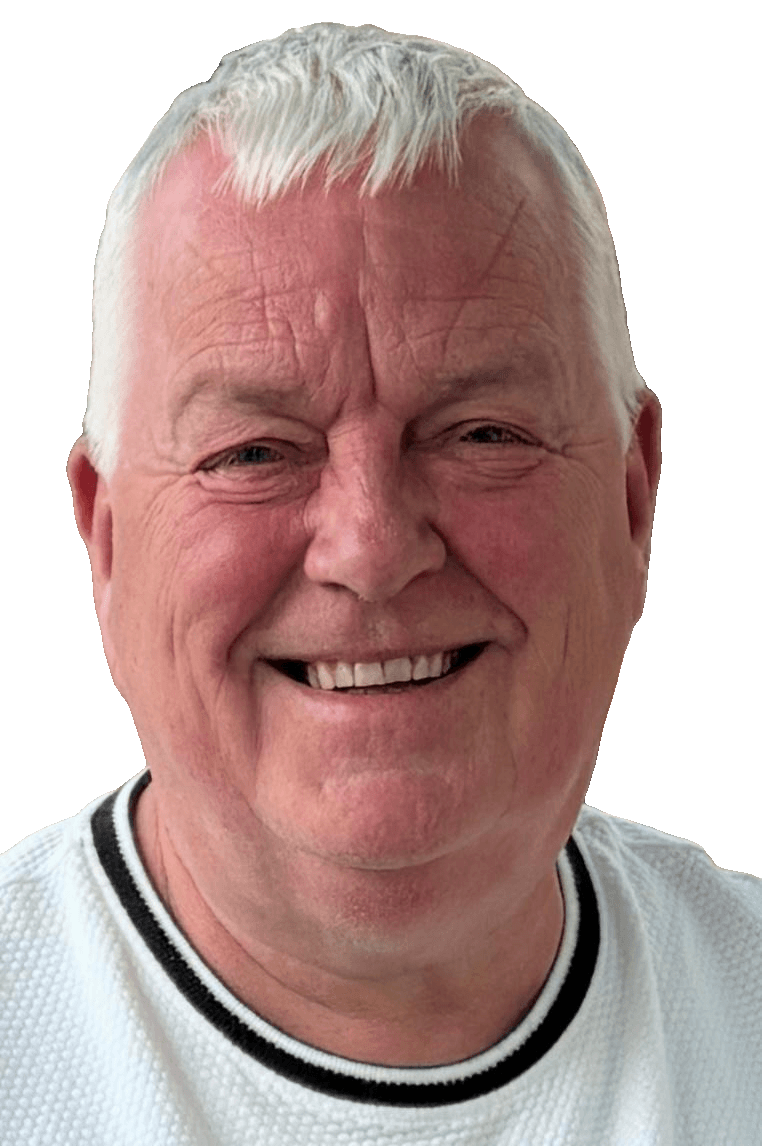
Paul Lawrence
Paul Lawrence has spent more than 45 years in greyhound racing and has filled almost every role the sport offers. He was a kennel hand and paddock steward at Rye House, spent a decade as racing manager at Ladbrokes Crayford, and later broadcast greyhound racing from around the world with the Go Barking Mad channel. He famously organised a greyhound race meeting on the hallowed turf of the Cheltenham Festival for five years running. Today he is a professional punter specialising in open racing, with around 90 percent of his income coming from betting on the dogs.
In this episode
Talking points
- A life in every role: from his first night at the dogs in 1980 to kennel hand, paddock steward, Crayford racing manager, odds compiler and broadcaster — Paul has done nearly every job greyhound racing has to offer.
- The vanishing tracks: Harringay, White City, Catford, Wimbledon, Walthamstow — Paul and Roy trace how online betting and media rights emptied the stadiums that once buzzed with bookmakers and cash.
- Too much racing: eight-race cards were once plenty; Paul argues 12 and 14-race cards put too much pressure on the dogs and turned individual greyhounds into numbers.
- Greyhounds at Cheltenham: the story of how Paul staged a greyhound race on the Festival’s hallowed turf for five years running.
- Turning pro: now a professional punter earning around 90 percent of his income from the dogs, Paul explains the mentors who taught him to price a race and why he moved to open racing.
- The SP mystery: after a lifetime in the sport, Paul says nobody can actually explain where an official starting price comes from.
Transcript
Roy: Hello, welcome to the Odds-On podcast, brought to you by bestbettingsites.co.uk. My name’s Roy, and delighted to be joined by Paul Lawrence, greyhound racing expert. Paul, welcome to the show.
Paul: Thanks, Roy. Yeah, looking forward to this.
Roy: Good, good. Now, I’m calling you a greyhound racing expert. I don’t think I know anybody in greyhound racing who’s worn as many caps as you. Now, I first knew you in the 80s as a paddock steward at Rye House Greyhound Stadium, and since then you’ve become a racing manager, odds compiler, broadcaster, kennel hand. Just give us an overview about yourself.
Paul: Yeah, well, that was kind of when I first bumped into you, in the paddock at Rye House, which was a really grassroots greyhound track. That was when I first got into being a kennel hand myself. And then I ended up being an assistant racing manager there. I first went greyhound racing in 1980. I was introduced to it when I first moved away from home, to the Romford area, and went to college there, and the college tutor, he used to go to Perry Barr and Monmore Green. And he said, come on lads, we’ll go for a night out at the dogs. And I knew nothing about it. My father wasn’t into gambling or anything. My granddad maybe, but not my father. And I got involved with dog racing through that. The first time I went there, I just got the bug, you know: the prices, the odds, the thrill of the race. It was just brilliant. A group of us got a dog together in, I think it was 1983. And then I met my wife, and we had a little kennel, and that’s when I bumped into you. And I got more and more into clocking dogs at the schooling track, if you remember, Ockendon. And a guy there, I got really frustrated that I was out quite a lot with my times, and he said, look, it doesn’t matter, as long as you’re the same out all the time. So it kind of clicked. So you might be 30 spots different; you could go to Rye House and it might be 10 spots different. But that was just a little trick that you pick up, and you’d know yourself, when you get into the dog game, you just pick up all sorts of little tips, and you kind of bank them. You say, yeah, that works for me; no, maybe that doesn’t work for me. And you just build up that experience. And I find people within the greyhound industry, it is like a community, and I’m sure you’d agree with that.
Roy: Yeah. Now, the game has changed dramatically. Tracks have shut down everywhere. In that period, in the 80s, I mean, just in London alone there was Harringay, there was Slough, there was White City, Catford, Wimbledon, no end. I mean, one by one by one, they’ve shut. The game is very different now. I mean, back even in the early 2000s, certainly in the 90s, you know, you’d go to Walthamstow, Wimbledon, Wembley, you could walk up with a carrier bag with five grand in cash, find a bookmaker, boom, no questions asked, you know. You want five grand on a two-to-one shot? No problem, son. There’s your ticket. That’s all gone now. I mean, tracks strike me, I might be wrong, but far more sterile. That sort of atmosphere, that buzz, the bookmakers, are missing. It’s a different game.
Paul: Yeah, I think so. And I think, probably, when you think about it, when we first started getting into greyhound racing, you had to go to the track, basically, to have a bet. And then it kind of got so as you could have a few bets within the betting shop, as things progressed, I guess. Probably, was it 1990? And then you start to get the Bookmakers Afternoon Greyhound Service, so the pictures. Whereas before, you’d go in a betting shop, you only had the commentary, via the blower, as it was then, and everyone would gather around the speakers and listen to the commentary. There were no mobile phones, no online betting at that stage. But it was when, I think, the pictures started coming in, and then the online gambling, that probably forced people not to have to go to the tracks, and that’s where I think the tracks have suffered. And it’s become, really, the bookmakers now. In my book, they’ve called the shots. It’s maybe more media rights now, Roy, than bookmakers that call the shots. But it’s got so as, yeah, the tracks have dwindled now, and that kind of excitement has been taken away to a certain extent. Because I think if you go to the track, that’s where the buzz is.
Roy: Yeah, I can’t agree more. But that community feel does feel like it’s shrinking to me, which is really, really sad. Okay, far less tracks, but is it too much dog racing? Because back in the day, you know, there’d be two meetings a week. Some tracks would have three, some would have two meetings a week in the winter, three in the summer, but there’d only be eight or 10 races. Now there seems to be 12, 14 race cards and five, six meetings a week.
Paul: Yeah, I mean, I think Lorraine always used to say to me, because she used to go, my partner’s Lorraine Sams, she used to train greyhounds as well. We had a great time, 2007, when Spiridon Louis was voted Greyhound of the Year. They were the halcyon days. But prior to me even meeting Lorraine, she used to go there with her dad. She used to say it was Tuesdays and Saturdays, eight-race cards in the evening, and then I think alternate Thursdays, but they were eight-race cards. And that was enough for people. You know, I know Harry Findlay really well, and he’s kind of old school in the greyhound racing world, and he thinks 10-race cards is enough. I think there’s a bit of overkill when you get to 12, and especially 14. I know the powers that be have calmed that down, so I think it’s 12-race cards maximum now. But I think it’s the everyday racing. I don’t agree, either, with racing twice on the same day. Listen, I was part of that, because, you mentioned, I went on to become a racing manager. That was at Ladbrokes Crayford Stadium, in 1990, and I was there for 10 years. And that was Saturday mornings and Saturday nights. And if you think of it as a job, which I lived and breathed at the time, it does affect your home life, because it’s difficult to get away from it. When you live and breathe dogs, and you’ve got that bug, it’s hard to walk away from it. And I’m still here, what, 40-odd years later. And so, I do love it. I can’t get away from it. It isn’t the same anymore, and I don’t think it’s got any better, particularly. But I’ve still got that bug, so I’ve still got that passion. And yeah, it has changed, Roy. And I do wish that people that were in that kind of power would probably say, look, there’s too much racing, we’re putting too much pressure on the greyhounds. The greyhounds is where I live. We’ve got two greyhounds indoors, and we were just saying the other day, me and Lorraine, I couldn’t do without a greyhound by my side. They give you great companionship, and a bit of love, and attention as well is all they need every now and again. But I love greyhounds. I always quote, when I was at Crayford, I was really hands-on, because I was so respectful that I worked for a good company such as Ladbrokes that I wanted to be the best, if you like. I wanted the best for the track. When the dogs came through, I was hands-on in the paddock. So we weighed the dogs in, and I used to recognise them, not by their racing name, but by the kennel name. Believe it or not, I’d get 90 percent right. It’s not easy. Have you got a brindle dog? Obviously plenty of black dogs and stuff like that. But it was just, I got consumed in it. I just loved it. But I think now they’re not those individual dogs anymore, they’re more numbers, and I think that’s quite sad, really.
Roy: Yeah, I would totally agree. Greyhound racing to me, from the outside, and you know I used to be involved, appears just more like a product. I mean, literally like an online casino. I don’t think people are informed enough. I don’t actually think people understand even the simple basics of a grading system, whereby a dog is basically rated: it wins a race, it’ll go up a grade because it’s performed, and go down. Horse racing has a great way of informing people. Here’s the trainer that speaks to them. Here’s the jockey. You know, the likes of ITV Racing are going to do stable visits and things like that. I think maybe greyhound racing, personal opinion, needs a lot more of that these days, otherwise it’s just going to become more and more and more of a, and we’re seeing simulated cartoon racing, you know, start to appear. Listen, let’s go off on a few tangents there. You mentioned black dogs, which I found quite interesting, because back in the 80s, the most common colour greyhound was fawn, and you rarely see a fawn greyhound anymore. And then it become white and brindle, white and black, white and fawn, and that went away. But when the Australian bloodlines arrived, when stud dogs and sires from Australia come, greyhounds become predominantly, for a while, black and white, and then 80 percent of greyhounds, maybe more, were pure black. And I’ve got to say, from a viewing spectacle, I just didn’t like seeing a race with six black dogs. It just wasn’t the spectacle. But I know you told me earlier, Australia, and we’ve touched on that theme, now you are punting on Australian greyhound racing.
Paul: Not quite as much as I did. I was during COVID, and I carried on a little bit, and a good friend of mine, Neil Price, he continued that, because of what happened through COVID, when the racing stopped over here. The racing in Australia, I think I’m right in saying, maybe stopped for one week or two weeks or something like that. I like the way that Australia has developed. I started following greyhound racing in Australia in 2001, when I first started at Go Barking Mad. My Twitter handle, or X handle, is PLGBM, which is short for Paul Lawrence Go Barking Mad. And Go Barking Mad was the company that I joined. Arthur Cooper and his brother set it up. Look at what they wanted: a global greyhound channel. And they had greyhound racing from all different countries, but primarily in the morning it was greyhound racing from Australia. And something you just said there about the colours of greyhounds: I think it’s also the colours of the track, the traps as well, you know, the jackets, or, as they call them, the rugs. I think that adds to it all, the colour. And that’s what I think, I got that bug when I went to Romford. It was the ambience, the colour, the atmosphere of it all. And I’ve been lucky enough to go to Australia recently on a couple of occasions with a big party of maybe 40-odd people, with Nathan Corden, who’s a good friend of mine also, that has organised it, really well organised. I do wish, Roy, that in 2001 I’d probably gone to Australia then, because I got gripped by it. And Brett Lee was just starting his kind of command of being the top dog over in Australia, and obviously then he became a big sire.
Roy: I best jump in there, explain. We’re not talking Brett Lee the cricketer. It was a greyhound named after Brett Lee.
Paul: Named after Brett Lee, yeah, that’s right. And that was another thing, just on the tangent there. We did a couple of outside broadcasts with Go Barking Mad, and I worked with Ozzie Osman, who was a great mentor for me when I first started broadcasting. I owe a lot to Ozzie. Sadly, he’s passed away a number of years ago now. But he was another one that was great to be around. His enthusiasm was infectious. But we did an outside broadcast at Kinsley, and it was when, it was the Ashes series, and England were playing Australia at Headingley, and they all came to the track. And I saw Shane Warne, and he was like a god, really. I’m not massive into cricket, but in those days, when you had the likes of Ian Botham on your side… Brett Lee was there. And Ricky Ponting, if you remember, Ricky Ponting is still massive into his dogs. I think he even breeds dogs as well. Great batsman for Australia. There were some great names there. And we were lucky enough to meet them after, but he came into the ring, and I was half doing my John McCririck thing, reporting from the betting ring, and Ozzie Osman was interviewing the people, and it was just such a thrill to see, again, another man that sadly departed, Shane Warne.
Roy: Yeah, greyhound racing, personality, celebrities. I think in the 90s, Vinnie Jones was our poster boy. But historically, the royal family, throughout the 70s and much of the 80s, owned greyhounds, with profits going to charities, etc. Who have you come across, dog racing, celebrity-wise, in your, well, 45 years I’ve now discovered, your time in dog racing?
Paul: Well, when we were at Crayford, we did, we’d like to do a lot of charities, and I think Crayford, I’m right in saying, had like a charity of the year, if you like, so we kind of did special events. And between us we organised, you know, Barry Silkman was a trainer. Barry Silkman used to play for Manchester City and Crystal Palace. Excellent footballer, quite flamboyant. He actually was in the kennels that Lorraine actually ended up at, in Claverhambury, next to John Coleman. And when he finished being a footballer, he became a dog trainer, and he had some good dogs, to be fair to Barry. And again, he’s another one of those kind of obsessive personalities, a lot like Lorraine, who would put his heart and soul into that: getting the best out of a dog, you know, the way that it was exercised, the way it was fed, things like that. So he put a lot of thought into that. And I bumped into him, actually, at Rye House. We did a charity thing at Rye House, and that was for his firstborn daughter, who sadly passed away. So we did a charity for that, and then he reciprocated and helped me when we did, for Crayford, boy, did he help me, because he got football, signed football shirts and stuff like that. We did a charity tipping contest, and McCoy came. So Tony McCoy came, and he signed the whip. We did it with Jonathan Hobbs, I don’t know whether he’d fall into that celebrity category, but certainly Tony McCoy. Who I’ve got on really well with, and subsequently bumped into along the way, through a good pal of mine called John Joe O’Neill, not the horse trainer, but he’s from Northern Ireland, and kind of likes a bit of the dogs and a bit of the horses. And I think you find that horse racing and dog racing crossover works pretty good. So, yeah, that was a good night. I don’t think I’ve had a bump into, well, having said that, you say bumped into royalty: that was probably through horse racing. And Terry Dartnall used to have a box, and I used to go there quite a lot. And one night we went back after Jim Culloty had won the Gold Cup. Mick Fitzgerald was there, Richard Johnson, and of course, Richard Johnson was going out with Princess Zara at one stage, so she was there. Yeah, they were good days. Of course, spinning on from that, something that was a brilliant thrill was when Terry Dartnall, through Edward Gillespie, asked me to stage a greyhound race. And so we were going to get it all done through NGRC rules of racing. We had all the kennels there. They were wooden-built, but they were to the dimensions. We had Irene McNally as our stipendiary steward. And then that was when, if you remember, there was a big spat between the NGRC, as it was, which was the governing body for greyhound racing, and the BGRB, which was the kind of promotional arm for greyhound racing, and they pulled the plug. So that was kind of a disappointment. But, me being me, I said, well, we’re going to stage this, because Edward Gillespie wants it. And Edward Gillespie’s one of those people that is fantastic.
Roy: Let me just interject here real quick. You are talking about, I forgot all about this, greyhound racing that you organised at the Cheltenham Festival.
Paul: Yes, and I bumped into you one day as well. You were there. And you actually asked me who was going to win.
And I was with Edward Gillespie, and I felt a little bit of pressure in that I should remain, you know, an arbiter, rather than a tipster or a punter within that. Because I did take great pride in, if I did anything, I did it properly and to the letter. And for a man such as Edward Gillespie, I’ve got the utmost respect for.
Roy: He was the clerk of the course?
Paul: We did it five years.
He was, no, he’s the managing director, so.
Roy: Managing director at Cheltenham. Okay, and I’ve gone up asking for a tip. Yeah, that was inappropriate of me.
Paul: Yeah. Well, you didn’t know. But that, you know, that was just because we’d had those kind of meetings within the greyhound racing industry. Obviously, you went there for the horses, and the dogs were there. But I got a great buzz. David Hood, who used to work for William Hill, he was massively behind it and supported it. And it was carried within the Racing Post, so all the form. Although we staged heats at different, as they were called flaps then, so independent tracks, so you had to qualify to get there. And there was a dog called Shades of Johnny. He won it the first two years. And he actually tried for the third year, but he didn’t quite get that. I think he came third, or got in the consolation final. Of course, he was getting on a bit there. But because they go up in a straight line, Roy, it’s not behind a drag hare, it doesn’t put as much pressure on their joints, if you like, as if they’re turning on a bend. So you could have a four- or five-year-old dog run well in the straight line. And it was just such a sight to see them going up that grass, hallowed turf, if you like. I mean, I love Cheltenham. It was a special place, and Terry Dartnall had a really special box with a great atmosphere there, and we had some great times in there. But again, it was that crossover between greyhounds and horse racing, and it was just a joy to do it. Five years, then in the end, I think it was cancelled through foot-and-mouth. And it never resurrected again, because, it worked, but it did cost a fair few quid to stage it. And the late Patsy Byrne, he sponsored it, through the Byrne Brothers. So I think we did well to try and sell the sport to a bigger audience. But again, I don’t think you got the support. If it was me, I’d have, you know, two tracks that have both gone, Swindon and Oxford, but close to Cheltenham, to give an advert in there, free tickets to come, and things like that. But there was none of that, and I think that’s where we kind of lose that selling of the sport. And you’re right, you touched on it earlier on: when you look at the likes of ITV Racing, or, you know, Racing UK, stuff like that, At The Races, they make you feel part of it. But with greyhound racing, even now we’ve got Premier Greyhound Racing, they utilise people that know a bit about horses and a bit about dogs, but they’re not really experts. And I think you can see through that, and I don’t think, because of that, it sells it. You know, it’d be a bit like putting me on Sky Sports football instead of Roy Keane or someone like that. It would just be ridiculous, because I wouldn’t command that same presence. But going back to the Australian stuff, if you look at what the Australians do, I am in awe of them. The commentators are brilliant. The people that broadcast there, the guys, they’re brilliant. And they sell the sport because of that. They draw you in, and they encourage you to have a bet. In my opinion, they encourage you to have a bet. Whereas over here, I think we really, really struggle to do that.
Roy: Eight-runner races in Australia. The field exits the second bend, and by the time the dogs reach the third bend, the commentator has successfully named, not gone “trap one, trap two, and the four dog, and here comes the six”: named every greyhound, in the space of a straight, in running order. Absolutely amazing stuff. So, you’ve touched on something there that I am aware of: Dunstall Park, Wolverhampton, recently opened, and obviously great news to see a new greyhound track. But I did look at the management myself, and I see the people that built and designed the track, saw their interviews, and they said this is the perfect design, shape, size. I watch Australian greyhound racing. I see eight dogs hurtle off to a first bend in a two-bend race, and all turn that corner cleanly, uniformly, no bumping, no boring, no impeding, nothing getting knocked over, because the tracks are massive. From an injury point of view, surely Dunstall Park, with a fresh piece of paper, could have been a lot bigger than what it is, even though we’re told it’s ideal. I don’t know how you feel about it, but that’s how it strikes me. It’s just another dog track.
Paul: Yeah, I’d agree with that. And you could say the same for Towcester as well, because Towcester is another horse racetrack that then put the greyhound track in the middle. And actually, Lorraine, my partner, she went from being a trainer to then being a stipendiary steward, which, a stipendiary steward’s job is to really check that everything is above board, at kennels, at tracks, and that the whole process is run with integrity. And she was there, even at Towcester, when they started building that, and they said that they’d modelled it on Sandown Park. Now, I’ve been to Sandown Park, and it ain’t nothing like Sandown Park. But then, that’s an inside hare, but it doesn’t get away from the fact that, why, as you say, if you’ve got a blank canvas, can’t you get it right? It’s just, that’s another frustration. I think that Dunstall Park, I think they tried to model it a little bit more on replicating Perry Barr. And Perry Barr was always that way. The traps were positioned in the home straight, so halfway down, rather than right at the top of the straight, so you get that big long run to the bend. And I think you get a better organisation: the early pacers get loose, the stayers drop back, and then they can use their stamina late. But it’s more of that short run to the bend, then on the turn. It’s probably, again, that design of it is not straightforward, and it’s not easy, and I think that’s where we fall down. Don’t get me wrong, I like Dunstall Park. You know, we sent a dog there for the centenary meeting, and he won, and he won a nice little pot, a lovely trophy, a prize, when he was good, and a lovely presentation jacket. But again, you kind of intimated, is it the perfect track? And you’d have to say, not really. It could have been better. And the fact now that they, I think, was it last year, they put their hat in the ring to stage the Derby. It was only Towcester and Dunstall Park that really want to do that. And the fact that they’ve got the horse race stands as well, Roy, means that you can get a big audience there. But as you alluded to, right at the top of this podcast, it’s hard to get people through the door anyway, for normal weekends. And, you know, a 12-race card, people do struggle, because there’s so many other leisure factors that people can now go to and enjoy. So they’ve gone down the lazy route a lot, of just getting the pictures into betting shops, or into, you know, pictures that you can watch on your laptop, really. Whereas, in my opinion, you could do both. But then, having said that, the Australians were a bit like that as well, because, you know, they have their pubs show the racing out there. So a lot of people watch from a pub, or from a club, or a casino, rather than go to the track. And normally their restaurants aren’t always that busy, to be fair.
Roy: Now, in defence of Australia, it’s a big country, and you can be in a lot of it and you won’t be within six hours of a greyhound track. I personally, there’s three tracks now that are racecourses turned greyhound track. We’ve got Dundalk in Ireland, obviously, Towcester, and Wolverhampton. It’s seeing the track off in the distance, compared to the days of going to Catford, and the dogs would go by you at eye level, or you’d be at Portsmouth, and you’d be leaning over the rail, pretty much be able to touch the dogs as they ran by. That’s a lot of atmosphere lost. And I think Wembley got like that towards the end. Huge stadium, greyhound racing at Wembley, but when you put a hardcore crowd of 600 greyhound punters in a stadium that will seat 40,000, the atmosphere starts to dwindle. Listen, that’s a personal opinion. Let’s go elsewhere. Yourself, what are you doing now? Are you punting professionally these days? I mean, how much does gambling play a part in your life right now?
Paul: Oh, yeah, probably 90 percent of my income is through gambling still. Yeah. So I started gambling, when I went to Go Barking Mad, it was 2000. I left Crayford in 2000, so I was racing manager there for 10 years, and had this opportunity with Go Barking Mad. It was really funny, because the commentator Paul Jacobs used to come to the track to commentate on a Saturday night, and sometimes he was late. So I just had to, in the late 90s, I just started, I’d call the first race, and he might turn up for the second or third. And then he said to me, why don’t you come to my house, and I’ll give you a few tips on relaxing and saying what you see. And it was a massive help, and he gave me the confidence. So I went for this job, and I got it. And yeah, that was me hooked then, on commentating and greyhound racing.
Roy: So, once again, let me explain. Go Barking Mad was a TV show, correct, that was broadcast on cable networks and the Sky network, and it was greyhound racing all across the world, but you would concentrate on presenting and commentating on the domestic action.
Paul: Yeah, so we were doing Irish racing as well, but mainly my job was to do the Australian stuff, a little bit of Irish. There was American racing of a night time. But what I did was, then, Roy, so while I was doing that, I was on the early shift, so I was getting the first train into central London. It was in Goodge Street, just off of Tottenham Court Road, where the studios were. And then I was getting away at, you know, from seven o’clock to one o’clock, maybe, and I was home, and I started going, of course, to Romford. Again, because I’d gone there obviously when I first bumped into greyhound racing, and opened my eyes, and got my first ownership of a dog there. And I bumped into a man called Graham Bloomfield, who was the odds compiler, stroke, he put on money to hedge bets for Ladbrokes as well. And he was there, and he said to me, have you ever thought about doing this professionally, betting on dogs? I said, no. Why? Well, he said, obviously, you know how to grade a race. Now, from my point of view, he was pricing. He has to dissect what the racing manager has put up as his competitive race, for the punters, to work out who’s going to win. So he was another one. And what a mentor he was. He was big on figures and sectionals and stuff like that, and he taught me so much, Roy. Sadly, he passed away earlier this year. But Graham Bloomfield was a man I gave the utmost respect to, because he gave me a fantastic grounding in how to start punting on greyhounds. So I do owe him a lot. And you develop it from there, and then you get your own style, what you look for. I’ve always looked for early pace, really, more than anything else. And then again, you know, you bump into people along the way. I’ve bumped into some great judges along the way. Paul and Alan Richardson, two brothers, really, really top quality. And they give you all the ideas. They mark your card, if you like. Those people can see what most people can’t see in one video, bearing in mind you had to pay for videos in those days, so they weren’t accessible like they are now. And they could see it in the first viewing. With me, I had to work at it, I don’t mind telling you, and I still have to work hard. So I can watch a video two, three, four, sometimes five times, and then you make your notes, and you build your database and your knowledge. Because I wanted to be an expert in that niche. So Romford was a place, so I was going to London four or five times in the morning, and then I was coming home, doing my videos, and then going to the track. Because, as I said to you, at the time, that was really the only way you could get a bet on: was go to the track. And whether it was an afternoon meeting, a morning meeting, or an evening meeting, I’d go there, and it was just all-consuming. But when you see the fruits of your labours, and you can outsmart the bookmaker and get an income out of it, it was great. I mean, they were fantastic days, and it was something that I owe a lot to, for Graham Bloomfield encouraging me to do that in the first place. And now it’s gone into a completely different animal now, because I don’t go to the track as much. You watch online. Now bookmakers monitor your bets. You can’t get the bets on that you want, at the prices you want. So it’s not as easy as it was. The liquidity is not as good on exchanges that have come in; at the time they were great. But again, robotics and stuff like that, you kind of have to beat that. It’s really, really developed these days into grinding out a win. And I would say I ended up being a bigger punter from around 2005 to 2015 than I am now. My stakes have reduced, because I can’t stake properly, if you like. So when I’ve got a nap, in the old days I might have two, three, 400 quid on. I’ve never been a thousand-pound punter, never. I just bet within my means. I always want to bet to win, and take a lot of pride in that. I’m massive on the, I’m a bit nerdy, you know that. There are a lot of people that keep stats and stuff like that, and I’m a bit nerdy like that. But if it works for you, then you have to do that. So these days, I don’t bet as much. I don’t do a single track anymore. Whereas I’ve done quite a lot of tracks. I think when you move from track to track as well, you need to be the expert in that one field. So you don’t want to be betting, you know, there might be three meetings on in the morning, you just don’t want to be betting every race, because you’ve got no advantage over the bookmakers. What you need to do is be expert in that one field. So I was Romford. I’ve done Nottingham before. I’ve done Yarmouth. You need to be an expert in that field and have that advantage all the time. So I enjoy pricing up, and again, Graham showed me how to price up a race. It’s against probability. That’s what it is, mathematics. I love mathematics. I got an A-level in mathematics at school. And I think you can utilise that within greyhound racing: knowing what the probability of a dog is against the price of a dog. So if you fancy something really strongly, but it’s less than the price that you make it, you just don’t have a bet. And you have to have that willpower and that determination to do that.
Roy: How many betting accounts have you had closed, and how many are restricted down to pennies?
Paul: Ah, hundreds. Yeah, hundreds of accounts. And that’s always a frustration. I do literally have another conversation with, he’s my best friend, Paul Richardson, we call him Podge. I talk to him every day, and we talk about a lot of, you know, the ethics and the landscape of what’s happening at the moment. And he tries to get bets on through third parties. And I find sometimes they’re a nightmare, because you can think you’ve won, but try getting the better of it. I don’t even agree with that. I don’t think it’s right that you should have an account in someone else’s name. But again, computerisation caused that, Roy. That was the making of bookmakers. They created that beast.
Roy: Just stop, Paul. Just tell our listeners, I mean, explain open racing, and explain how it differs from graded racing, and what we call bread-and-butter racing.
Paul: Yeah. So open racing is for the upper echelon. So it’s almost like, probably it’ll be like something like the FA Cup, where you can enter into a competition, and there might be 36 dogs, or 24 dogs, and they have to get in the first three and qualify. Or there might be just a one-off open race. So if you think your dog’s good enough to take on a really good dog, you can. But you wouldn’t do that with a middle-grader, because you would just be outclassed. But these days, because, you touched on, there’s too much racing, what tends to happen is that racing managers are looking to fill the traps, and they’ll take any entry. And if the prize money is good, then why wouldn’t you try and win? Might be a weak open race. But generally, open races used to have Sky nights. Sky nights was big business, not only on the firms, but on the exchanges. But we don’t have Sky now. They’ve dropped showing these big competition dogs that go out there. And it’s almost like, yeah, you’re watching Roy Keane, or you’re watching Wayne Rooney every week. You know, you’re watching, will he score? Erling Haaland. It’s like that within the greyhound game: you wanted to watch those dogs each week. There’s less, to a certain extent, of that. But with Premier Greyhound Racing, and now with the SIS showing the Irish Greyhound Derby at the moment, you still get that opportunity to see these superstars in action. And that’s where I think I get a buzz. Because I love greyhound racing as a sport. And I want to pit my opinion against the bookmaker’s opinion. So I can pick and choose. I haven’t got to bet in every race. But if I see a wrong price, then I want to take advantage of it. That’s the tough part: it’s trying to get the price. And I’ve learned it these days now, Roy. So if you see your best price in the village at sevens, but you make it 7-2… if it’s sixes, don’t be worrying about their sevens if you can’t get on it, because six-to-one is still above what you make it. You still have to have that discipline, and that wherewithal, to take advantage. Don’t get me wrong, in the past I’ve had a bit of a sulk, and then you look, the next day, leading up to a race at the weekend, and that 6-1 is gone, because someone thought the same, that’s too big, and now you’re struggling to get on at nine-to-two, say. So it’s all about price versus probability, and trying to take advantage of that. I think the opportunities are less these days, but there’s still good competition, though. I love the Towcester Greyhound Derby. I love the Irish Greyhound Derby. We’ve got the Yarmouth Greyhound Derby coming up. We’ve got the St Leger, which will be coming up at the aforementioned Dunstall Park. So yeah, there’s a lot for me still to get enthused about.
Roy: So, when we started this, we talked about, not the demise of greyhound racing, but how it’s losing popularity. But of course, where’s the incentive to buy a greyhound, which aren’t cheap these days? So you buy a half-decent dog, it’s probably going to cost you five thousand quid. You’ve got to pay for it to be in training. You’ve got to cover vet fees, blah, blah, blah. Trainer says, listen, dog’s really well in himself, he’s bouncing, we’re going to take him here for a trial. And ultimately, trainer says, listen, we think the dog’s going to win this week. And as an owner, you get onto your favourite online bookmaker, try to place a thousand-quid bet, a 500-quid bet, on the dog that’s cost you 5,000 quid, and they say, sorry, we’re referring this to a trader, or, take 40 quid at six-to-one. And, you know, I mean, this has got to be a problem. Do bookmakers only want the two-quid and fiver punters? You know, because, I don’t know, I’m of the opinion that when you walk past a bank, and in the window it says saving scheme, you know, 6 percent APR, or 3 percent, whatever it is, legally, if that is advertised and offered, they must give you that dividend. A bookmaker can advertise six-to-one, could have placed the bet, or take two pound at that and you can have the remainder of, yeah. Something’s got to be done, surely.
Paul: Yeah. I mean, it was in Australia, so we make these Australian references, and, you know, Australia was banned at one stage. It was banned, and it came back and resurrected itself from the dead. So now Australia has to put all these integrity issues into place. And one of those issues was, is that they realised that it’s a gambling sport. It’s the perfect gambling sport, with six dogs. Now, eight is probably even better, because you’ve got first three, if each-way, for places. But they have got political rules within the bookmakers, that they have to lay a certain figure, to lose. So they have to lose, say, I don’t know, I think they do it in stages as well, away from the event. So the closer it gets to the event, the more they have to lay, because by then they should realise what the true price is. But if they’re putting up these early prices, they can’t just put them up willy-nilly like they do over here. They have to lay the punter, and treat people the same. So it doesn’t matter whether you’re a recreational punter or a professional punter, they have to lay you, to lose, for the bookmaker losing the same amount, and the punter to win that amount. That is a fairer way. But over here, it’s not. It’s just an insulting way, and it doesn’t do the sport any favours. If you’re trying to sell the sport as a gambling sport, and it is a gambling sport, I’m not ashamed to say that, it’s the perfect gambling sport: six dogs. It’s the perfect gambling sport. But now we’ve gone down the road of four- and five-dog races. In some cases, a three-dog race has been acceptable. It’s shameful. That is shameful, Roy. And the people in charge should do something about it. Because if you’re reliant on turnover, and the percentage of that turnover coming back from bookmakers, then you’re going down a slippery slope if you’re not allowing people to have a bet on it. If you’re not promoting the sport as a gambling sport, and you’re not controlling bookmakers, to say, you can’t do that, you can’t say you can have one pound 30 on it instead of the 20 pounds that you asked for. That’s where it should be controlled. So, therefore, the sport is self-perpetuating; it can fund itself. If it was me, I think the media rights companies have taken far too much control. It always used to be, we used to moan about the bookmakers, but I think now it’s the media rights that hold all the aces. And I think that the governing body should go straight to the media rights and say, this is what you’ve got to pay us for it. Now you go and get that off the bookmakers that you supply the pictures and the data for. I think it would be so much more straightforward.
Roy: Interesting stuff. Paul, we better wrap this up shortly. One last question for you. No one seems to have the answer to this one. Official SPs, horse racing and greyhound racing: no one seems to know where they come from. I mean, what is the story there? Any idea?
Paul: No, no one knows about that. No, it’s one of those, again, it’s one of those things that has just become accepted, through COVID, really, you know, where people stopped going to the tracks, and therefore bookmakers couldn’t go to the tracks, and then they just used some kind of algorithm, through, however it was, I don’t know. I think, even, I heard a theory that, even if, say for instance, there was a dog, as you mentioned, backed from six-to-one into, say, seven-to-two, and it drifts back out again, they would, even, because they’re mindful of, someone obviously fancied that dog, from a computerised algorithm, which doesn’t really make sense, but then that could have an influence on the SP. I don’t know how it’s done. I kind of think that it might be done through more exchange prices than anything else, and then a percentage added on. But again, that’s another frustration, where it’s sad, because I think greyhound racing has been used and abused along the way, and I think someone should take control of that. No one has. As I say, I’ve still got a passion for the sport, and I’ve still got that determination to kind of win and get a living from the sport. And I do own dogs as well, which give me great pleasure. But no, I don’t know how the SPs have come to where they are. We haven’t really got anyone in control of this sport that can give you an answer to those tricky questions.
Roy: Yeah. Probably not restricted to greyhound racing: field sizes in horse racing have become pitiful. And like you said, six runners, eight runners, it’s open for each-way betting, forecast, tricast. That stimulates betting turnover. The more betting turnover, the more that comes back to the sport. Paul, I think you and I could talk day and night, and we probably will do on the back of this. But for now, I’ve got to thank you so much for joining us at the Odds-On podcast, brought to you by bestbettingsites.co.uk. It’s been an absolute pleasure. I look forward to talking to you again very soon.
Paul: Thank you.
Roy: Cheers, Paul. Thanks so much.
Read full transcript
Your hosts
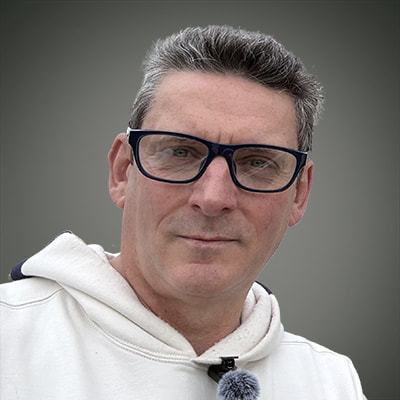
Roy Brindley
Racing, Darts & F1Former greyhound trainer, Racing Post correspondent and a Sky Sports At The Races regular since 2012. Roy brings the paddock yarns, the pace maps and the each-ways that are worth considering.