Also on YouTube Spotify Amazon Music
Roy Brindley sits down with Chris Poole, head of trading at BetVictor and one of the funniest voices in betting on X. Chris has spent 26 years in the industry, starting as a cashier in an A.R. Dennis betting shop and working through Boyles, Paddy Power and Victor Chandler in Ireland before moving to Gibraltar to run horse racing, and now leads a team of 47 traders. He tells the inside story of the Dublin Racing Festival day coup — three well-handicapped horses, a flurry of pound Trixies within minutes, a liability of well over a million and a live interview on ITV Racing asking whether BetVictor would pay. Roy and Chris also get into why old-school odds compiling has gone, how AI lets punters build their own models, where the money really goes, the darts boom, snooker’s struggle for young fans, and why Chris calls himself the Twitter sheriff.
Meet the guest
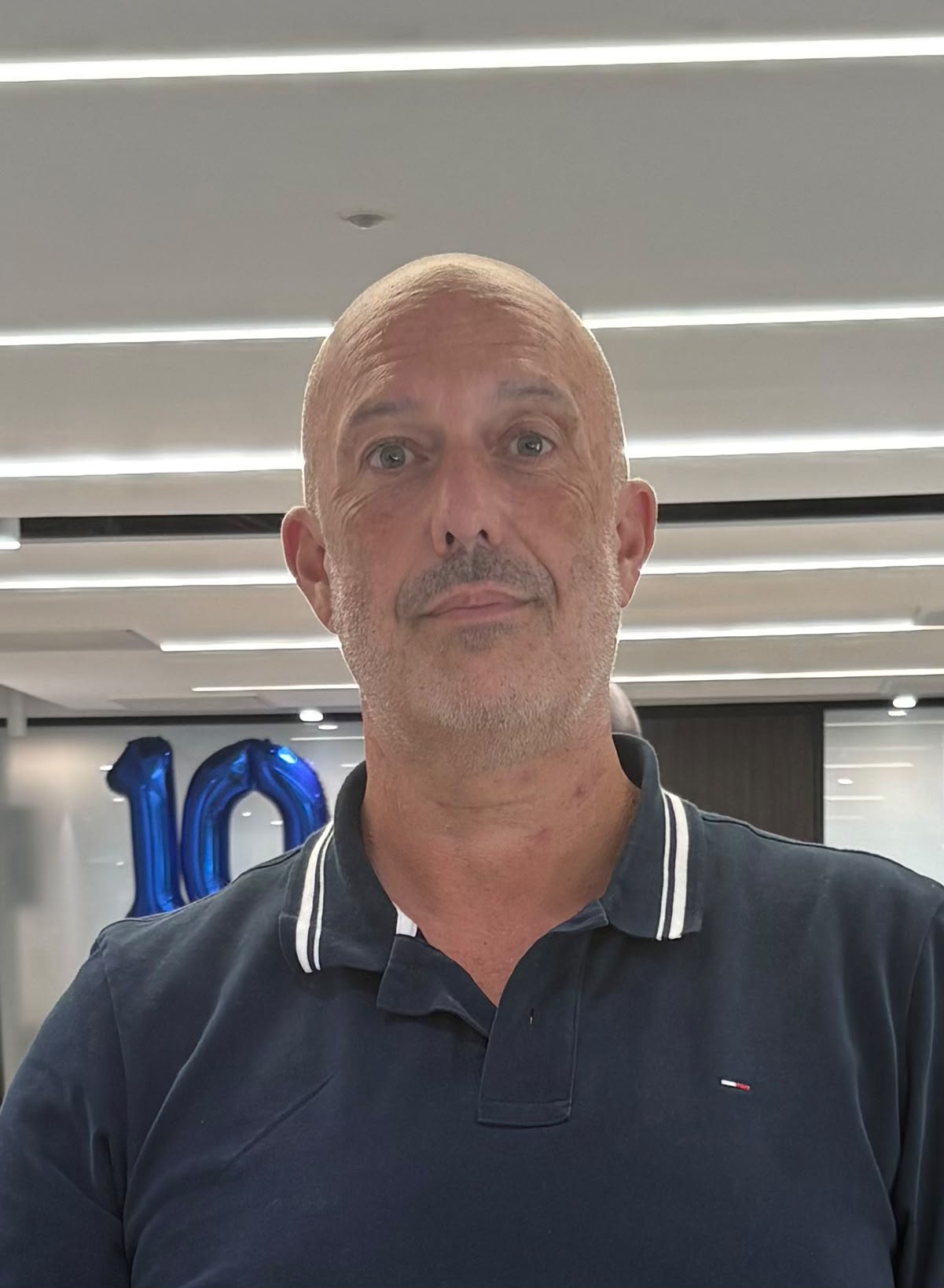
Chris Poole
Chris Poole is head of trading at BetVictor, based in Gibraltar, where he leads a team of 47 traders. He began his career as a cashier at independent bookmaker A.R. Dennis and rose to area manager before moving to Ireland, where he worked for Boyles, in the Paddy Power head office race room and in Victor Chandler’s shops and on-course pitches. When the financial crash hit high-end betting shops in Ireland, he moved to the Gibraltar head office to look after horse racing and worked his way up to head of trading. A lifelong horse racing fan, he is known on X as @ChrisPoole___, the self-styled Twitter sheriff who calls out punters trumpeting their winning bets.
In this episode
Talking points
- The coup that nearly landed: a stack of pound Trixies on three well-handicapped horses, a liability of over a million, and a live ITV Racing interview asking whether BetVictor would pay — Chris tells the full inside story.
- The odds compiler is redundant: Chris argues old-school pricing-up has been gone for the best part of a decade, with almost every firm now within a whisker of the exchange price.
- AI changes the battle: where punters once needed a quant to build a model, Chris says a few quid and an AI tool now let them hunt for edges themselves — a constant back-and-forth between bookmaker and bettor.
- Where the money really goes: football leads, but horse racing still holds second in the UK, with basketball, tennis and a fast-rising cricket close behind.
- Darts up, snooker down: Chris on the Matchroom formula that filled arenas for darts, and why snooker struggles to win young fans.
- The Twitter sheriff: why Chris made a trumpet his profile picture and spends his time gently calling out punters who show off their winning slips.
Transcript
Roy: Hello, welcome to the Odds-On podcast, brought to you by bestbettingsites.co.uk. I’m Roy, and joined this week by, well, I didn’t know how to introduce him, so I went to his LinkedIn page, and it reads: head of a team of 60 traders who love sports betting, 26 years in the industry, starting as a cashier in a betting shop long before they became arcades, and rising through the ranks. Have achieved at every level, possibly overachieved, given my inability to spell or successfully book a meeting properly. Hatred of office politics and clock watchers. Chris Poole, currently and a long-term employee of BetVictor. Thank you so much for joining me, Chris. How was the intro?
Chris: Yeah, not bad. I need to update that LinkedIn. It’s 47 traders now, a bit more automation, but the rest of it’s about right. I could just about book things a bit easier now; Teams has made things a bit easier. I’m probably selling myself shy there. But an industry dinosaur, certainly correct anyway, Roy.
Roy: I love the fact that you spell incorrectly these sentences, as possibly an overachiever given my inability to spell. And you put two spelling mistakes in there. That’s really classy. Chris, I’ve known you for a while.
Chris: I didn’t even know I’d done it.
Roy: I’m sure you did. I’ve known you for a while, and you never fail to put a smile on my face. Your antics on Twitter, X, are legendary. Where do you get your sense of humour and personality from? Because it seems absolutely instant. A new story will break, and you’ll just put a spin on it, which is bang on the money.
Chris: Well, it’s funny, actually. I’ve always tried to amuse, I think. I was the class clown at school, Roy, as they used to call us. But then, in the reports, I was trying to make the girls laugh at school. Well, successfully making them laugh, but it didn’t lead to maybe what I did afterwards. But yeah, I think I’ve always tried to be amusing, trying to make people laugh, and try to enjoy things. I mean, I’ve got quite an easy philosophy on life and, you know, you’re a gambler yourself, and I’ve always been a gambler. What price were we to be born? I don’t know, 10, 12 million to one, something like that. We won the lottery. So, you know, you’ve just got to enjoy yourself. So things do come into my head a lot. Sometimes that’s a good thing, sometimes that’s a bad thing. I like puns, as you can tell, and sometimes puns just hit me. And Twitter was a great outlet for instantly getting out to your followers and other people. Some I thought were really, really good and got 10 likes, and I’m a bit gutted about them, and some hit the nail on the head. But yeah, Twitter’s kind of worked for me because, if you think of something quite funny and snappy, it’s kind of a place to get it out. Don’t earn anything out of it, Roy.
Roy: Yeah, I’m just thinking, with the greatest respect, you’re a backroom guy. You know, people don’t see you at the racecourse, you’re not stood on a stool, you’re not doing your bit, but you’re responsible for millions over the course of a year in bets accepted, liabilities, etc. Twitter is an opportunity for you to express yourself, maybe. Can I say that? I mean, this day and age, there’s so many people reporting live on course, doing blogs from the bookmakers or whatever. It’s only the tip of the iceberg. And people like yourself probably don’t get the recognition you deserve for the work that you do.
Chris: Right, yeah, I suppose, it’s very kind of you to say so. Yeah, I suppose I am. Yeah, I was a bit hidden away. I did a bit of PR work for the firm, going back, and starting, you know, we sponsored the darts at Blackpool, and I got involved in that. I was very into the darts. So I started doing a little bit behind the camera, so to speak. I always fancied myself, actually, as being able to do that type of thing, you know, I feel quite confident. And I’ve never really been sort of shy to come forward and do social media stuff, or even TV work. So yeah, I suppose it is a way to get out there. For a long time, I was doing little kind of daily betting pieces for the firm, which was just kind of a bit like this, recorded on a phone. But we got obviously a little bit more compliant, as you have to, and, you know, I might have occasionally said something on those that, if someone looked back now, maybe wasn’t the right thing to say. So that ended in the end, but I quite enjoy that type of thing, yeah.
Roy: Oh, you did something. I don’t know what it was now. In my head it says three years ago; probably means it’s 10. You joined some dots. So correct me with the story, because this will be wrong. But you went into the office one morning in your capacity, and you found that overnight was a stack of bets in accumulators, doubles, trebles, etc. And you joined the dots of how these horses were related geographically. I thought it was fantastic, and an amazing insight into maybe the way the bookmakers work, old school bookmakers like BetVictor, formerly Victor Chandler. Can you remind me of that story and tell me how you did your detective work? Because it was fascinating stuff.
Chris: Yeah, so I do. It definitely is longer than three years ago. I can’t honestly remember the date, but I know exactly the day it happened. It was at the same time as the Dublin Racing Festival. Because that would have been, it was pretty rare that I’d actually go into the office on a Sunday, to be honest, but it was big racing on. You know, Arc Day and huge days, a Sunday, I tend to go in. And yeah, we kind of walked into very small bets, but placed on three horses. It was actually three horses. One was at Southwell, but the other two were jumpers, which I can’t remember exactly what the racecourse was that they ran at. But anyway, it was too coordinated. It was all within about five, six minutes of each other. Like I say, tiny bets, like pound Trixies, 50p each-way Trixies, whatever. But the prices were absolutely huge. They were, like, off the top of my head, because I’m not prepared for the question, but something like 50, 33 and 20, or something like that. Three huge-priced horses. And the first thought is, well, they’re not trained by the same trainer, you know, owned by the same owner, whatever. Maybe it’s a tipping line, which happens quite a lot. People put out tips and, you know, a lot of the social media things about it. But this was totally different. This was very, very targeted. This was a very small space of time. And the liabilities were massive. Normally, like, the Twitter tipsters or whatever ones, you know, we’ll have those for a lot of money, but those, they’re just guesses, really. But when you started looking at these a little bit closer, they were all really, really well handicapped. For starters, they all had back form, which suggested they were well capable of winning off their marks. And there was also a link to where one of them had been trained before, which was close to the one that it’s trained at now. And anyway, it didn’t take long to kind of work out that two of the people that were down as training them were probably unlikely to be training them. And it was all linked to a very shrewd trainer and, even worse, a very shrewd punter behind it. So we were stuck with the bets. Of course, once you’ve laid those type of things, you know, there’s no hedging involved here. They just collapsed. They kept collapsing. The Racing Post got a hold of it. I mean, I put something on Twitter, basically; I was probably one of the first ones to put it there. But a lot of other firms had seen it. I don’t want to say I was the only person to see it; other firms had seen it. But once the ball started rolling, a lot of people want to be involved, and they want to back them at any price.
Chris: Before long, I remember the treble was 10 to 1. The treble was 10 to 1. Now, taking into account we’ve laid like 40, 60, 33, for tiny stakes, we’re holding nothing on this bet. You can’t get out of any of it. The horses are now ridiculous. The first one went off odds-on and won by half the track. ITV, I actually got on ITV, probably the first and only time I’ve done a live piece on ITV, on Dublin Racing Festival day, because of this gamble. Because ITV had picked up on the traction that the tweet was getting, and the gamble, and the fact the first one had won. And I spoke to Richard Hoiles, who was live on it. Again, a little bit nervous, but all of a sudden I was getting texts from people I haven’t spoken to for years: I’ve just seen you on ITV, or whatever. He asked me on that, will you pay? Of course, like, there was never a doubt that we were going to pay if all three were successful. You know, these are the things that bookmakers battle against, coordinated multiples, but, you know, we’re there to try and battle against this type of thing. There was no corruption involved in the races themselves. I mean, the horses were chucked in, clearly trained for the day, and it was a very, very well-planned coup. But, you know, they weren’t sort of what you would say bent races or anything. There was nobody, like, pulling one up or falling off deliberately. It just so happened that, you know, they were very well disguised, and whatever. Anyway, as it happens… The first two won and the last one got well beat. The last one was, I can’t remember what it went off, but it was an ex-Nicky Henderson horse. Again, was chucked in. It didn’t run very well, and I think subsequently it didn’t run well. They’re not machines, type of thing. So we got away with it. But it would have been hefty. It would have been very hefty. And it was, again, something that started us looking at more ways and means of trying to spot these things, you know, and quicker. Although then again, you take the few pound Trixies, no one’s really that worried about them at the time, and they fly through the system, so to speak. So, you know, obviously there are limits and things with wagers, especially placed overnight. But, you know, anyone’s going to get a pound Trixie pretty much at any price, because if you don’t take those, you wouldn’t be a bookmaker, unless you flag the horses in question up and reduce the liability on those horses. But if no one spotted them and bang, bang, bang, all the bets are in in six or seven minutes, then, you know, there are ways that people can try and kill you, really, and that was one of them. I thought it was fantastic, really. It was exciting. I mean, obviously, if all three had won, I was, you know, up against the wall from the CEO with how much we’d lost. But, you know, I take my hat off, having been a punter all my life and involved in the game. I just thought it was fantastic, the precision and the planning that had gone behind it. Three horses, three different yards, same day as the Dublin Racing Festival, eyes averted. As you know, we’re always careful at Sedgefield and the like during Cheltenham, because, you know, people know that that is a good time to land a plot at an away meeting, because, you know, the eyes of the trading rooms are on Cheltenham. And so, you know, subsequently, we actually, obviously, in the recent World Cup, there was a couple of iffy, or potentially iffy, games in funny areas, you know, all played at the same time as World Cup games. So people realised that eyes were averted during these times. So everything about it was clever. And we were pretty lucky not to pay out, Roy.
Roy: You’ve given me so much food for thought there. The last point you made, the World Cup. You’re hinting at the fact that, I presume this is in the football space, that punters trying to organise a coup like this realise you were distracted, so potentially there were a few banana skin games? Or are you referring to maybe horse racing coups that could have taken place during that busy time?
Chris: Yeah, yeah, basically. Yeah, it’s a good time to have a bet in other areas, where people are busy watching big World Cup games or, you know, as in Cheltenham, big horse races. I think people who are trying to organise a punt or a coup, especially in advance, if they’re going to be able to pick a date, they’d always pick a date. Imagine if England were playing a World Cup game. And, you know, obviously these times weren’t fantastic for that. But if you were going to try and shove through a few multiples on some horses that were, you know, plotted up for the day, and they were plotting it at the same time as England were playing Mexico at three in the morning, or whatever, you can guarantee that the people behind it know the people in trading rooms have not got their eye totally on the ball. So that was kind of the thinking there. I don’t know how coincidental, actually, come to think of it, that day was. I think any day they would have got away with what they got away with, simply because the prices, you know, like I say, it was huge money for very little stakes. Without going into the figures on here, it was well over a million, I remember that, for shrapnel.
Roy: And also, I love the way you say that you tip your hat to them and you respect them, and, you know, almost, I get the sense you’re cheering them on, which I think is really cool. By your own admission, you’re an industry dinosaur, but you’ve touched on there, basically, almost, we’re talking now, I mean, systems and controls. Making the old school bookmaker, you know, assessing liabilities and pricing things up, redundant, or on its way to being redundant?
Chris: Well, I think pricing up’s kind of been redundant for a good, maybe six, seven, maybe as much as 10 years, really. I mean, I do find it quite strange that people invest any money, really, in old school odds compilers these days. If you look at Oddschecker at any time of the day, you’ll see that pretty much everything is the same price, or roughly the same price. It’s all driven by other firms and exchange markets and what have you. So, you know, really, we’ve been really sort of automating odds for a long time now. And unless anything goes wrong, you know, something goes wrong in the system, you will see, like I say, if you go into Oddschecker maybe 11 o’clock in the morning and look at any random horse race or any football match or any cricket match or whatever, you’re going to see all the firms within a very, very small amount of each other. No one’s really taking opinions, because, you know, if you’re taking an opinion and sitting outside the exchange price, you’re just inviting bad business. And you won’t beat it either, over time. You certainly won’t beat anybody who plays bigger than the machine over any period of time. So there is really no point in being outside of that. Of course, we do still have people that are doing ante-post prices and keeping an eye on things there, and football specials. So you do need people with odds compiling knowledge, you know, knowing how to compile a book and making sure you’re betting to the right percentages. But as far as going back, you know, 15, 20 years, when, maybe just over 10, when you would have quite a lot of odds compilers who were actually pricing up races, three or four races a day or whatever, or even more, and, you know, taking opinions, that side of it’s gone anyway. But AI has definitely moved things on, so to speak. I mean, you’re forever designing more kind of things to battle, if you like, undesirable business. Customers are finding more software and designing more stuff themselves with AI. Obviously, you kind of needed a quant or someone very clever to design a model. You know, if you think you’ve got a little bit of an edge, say, on cricket runs, you might think, oh, it looks like it’s too low in this league or whatever, but in the past, you probably needed to, you know, find someone pretty clever to design it for you. But now, you know, with a few quid, Claude or whatever, you can probably design a model yourself and maybe refine it over time. And I think a lot of people are doing that, using statistics to try and find kind of weaknesses in pricing, and you don’t need to find much of an edge. So it’s a different type of battle now, I think. It was very, very obvious, people that had an edge on you in the past, you know, a bit like your blackjack casino card counter, it’s very obvious, kind of, to the casinos, the people that were doing that. But I think people now, with regards to sports betting, I find them kind of differently, different ways in, and it’s a lot easier for them. If they’ve got an idea, it’s a lot easier for them to research those statistics and to build something to, you know, look around and find edges and stuff like that. So yeah, it’s a constant battle. So even though I do, like I say, on LinkedIn, call myself a dinosaur, I think you kind of need these challenges to keep going, to keep our mind ticking over. It is very much a game between the bookmaker and punter, no matter what anyone tells you. Punters will always try and find, or sharp punters will always try and find, an edge, a way to beat you, and the markets, at different markets. There’s things like, obviously, bet builders and the prop bets now, which are massively in bookmakers’ favour. We all know that. But there will be ricks there. And there were statistical things that happened with teams. A lot of transfers over the last few weeks with the transfer window, people going to different clubs and things, and, you know, clubs playing different, managers playing in different ways, and the sharp people will get on top of that, because the prices might well be wrong for a few weeks before the market catches up. So, you know, it’s always interesting trying to find what they’re doing, and we’re trying to counteract what punters are doing, and punters are trying to counteract what we’re doing. It’s a constant battle.
Roy: You’ve got 46 people on your team. Is that correct?
Chris: 47, unless I’ve lost one today.
Roy: Forty… Oh, you didn’t count yourself.
Chris: No, I don’t think so. Yeah, I might count myself. Yeah, 47, so 47.
Roy: Yeah, I mean, I’m just thinking, I mean, it strikes me, the way you’re talking, which I find fascinating, they’re now in charge of building bots and programs and whatever that can tackle… It’s almost like a nuclear war that’s going on, but there’s no missiles. It’s just a case of, by use of the computer and technology, beating the enemy now. I mean, it doesn’t sound like your odds compilers or your decision makers are actually working off of anything other than computer systems and programs, which they’ve got to design and maintain. Is that, am I miles off here? That’s how it sounds to me.
Chris: Yeah, kind of. Yeah, kind of. I mean, we’d probably send people away. Once we’ve found something significant, you know, a certain amount of customers are backing one thing, we’ll probably use a team of people to investigate, you know, whether it is a statistical anomaly, or pricing is wrong, or whatever. So yeah, there is a fair bit of that. I mean, a lot of the traders are dealing with kind of daily stuff, which is queries from customer services and stuff like that. And they’re keeping an eye on what bets are coming in and, you know, seeing if there’s something wrong, you know, with the price, on a daily basis. So we have kind of a ticker; all traders have got those, and you can filter it however you like. So basically, your day is monitoring the bets coming in. And then it’s, you know, Roy’s had 50 quid on something at Cheltenham, that’s all fine. Hold on, there’s a strange bet here, this looks a bit funny, maybe we’ll have a look at that price, check that it’s okay, and if it is or it isn’t. So, you know… The clues are there. You know, we develop more and more kind of… Yeah, maybe not so much AI at the moment, more just an idea with what we think might be going on, and someone going and investigating it. But yeah, AI is changing things in a way. I don’t know how far it can go in the world of trading and betting, apart from, like I say, customers kind of being more savvy, to be able to build their own algos and models themselves, than they once were. You know, it’s interesting, and I don’t know how it will go, to be honest, apart from us all having robot wives and things like that, Roy. I don’t like to think about it. I don’t think about it too much.
Roy: I don’t know how far you can quote your company, but I’m really intrigued, just generally speaking, what are the percentages now in terms of betting? I’m guessing that the bulk of business, in terms of number of bets and also the total amounts, football will be your headline sport. And I’d also take a pot shot that horse racing has probably dropped down to fourth now, but I might be miles out. Can you give us some idea of where the money goes?
Chris: Yeah, obviously I can’t talk you exact figures, but funnily enough, horse racing has held up a lot more than you might think. So football is the leader, globally, obviously, football is. But horse racing’s still up there. I would say just third, globally, and that’s globally. And don’t forget, a lot of countries don’t enjoy horse racing betting as much as the English and the Irish. So that’s where most of it’s coming from. So I’d say, if you just had a UK sportsbook on its own, I would say horse racing probably still sits second to football, with nearly every firm, to be perfectly honest, in the UK. Remember, there’s a lot of horse racing, Roy. There’s not just your English and your Irish horse racing. There’s the American stuff that goes on all night. There’s a lot of it. We’ve got in-play horse racing now, which has gone pretty well, to be honest. I wasn’t too sure that people would bet in play on horse racing, but they do. And I think a lot of that is also, if you just miss the off, you know, oh no, that’s off, but you can still get a bet. So a lot of the action is just after the off as well. So yeah, it’s held up pretty well. The emergence of things like esports, yeah, it’s been slow enough in the UK, to be honest, but in other places, it is lively. That’s kind of one that baffles me, as someone who watches sport, because I like to feel I’ve got a bit of, I’m quite invested in some sports, and I can watch them, and I can cheer for a certain family. I might have Scottie Scheffler for a few quid on a Sunday, and I can watch the golf and try and get him beat. But I don’t know if you’ve ever watched League of Legends, esports League of Legends, but… I don’t have a clue what is going on. And it’s just an absolute, well, God knows, wizards and axes and maps and all that sort of thing. So, you know, that’s one sport I could never properly get invested in, but a lot of people are betting it. So yeah, in short, to answer your question, football is well and away the winner, but horse racing does still hold its ground.
Roy: And rounding out the top five: golf, tennis and one other?
Chris: No, golf isn’t up there. I would say basketball. And tennis. What did we say? Horse racing. So football, let’s say horse racing, joint second with basketball, tennis, and maybe cricket right now, actually, come to think of it.
Roy: See, I would understand cricket.
Chris: Yeah, so cricket’s actually been quite a surprise to me over the last five odd years. Turnover has grown on cricket. And I think a lot of that is, believe it or not, the gung-ho fashion in which England decided to start playing the game, the Bazball tactic, smashing it around, seemed to kind of provoke a bit more interest in cricket from people. And obviously, there’s a lot of the T20 franchises around the world. So it’s not just, like, the Big Bash in Australia, and the IPL, obviously, that is massive. So they know all these players. They know, like, your Ben Stokes and your Harry Brook and all that. They’re used to them from England, and they go and play in South Africa or wherever, for the money. So you’ve got familiar names in franchises. So the cricket kind of keeps going and keeps going. Yeah, and it’s been actually quite a successful, quite a big sport for us now. And it wasn’t, it really wasn’t, sort of 10, 15 years ago. So I don’t really know why. Maybe more people are just watching. I think there’s just more eyes on it. There’s more TV coverage. There’s plenty of opportunities to bet, if you think, you know, there’s plenty of swings as well, especially in, like, the… You know, it can go one way, go the other, and, you know, over runs, under runs. I suppose there’s always constant betting opportunities. Whereas tennis has stayed pretty stable. There’s obviously a lot of tennis content, but it’s not really sort of progressed. Cricket’s actually been on the rise, believe it or not.
Roy: The one that strikes me, beyond greyhound racing, because I still maintain it’s the perfect gambling product, and I know that’s slipping right down the rankings, but the one that really strikes me is the sport of darts. I mean, it seems ideal from the outside. I would imagine that turnover on that is substantial and growing, but tell me I’m wrong.
Chris: No, it is. It is. It’s absolutely growing. Littler has been a huge, you know, factor for the excitement in darts, I think, of late. There’s the MODUS series that’s on daily, which is just content, really, but it’s players, familiar players that you’d know, like Steve Beaton’s back in it. And, you know, actually, Littler came kind of through the MODUS darts, and there’s sort of darts on every day now, whereas there wasn’t before. I mean, that’s not of a high standard, but when it gets to, like, the World Championship, the World Matchplay or whatever, it’s very lively, very lively indeed. In fact, we had a European Tour over the weekend, and that’s not on TV. That’s just on certain channels, PDC channels and things, and that takes a few quid. So yeah, darts is definitely on the rise. I think, if I had to say a success story of how someone’s taken, obviously, what Matchroom did to darts. I love it. I’ve always loved darts, but, you know, what they’ve done to it now to make it so big, to fill venues of 12,000, 14,000 people, is kind of staggering, isn’t it?
Roy: Yeah, no, fair play, it’s been perfectly packaged. I do recall being at a conference 20 years ago, which Barry Hearn, it was an event of his, and he said then, I’ve got no magic wand. I’ve actually just done what they’re doing with WWF in America with wrestling. Just instead of the spectacle being wrestling, it’s going to be darts. And if you look at it, the walk-on music, there’s girls in pom-poms. It is, when you look at it. I go to darts quite a lot. You know, we spoke to Colin Lloyd on here recently. We’re going to speak to a lot of darts players in the future. I’m still quite amazed that, like you say, 10 or 12,000 people turn up to see guys throwing a little six-inch nail at a board that they can’t possibly see. It’s remarkable stuff. And at the same time, it’s gone like that, I could see why it would drop off and people start to say, well, we see more at home. But for now, yeah, unquestionably, Matchroom Sport’s golden goose.
Chris: It’s a night out, isn’t it? It’s a night out. I mean, it’s a big part of it, isn’t it? And people getting dressed up as bananas and things like that. So I think, however many people are there to actually watch the darts, there’s far more that are there for the piss-up, and, you know, that obviously bolsters the crowd. I think it comes with the territory that you get a lot of, I don’t know if Colin mentioned it, you know, like the crowds, the crowd interaction and the booing and the whistling and stuff, which you could probably do without as a player, but then you’ve got to take the fact that you’re getting paid very handsomely. And you wouldn’t have been paid very handsomely if Barry hadn’t got the crowds in.
Roy: So let’s look at the other Matchroom sport then, snooker. Where does that stand with you? I’d imagine that’s fallen right off.
Chris: Yeah, it’s not as sexy as darts, for sure. Yeah, there’s not as many characters as there… The World Championship obviously is decent, and the Masters, but yeah, week to week, the kind of, I think it was the British Open last week. That’s just finished yesterday. Jak Jones beat Selby in the final, and they were saying, I saw on the tweet machine today, they were disappointed that it wasn’t full. And I was thinking, well, do you know what? I’m not sure. Mark Selby versus Jak Jones. I don’t really know much about Jak Jones, but anything with Selby, you know, I’d probably swerve. So yeah, it’s just, how could they? Well, they tried to make snooker sexy with the Premier League, didn’t they, like, a bit like the darts, but it just doesn’t lend itself to… You can’t speed it up. You can’t bring in booze. You can’t bring in… You know, you’ve got the Shoot Out stuff, but it’s, yeah, it’s kind of, I think it’s found its… I don’t think it can get much bigger. Obviously, we’ve got a lot of Chinese kids still coming through, and the quality, but I think you’re either a snooker fan or you’re not. It’s hard to see the youth; they’ve got not much patience, have they, kids? I can see why kids would want to play darts and get into darts and see they’re making loads of money. Stick a dartboard on your wall. Have you got any talent at it? You’re not going to be able to stick a 12-foot snooker table, and, you know, unless you’re rich, you’re never really going to pick up a cue. There’s not many pool tables in pubs anymore, you know. So I kind of think, yeah, it kind of dies a natural death, doesn’t it? And probably when we’re gone, Roy.
Roy: Yeah, I think it might just become a Chinese thing in time. It’s certainly gone that way in the last three or four years, hasn’t it? Right, let’s do an about-face, because that’s what I do. Let’s look more so at your career. 26 years surprises me. I can tell you when we met, because I stumbled into your betting shop in Dublin when BetVictor was called Victor Chandler, and Victor had a handful of betting shops, didn’t he? You managed that. And I can tell you exactly when that was: 2010. And the reason I remember it, and this is my Chris Poole story…
Chris: Oh, Christ.
Roy: I wanted a good-sized bet on Richard Hughes to become champion jockey, and my thought process was that he’d just left his retainer with Khalid Abdullah, he was going out on his own, freelance. He was also dating Richard Hannon’s daughter; they later married. And I thought to myself, if he gets all the Hannon rides, a few outside rides, and maybe a few of Khalid Abdullah’s, even though he’s left, I thought this guy’s, you know, and his strike rate at the time was phenomenal. I mean, 25 to 30% strike rate. I thought, if he can carry that forward… Listen, that’s the reason I placed the bet. But I walked into the shop and introduced myself, and I think I wanted a sizeable wager at 14 to 1. You had to get on to the phone to get the office to authorise it, etc. And while you’re waiting, you pretty much turned around to me and said, well, do you want me to chuck in Richard Hills and Richard Quinn as well at that price?
Chris: Good night.
Roy: I thought, what a cheeky monkey, for want of a better phrase. But from that point onwards, you know, I’ve always respected your judgement. And Richard Hughes didn’t become champion jockey that year. He did the following two years, in, the following three years, 2012 to 2014. You have strong…
Chris: You were ahead of the curve, Roy.
Roy: Yeah, I was a bit too early. I picked too soon. You know, you’ve got strong judgements on things, but I think, through and through, you’re a horse racing man. Would that be right?
Chris: Yeah, I think, yeah. I mean, horse racing has always been my passion, really. I started going racing with my brother when I was very young, 13, 14, used to go to racecourses with him, and kind of picked up on it. My grandparents were punters, albeit small, but they liked to bet every day. So they always had the racing on when I went round there. And, you know, I just saw, who’s that, and what’s this, and who rides that, or whatever, and I kind of picked up that. You know, you wouldn’t want to watch horse racing without having a bet on it. I could see why they were having a bet on it all the time. And then once I went racing with my brother, and he was trying to be a jockey at one point, he didn’t get anywhere near doing that, but he did work for Simon Dow for a while as well, so he was kind of involved. And I just enjoyed it. I enjoyed the whole atmosphere. It was just a different world, wasn’t it, back then, the tic-tac men, you know, getting a ticket rather than, you know, number 968, didn’t say what the horse was or whatever. The skill of the bookmakers back then, I mean, you know, fair play to them now, I’m very vocal on Twitter and I like an on-course bookmaker. But all they do really now is kind of play the game, really. And, you know, they’ve got everything for them. Back then, the clerks writing them all down with such speed, it was kind of amazing. Yeah, I mean, I couldn’t have clerked back then. You know, I did later on in Ireland, but only when the machines came in. But I could never have written them, the speed they were writing the bets down. I mean, it was just a different world. And it was kind of exciting. It was just rushing to get the best price you could, and whatever. And yeah, just kind of found it really interesting. I just really liked it, you know. And I wasn’t very, well, I wasn’t successful at all when I was younger. You know, you learn the hard way, don’t you? And, you know, I didn’t really know weights and measures. I didn’t really understand handicapping. Just picked a jockey, picked a horse, and I learned more, I did. Which I think, I think it’s kind of good to learn slowly more about the nuances of horse racing. I just despair for some of the kids, just kids, adults as well, that, you know, are on the tweet machine and say, oh, this is a rocket, and I’ll back this at any price. And they’ve got no concept, really, of value. And I think maybe if you learn, you know, if you kind of learn the hard way and learn the way the game works, it kind of works out better in the long run. But yeah, I just enjoyed it. It’s every day, isn’t it? Like I say, some days the racing card isn’t very good, but… You’ve always got racing. There’s always something happening. There’s always something a little bit exciting. You’ve always got something to look forward to. You know, when you’re in the flat racing season, you’re looking forward to the jumps and Cheltenham, whatever. And when you get kind of starting to get a bit sick of the jumps, bang, here comes the Lincoln, and you’re into the Guineas. And there could be a star around the corner as well, I think, is the main thing. I mean, I never got to see Frankel live, unfortunately, but, you know, without a shadow of a doubt, it’s the best horse I’ve ever seen. He won the Guineas. Incidentally, Victor Chandler had laid half a million at evens, which was quite a well-publicised bet at the time. Fella wanted a million, but laid him half a million, which is a fair bet to lay. This was slightly before my time in the office, as it happened; I was still in Ireland when Frankel won. But we all said, right, we’d better watch this, we’d better get this beat. And then after, like, two furlongs, it’s 15 lengths clear, and you’re like, well, he must have gone too fast, he’s gone too fast. And he goes and wins, like, the most impressive I’ve ever seen. And, you know, I remember ringing my brother just after that and saying, what the fuck have we just seen there? I mean, I’ve never seen anything like it. And, you know, you knew then, well, you might have known as a two-year-old, some people picked up on it then. It was very special. So you never know when you’re close to getting a star, you know? And you just hope that one wins the Guineas and then wins the Derby or whatever. And sometimes you don’t even need… I never bet on Frankel. He was 10-on or 8-on, but it’s just good to watch. I enjoyed watching the sprinter in Hong Kong last night, Ka Ying Rising. You know, you’re never going to bet that, when it won at whatever it was, but, you know, just seeing a really talented horse is kind of a poetry thing, and, you know, even talking about it now, I still think there’s life in the old dog, especially abroad, where the finances are slightly better. And I think I’ll probably keep enjoying racing until they ban it, or I die, probably.
Roy: Oh, okay. Well, let’s not consider banning horse racing, because a lot of people would die, because in fact they need it in their life, shall we say.
Chris: Yeah, including the horses.
Roy: Give us a bit more about your, you know, what was your first step in the industry, and where did you start then?
Chris: So I left school at 16, well, just before 16, or 15, just coming up to 16, and I didn’t know what I wanted to do. Although I was a very keen punter at the time, I didn’t really envisage working within the industry. I went to work for a bank, which was as boring as you’d imagine. Had about two years in a bank, and literally, I was getting pretty bored with it. And it was Barclays Bank, and they were automating quite a lot of stuff, and they offered voluntary redundancy, which wasn’t a lot of money for someone who’d only been there two years. But as it happened, I was getting bored with it; it didn’t really seem to be my type of thing. And I saw an advert in the window of A.R. Dennis, if you remember A.R. Dennis, an independent bookmaker in the south-east of England, south of England, a few in the Home Counties. And yeah, I just basically went in and asked to go. And I’d literally been 18 probably two weeks, excuse me. And I applied for that. I got the job. My mother was absolutely gutted that I’d left a bank, you know, career, to go and cashier in a bookmakers, but, you know, she accepted that was what I was going to do. And I just kind of went through the ranks at A.R. Dennis. I really enjoyed it. I thought it was amazing working in a shop, probably because I could watch every, well, not at the start, it was Extel, but soon I could watch every race on SIS. And that was it. So that was a plus. Those days, obviously, there was no machines in shops. They were all horse racing punters. They were very, very busy at times, some busier than others. I just made my way through there. I became a manager for them and then sort of like an area manager, where I had a few shops. And then they sold to Ladbrokes. I didn’t want to work for Ladbrokes. You’ll like that. I didn’t want to work for Ladbrokes. Yeah, because I knew people who worked for Ladbrokes; they were on a lot less money, and I didn’t really kind of like them. So I got out of the industry for a little bit of time, doing a bit of other things. I did sales, believe it or not, door-to-door sales, Roy. You can believe that, can’t you? Selling gas and electricity. But eventually, it’s like a vortex, this industry. It sucks you back in. And I went to work back for an independent, and got on okay for them, was quite happy just managing shops, and they paid quite well, and they were good lads, and whatever. Perfectly happy. And then my world was turned upside down when I met my now wife on a lads’ holiday in Gran Canaria, believe it or not. She was Irish. I ended up living in your neck of the woods. And so I ended up moving countries, really. She came to live with me in England. I then went to Ireland, and without a job, but knowing that the betting industry was flourishing in Ireland, I didn’t have much doubt I’d get a job. Went to work for Boyles in a shop. And then Paddy Power rang me, and they’d seen my CV, which I’d sent them, and they said they might have something interesting for me in their head office, which I hadn’t really thought about, to be honest. I quite enjoyed shops, but, you know, it was something different. And I ended up going to work for their head office in the race room, basically, out the back of the race room, answering the calls from the shops when someone like yourself had gone in and asked for a big bet on Richard Hughes. The shops would obviously ring up; then it wasn’t automated. And we’d say, they can have 200 quid, or we’d refer it to a trader in the room, or in the front room, or whatever. And that kind of, from that stage, got me involved in, you know, if you like, office mentality and that side of it. I probably misjudged it, in that I thought that everyone was a genius in trading rooms and whatever, and I probably wasn’t as clever as them. But I soon realised that I probably was, and I fitted in well, and I got on really well there. I was quite happy. Then Victor Chandler came into Ireland. And I kind of met Ian Marmion, who you know well, and I went for a kind of just explorative, seeing what they were doing, because I thought, well, you know, I wouldn’t mind being at the start of something. They were moving into Ireland, and Paddy Power was obviously a huge organisation, and if I wanted to get anywhere there, it was going to be slow progress. So I thought this was quite interesting. And then it was interesting. I worked for Victor Chandler in Ireland, in the shops and on course. Really, really enjoyed it. If I had to probably name the time of my life where work was fantastic: we got autonomy to do different stuff, we put TVs in windows and speakers outside, and, you know, high-end shops, and offers on this and offers on that. We did the poker tour around Dublin. You know, I learned so much, and it was great fun. It was great fun. We always had good fun doing it. And like I say, we got to make a lot of decisions ourselves. Unfortunately, the wheels fell off, out of high-end betting shops in Ireland, when there was a crash. And I was offered a job back in the head office in Gibraltar, looking after racing, because the lad who was doing the horse racing there had moved on. So that was a departure. And that’s kind of what ended up, I ended up doing horse racing there, progressed to head of trading. And that’s the story, Roy, in quite a long nutshell, which is where I am now. As with all things, being born, whatever, 12 million to one, blah, blah, but also the clashes of things that make you end up where you are. I mean, you know, there was never any desire to move to Gibraltar and work for a gaming company. I would have said, if someone had asked me to price that up when I was 20, it would have been any price. But, you know, it’s worked out quite well. Perfectly happy. Well, the company are very decent to me. Family of three kids, youngest 10. Still with the wife I met in Gran Canaria, even though Dublin didn’t destroy me too much.
Roy: That was trying to get 20s on the machine.
Chris: Yeah. Yeah, no, it was. Probably earlier today, actually, as well. We won’t go into that.
Roy: Oh dear. OK, we won’t go down that route. That is a fascinating story. I didn’t realise you’d worn so many caps, to say the very least. Just a little anecdote here that I remember reading: you turned up one day in Ireland at the racecourse to trade on course. You left the float at home. The horses are on the way down to the start before anyone realised there was no money in the bag. Is that true?
Chris: That was our firm, but not me, and I’m not going to say the person. It wasn’t me. I was very much the payout man on course. I’ll tell you what, though, I did really enjoy working on the racecourse in Ireland. And I was generally doing the payout. We had Bill Tye. I think you might have met Bill. He was Victor’s racecourse man. He came over to Ireland and ran the pitches. I learned a lot from Bill. Very, very good man. Very funny man. But sharp, very sharp. As you can imagine, Victor’s right-hand man. And I was kind of just a bit part there. I was just kind of paying out. And occasionally, very occasionally, I did the kind of clerking, when the girl that did it wasn’t there. But I did end up getting hypothermia, pneumonia, sorry, from working at Leopardstown over Christmas one year, when it was absolute brass monkeys. I had the flu. I shouldn’t really have been working, but as people will know, in that game, you can’t have a day off. We only had a team of three people. You know, I had to work; I wasn’t going to let the lads down, so I worked anyway. I was really, really ill all day. It was fucking freezing. They threw out, in a late stewards’ inquiry, they threw out a horse and promoted Ruby Walsh and Willie Mullins’ 7-2 favourite. Everyone had thrown their slips away. It was absolute carnage. It was probably the worst, busiest day. I wanted to die. I went back to my car. It was so cold. I sat in there for an hour. And then about three days later, I ended up with pneumonia. I was off work for about five weeks. So that wasn’t a good side of an Irish racecourse, but I think, yeah, I mean, those days, I really, really enjoyed them. I mean, I got to see Beef Or Salmon and things like that, you know, going against them generally, but you get that. You’ve done all the work there, the race is off, and you’ve pretty much got a great vantage point to see. And Irish punters, Roy, as you know, are fantastic. Absolutely different breed. You know, nothing against English punters or UK punters whatsoever; I’m obviously an Englishman. But if I was to go to Sandown now, decent enough atmosphere, maybe a few too many on the other stuff, and maybe not as enjoyable a day. But I always found in Ireland that everybody was focused on the racing. Yeah, they were having a pint, but they all liked to bet. It was very good-natured. You never saw any trouble. Never saw a fight on an Irish racecourse, you know, just kind of a different vibe, especially around Christmas, the Leopardstown meeting at Christmas. Really enjoyed that. You know, a nice friendly vibe, and whatever. So yeah, those Irish days were good, Roy.
Roy: Yeah. It’s interesting, that, because obviously I’ve now lived in Ireland for 25 years or something, but I do recall, the second day I was in the country, I went down to the local paper shop, picked up a Racing Post, went to pay for it, and the woman behind the counter, elderly woman behind the counter, said… Oh, well, I think Danoli’s racing today. And I just thought to myself, would I walk into a paper shop in the UK, pick up the Racing Post, and someone say, oh, you know, Desert Orchid’s running? You know, it just struck me then that it’s a real big cultural thing. It’s a very different thing. Listen, one last question, because I’ve taken up loads of your time. Tony Bloom famously worked for Victor Chandler.
Chris: He did.
Roy: And was gambling at the same time, to a point where he turned around to Victor and said, I’m sorry, I can’t afford to work for you anymore, sort of thing. Have you ever considered going on the other side of the fence and making punting pay, rather than, you know, striking the bets rather than accepting them?
Chris: Yeah. I’m not good enough, Roy. I’m not disciplined enough, or clever enough, I don’t think. I’ve done all right over the years, mainly due to, you know, being in the right place at the right time occasionally, or getting a little bit of information here and there, which is mainly gained, you know, from working where I work. So if I wasn’t working there, I wouldn’t maybe potentially have the information. But my Achilles heel has always been discipline. You know, it takes a punter to know a punter, and, you know, I’ve lacked the discipline. So I wouldn’t fancy my chances of being disciplined enough. I’d fancy my chances, probably, of just about being able to make it pay; whether I could make it pay enough to maintain children and a wife and a mortgage, maybe not. I just wouldn’t see myself, I definitely wouldn’t see myself as disciplined enough. And, you know, to be mentioned in the same sentence as Mr Bloom is an honour. But no, if I’d done anything, going back, you know, I definitely would have liked to have set up something off my own back, or with other people, like, you know, maybe something very betting related. Maybe I would have been able to crack that, using the accumulated knowledge over the years. But actually just purely punting? Nah, I wouldn’t have made it, Roy. Definitely wouldn’t have made it.
Roy: That is refreshing to hear, because there’s a lot of judges out there, and you give yourself a fair assessment, which, yeah, kudos to you. Chapeau to that, man.
Chris: I’m a flawed judge. I’m a flawed judge, Roy. That’s what I’m like. What was his name? James Pickles. Judge Pickles.
Roy: Don’t know.
Chris: I’m a flawed judge.
Roy: Okay. I like to think, when people say to me about gambling, I know the angles. I just know when they’re good enough to adopt and endorse and stick to any of them. Listen, we’d better draw this to a close. Remind me, and the people out there listening, your Twitter handle, or your X, shall we say.
Chris: Yeah, it’s @ChrisPoole___, Chris Poole with three underscores after the Chris Poole. The picture is a trumpet, because I like to dig out people for trumpeting winning bets, or cunningly trumpeting bets of 20-to-1 shots into evens, and showing the bet on the day that it runs at evens, or whatever. But most people take it, I’d say most people take it in the spirit. It is meant, Roy, which is meant to be very light-hearted. Although, that said, I do find it quite fascinating that people want to show off their winning bets so much. And I’ve always found that a strange thing, even going back to when you were punting in betting shops, to the fella that, after the race, showed you his slip, I’ve had 20 on that, or whatever, and didn’t show you when he backed a loser. I always find it kind of a strange thing to brag about. I mean, if you had a lucky, maybe you’ve had an accumulator up or whatever, you know, maybe that’s fun, for a quid, but there’s too much of it. So I try to sheriff. I call myself the Twitter sheriff, to try and stop people, and maybe shame them into having to think about why you would. You know, it feels like a bit of a rub-down as well, doesn’t it, if you backed another horse in the race, or whatever, to trumpet your slips. And there’s no lack of trumpets on Twitter on a daily basis. So that is why I have the trumpet handle. And if you follow me, you’ll see that that’s what I do, is try and sheriff that nasty old tweet.
Roy: Chris Poole, the Twitter sheriff, who’s also fantastic on Spaces on Twitter, I want to drop that in. Thank you so much for joining the Odds-On podcast, brought to you by bestbettingsites.co.uk. I think we should both say, please do always gamble responsibly, everyone. Maybe learn by our mistakes. And Chris, finally, thank you so much. It’s been an absolute pleasure, an honour. And yeah, you’re a really interesting chap. So thank you so much for joining us.
Chris: Pleasure, Roy. Absolute pleasure. Good to speak to you.
Roy: Talk to you very soon. Thank you, Chris. Cheers, buddy.
Chris: Cheers.
Read full transcript
Your hosts

Roy Brindley
Racing, Darts & F1Former greyhound trainer, Racing Post correspondent and a Sky Sports At The Races regular since 2012. Roy brings the paddock yarns, the pace maps and the each-ways that are worth considering.