Roy Brindley launches the Odds-On podcast with one of darts’ most colourful characters: Colin “Jaws” Lloyd, former world No. 1, 2004 World Grand Prix champion and 2005 World Matchplay winner. Now head of player development at Red Dragon and Winmau, Colin names the three teenagers he believes are the next Luke Littler, lifts the lid on the Winmau Blade X controversy from inside the company, and reveals what touring pros really pay to chase the dream — “you are gambling.” Along the way: the prize-money explosion, the night he punched a dartboard, why champions fall off a cliff, and his all-time top three, with Littler only third.
Meet the guest
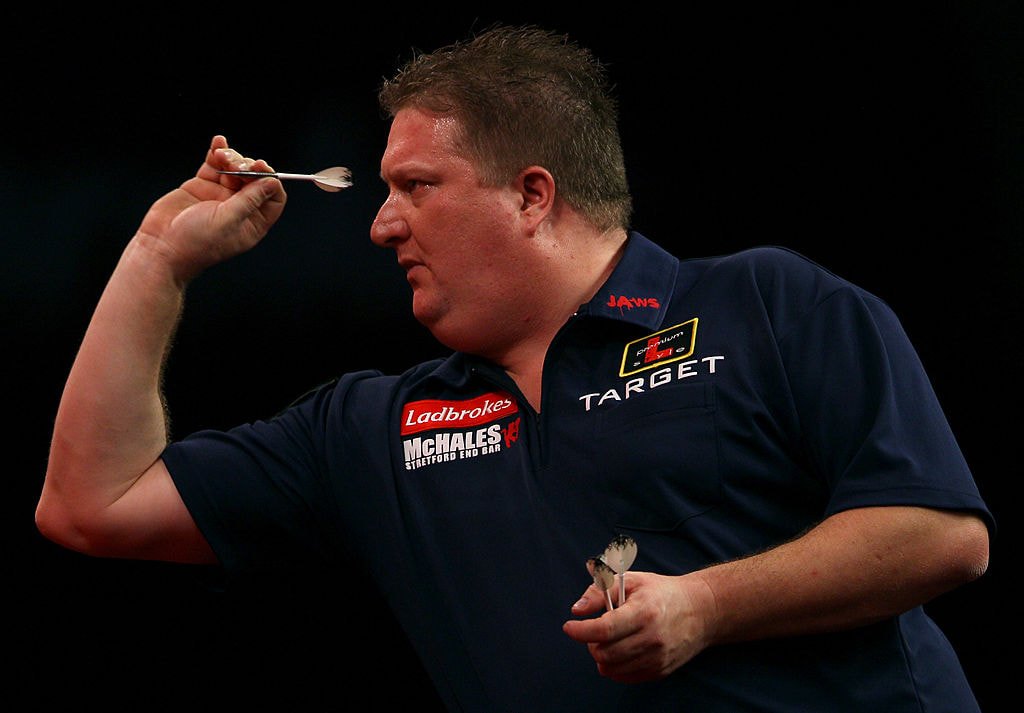
Colin “Jaws” Lloyd
Colin Lloyd is a former professional darts player who reached PDC world No. 1 and won two major titles in the mid-2000s: the 2004 World Grand Prix and the 2005 World Matchplay, the latter sealed with a famous 170 checkout in Blackpool. One of the few players who could go toe-to-toe with Phil Taylor at his peak, “Jaws” earned a reputation as one of the game’s most flamboyant and popular characters. Today he is head of player development at Red Dragon and Winmau, mentoring the sport’s rising stars across the ProTour, Women’s Series and junior events, which puts him in the perfect seat to spot who’s coming next.
In this episode
Talking points
- The next Luke Littler: Colin names three teenagers to watch — Mitchell Lawrie, the Scot breaking Littler’s youth records, plus Kaya Baysal and 13-year-old Jack “Jacky Boy” Johnson, who has already beaten tour pros.
- The prize-money explosion: the £25,000 Colin won for the 2005 Matchplay is £225,000 for Littler this year — and £1m for a world champion. He asks when, or if, the bubble bursts.
- “You are gambling”: the real cost of life on tour, where pros pay their own way chasing the top 16 with no safety net.
- The Winmau Blade X row: from inside the company, Colin addresses the criticism from Gary Anderson and Gabriel Clemens, points to PDC data showing fewer bounce-outs, and blames shipping delays over any design flaw.
- The all-time top three: on their day, Taylor, then van Gerwen, then Littler — Colin explains why he still ranks Littler third.
- Respect for Beau Greaves: “a lovely person, fearsome on the dartboard” who has earned the respect of the entire ProTour, alongside big-winners-in-waiting Wessel Nijman and Jermaine Wattimena.
Transcript
Roy: Hello, welcome to the Odds-On podcast, brought to you by myself, Roy the Boy, courtesy of bestbettingsites.co.uk. Joined today by Colin Lloyd, one of the most colourful characters in darts, a real flamboyant, fun player who won himself many fans. I’m not certain about his stripping-off antics, but Colin, we’ll get to that later. Colin was one of the very few players who could go toe-to-toe with Phil Taylor when bringing his A game to the party. He won his first PDC major in 2004, which was the World Grand Prix, and then a famous victory in Blackpool in the 2005 World Matchplay. In doing so, he lifted the trophy courtesy of a memorable, decisive 170 checkout. Colin, thank you so much for joining me. I hope that intro is okay with you.
Colin: Absolutely class, mate, and thanks for having me.
Roy: Right. First question: what are you doing these days?
Colin: I’m actually head of player development for Red Dragon Winmau. So basically, I look after our current crop of players, find out if there’s any needs. Is there anything they need, not just with darts, flights and stems? Do they want to have a chat? Are they okay with everything? But also, I source new players. So that means I go to ProTours, Women’s Series, Challenge Tours, Development Tours. I get to go to Gibraltar for the JDC Championships, which is obviously the Junior Darts Corporation. So I’m kept quite busy, Roy, if you know what I mean.
Roy: Right. Sounds to me like you’re ideally positioned to tell us who the next Luke Littler is going to be.
Colin: Listen, mate, there’s quite a few. There’s two outstanding players, possibly three. There’s a young man up in Scotland called Mitchell Lawrie. He’s actually breaking all of Luke Littler’s records in the youth, so he’s either just turning…
Roy: I’m making a quick, urgent note of that. Mitchell Lawrie.
Colin: Yeah, yeah, Mitchell Lawrie. I think he’s going to be 16, so I think he’ll be at Q School in January. Another young man from Burnley is Kaya Baysal. Kaya Baysal is an extremely good player also. So they’re two of the biggest names that are possibly going to be pushing through and trying to get a tour card for next year, Roy. But also, there’s another young man, but he’s only 13 or 14 at the moment. His name is Jack Johnson, Jacky Boy Johnson, and he’ll certainly be a player to look out for in the future. He’s just become the UKDA National Men’s Singles champion, funnily enough, in the old WDF sort of system. He beat two players who play on tour in the PDC ranks at the minute. He beat Martin Lukeman and he beat Owen Bates. So he’s certainly one for the big stage. All three of them are players for the big stage, and they’re certainly the three big names to watch out for coming through the youth system.
Roy: You mentioned Q School there, forgive my ignorance. I mean, Luke Littler famously made the World Championship final aged 17. What age can you join the pro ranks in, 16?
Colin: 16, yeah, you have to be 16. And it’s right, you can’t be any lower than that, Roy. You know, you’re going to be travelling, there’s going to be things where the parents are possibly need to go. The parents need to go with the youngsters as it is on the youth tour or whatever. So the PDC, you know, they had to make a cut-off point, and that’s the age of 16.
Roy: Yeah, I’ve got to say, when I was 16, I was packed off to bed at half past nine, 10 o’clock.
Colin: I was in the pub playing.
Roy: I never doubted you, Colin. I never doubted you. Right, listen, you were at the World Matchplay this year. When you won it, you collected £25,000. Inflation since then has gone up by 58%. I Googled that. But this year, Luke Littler got £225,000 for winning the tournament, and of course the World Championship is now a million to the winner. When you were ranked and seeded number one, the winner got £60,000. This money has gone absolutely crazy. Is the bubble going to burst? Where’s it going to end?
Colin: Well, it’s not ending at the minute. It’s been huge, the darts, since Luke Littler’s come along, Luke Humphries. Everybody thought, where’s the next battler going to come from? Phil stepped away. Michael van Gerwen took on that mantle. He was the man to beat. In some ways, he possibly still is if he turns up with his A game. But darts is just alive at the minute, and there are so many companies and so many people, Roy, that want to be part of it. I don’t know if you’ve seen on social media, they’re recording a Netflix thing with Luke Littler. He’s going to take on 20 players, and whoever beats him gets £501,000. So at this moment in time, it just seems to be going like that in the world of darts. It just keeps going. It’s like a rocket ship. It just keeps going up at the minute. It’s got to burst at some time. You think it has, you do. Well, with all these young academies as well, Roy, these academies are great. You’ve got your coaches, parents take the kids along. It’s fantastic for darts. But at a lot of these academies now, there are 30, 40, 50, 60 kids waiting to get in because they’re so full. It’s just madness.
Roy: Yeah, two thoughts. The Netflix thing elevated Formula One. It brought an entire, huge new audience. If you did that for darts, bearing in mind how big it is already… We waited a long time for the big Chinese invasion. We got the numbers, but now suddenly they’re getting the results. Darts is still a domestic thing. I know the PDC is showcasing Madison Square Garden but, let’s be honest, it’s not in Madison Square Garden. It’s in the little theatre room off to the side. When will the rest of the world come online, and might we start to see loads more North American and Chinese players? Are you expecting the rest of the world, or are they not built that way?
Colin: Well, I think at this moment in time they’re already doing it. You’ve just had the World Series events. It gives local star players a chance to qualify to play against the very best. The boys have just been down to New Zealand and Australia. Like you say, at Madison Square Garden, the top Americans and top Canadians are there. We have a thing over there called the CDC, which is an arm of the PDC, trying to develop, bring big sponsors in and get youngsters through into the game as well. For some reason, Roy, at the World Cup of Darts and things like that, you get teams coming from Asia, but no one really seems to be pushing along. The only person you see here with any consistency is Mikuru Suzuki, the lady player from Japan, playing in the Women’s Series. I don’t know if it’s a case of the men, dare I say, thinking they’re not good enough, but the opportunities are there. If they go to Q School, they don’t have to come to the UK. If you’re from the British Isles, then you do have to come and play in Milton Keynes. But while qualifying is going on there, there’s also a qualifier in Germany for the rest of the world. So they can all go to it. Listen, like you just said, I won £25,000 for winning the World Matchplay in 2005. Luke Littler bagged £225,000 this year. That’s just one tournament. A million pounds to the winner of the Worlds. There’s £350,000, I think, to the Premier League champion. Would I like to be playing now, with the money that’s involved? Yes, of course I would, but I know I’m not good enough. I had my time. For someone now who wants to be a professional darts player, there’s some serious money to be earned, Roy. You know the game as well, because we’ve known each other a long time. You’ve followed and seen what I’ve done and what I used to play for. I saw what you used to play for when you were playing poker. The game has come on in leaps and bounds, so there are plenty of opportunities for people. It’s just a matter of taking yourself out of your comfort zone. If you think you’re good enough, don’t look back in 10 years and say, “Do you know what? Perhaps I should have had a go.” If you’re thinking it, do it, because you’ll regret it. We’re seeing so many new faces now coming to the world of darts. It’s brilliant, and that’s what’s keeping it fresh. All the so-called old guard, the people who have been in the rankings for so many years, are now having to look over their shoulders because they can see the fresh talent coming through. And my God, is it fresh talent. It’s not just talent. It’s people who are going to look at you, as they did with me, and say, “Get out of the way, old man. You’ve had your day. It’s time for us now.” That, to me, is what keeps the game fresh.
Roy: Gary Anderson, veteran, same age as yourself or thereabouts, still doing it.
Colin: A couple of years older. A couple of years.
Roy: James Wade, I mean, he’s recently back in the winner’s rostrum. I’ve got to ask you, and I won’t use you as an example, but maybe I will. Your game, it went down quickly.
Colin: It did, yeah.
Roy: Peter Wright, I mean, two or three years ago, the man. And where is he now? He’s just fallen off a cliff. Sorry, Peter, but it’s a fact. What happens? Is there a reason for this? The snooker boys go on for generation after generation. We’ve still got the class of ’92. Darts seems a very, very quick drop-off when it happens.
Colin: I think it’s because, in some ways, it’s the individual. It’s the individual. I hold my hands up. I got it in my head that I wasn’t good enough anymore, and I started really trying. I’ve said it before, so many times, Roy. Something that I used to find so, so easy all of a sudden became so difficult, and I can’t put my finger on the reason why. I don’t know whether something broke inside. I still had that grit and determination about me, but I just wasn’t getting the results. When you start on the slide, you’re trying to dig your heels in to stop it. People keep saying to you, “Well, you’ve only lost 6-5, 6-5, 6-5, 6-4, 6-5.” It doesn’t matter. You’ve still lost. With the ranking system, it’s a money list. When you’re defending money from two years previous, say you’ve won a ProTour. A ProTour, when I was winning, was about £6,000 to the winner. Now it’s £15,000. But when you’re defending £15,000 from two years previous and you don’t win that first-round game, you’re thinking about it. I never used to think about it, but I started thinking, “God, if I don’t defend that £15,000, I’m going to drop from number 32 down to number 47,” and there’s nothing you can do about it. Unless you’re winning, you cannot stop it. Then the pressure mounts, and it feels like I’ve got a gorilla on each shoulder. It starts off as a couple of little monkeys, then all of a sudden it gets heavier and heavier and heavier. It’s hard. You still think you’re good enough. You still feel you’re good enough. Away from the pressures of the sport, you’re still playing well enough. But when it comes to saying, “Game on,” and it really matters, it’s just not there anymore. Someone like Gary Anderson or James Wade, you have to take your hat off to them because of their longevity, and they’re still prolific winners. I doff my cap to them because they’re both sensational players and they’re both good lads.
Roy: Sounds okay. I’ve known you a long time, as we’ve covered, but you’ve lost a lot of weight.
Colin: No, but you’re trying to say I was fat. I was, I’m just agreeing with you.
Roy: Like I say, I have those pictures of you taking your shirt off on stage.
Colin: Yeah, so it’s verified.
Roy: But no, the question is, why is it that when you say “darts player” to the man in the street, they immediately think of someone that’s hefty, someone that’s carrying a bit? That can’t be an accident. With the exception of your old mentor Rod Harrington, maybe Luke Humphries now, or Wessel Nijman, the bulk of darts players are on the big side. I’ve spoken to Wayne Mardle about this, and he says it’s just part of the lifestyle. You’re living in a hotel, ordering takeaways and pizza after you’ve been playing, raiding the minibar. But is it a certain thing? Is it an ingredient? Do you need a certain lofty physique to be good at this game?
Colin: No, not at all. You choose that lifestyle. No one tells you to go out and eat a burger and fries after you’ve played darts. You could have a Caesar salad or whatever. It’s your lifestyle. You choose it. I hold my hand up: I liked a kebab. I liked a steak with all the trimmings. Dare I say it, when you’ve had a little bit of alcohol, you get the munchies. Everyone gets the munchies. But let’s get the record straight. When you look at a lot of the players now who are at the very top, you’ve got the likes of Nathan Aspinall. He keeps himself fit, does a lot of running and swimming. Ross Smith does a lot of running and swimming. Chris Dobey. They’ve all realised now that you need to start looking after yourself. Look at Gezzy Price. Gezzy Price came into the game as this big, solid, muscular former rugby player. Look at Gezzy now. He’s trimmed down and is getting himself fitter because, as I’ve said before, and I don’t want to keep bleating on about the money side of things, you have to stay fit in that situation. People always say of darts players, “They’re just fat slobs who drink beer all the time.” Well, why is it that when we have other sportspeople come in and stand on that World Championship stage in front of 4,000 people; they look at you and say, “How do you do it?” Well, I’m told I’m fat and unfit, but you can’t play in front of that crowd. “I can’t play with a crowd like that. God, the noise and everything.” Well, we adapt to that. Phil Taylor’s weight was like that. It didn’t stop him becoming a 16-time world champion. John Part was a big lad. John Part still is a big lad. It didn’t stop him becoming a three-time world champion.
Roy: I’ll jump in there, Colin. I will say this. I remember when Phil Taylor got sponsored by Weight Watchers and his game went out the window.
Colin: Oh yeah, that’s fair enough. That’s fair enough. But people look at the weight side of things and the alcohol side of things. How about looking at a little bit of what people have got about them, a bit of talent, hitting a segment that big from seven foot nine and a quarter? Most people in life have thrown darts. Everybody who’s ever stepped foot in a pub has thrown darts just for a bit of fun. Everybody’s thrown a dart, and if I had a penny for everyone who said, “I don’t know how you do it,” I said, “I don’t know how I do it, but I do it.” Everybody has their firm favourites, the fans’ favourites. Like them or loathe them, a lot of people don’t like Luke Littler at the minute. I don’t see why. He’s just a very, very talented young man who, when he puts his mind to it, can absolutely destroy people. I just say to people, enjoy it. Just enjoy watching the darts. Don’t worry about his shape. Don’t worry about his antics or anything like that, and I’m not picking on him. Everybody’s got their own little way of doing things. Peter Manley was like the pantomime villain. Just enjoy it. Enjoy the richness of how talented the players are, everyone from one down to 128 in the system. They’re all there for a reason. They’ve got off their backside. They’ve worked extremely hard. Whether they’re fat, thin or medium, whether they started off thin and are getting fat, or fat and are getting thin, just look at what they’re trying to achieve. They’re trying to better themselves in life. It is a job. People think it’s not a job. It is, and it’s a very, very hard job. It can sometimes be a very lonely job. If someone finds comfort in eating a bag of sweets or a bag of chips after a triumph, knock yourself out. It didn’t do me any harm.
Roy: Not new territory. Sebastian Vettel was winning everything in F1 for a while. He’d stand on the podium and be booed. Steve Davis in snooker, everybody used to love seeing him get beat, because you can be an outstanding talent and, when you start winning everything, for some reason the crowd does turn against you. Listen, you’ve mentioned other tournaments that I didn’t know existed. I’ve gone through the list. I want you to give me a little bit on the lifestyle of a travelling pro, a workmanlike journeyman darts player trying to make a tidy living. There are eight PDC televised ranking events. There are a further three Sky-televised events which are listed as majors. There are 15 European Tour competitions and seven World Series events. This year there are 34 Players Championship competitions, and if you’re amongst the top six elite, there are 17 Premier League nights to contend with. They’re just the ones I’ve found. You’ve opened up a whole fresh new bag for me. Is there too much darts? Surely this burnout has got to happen.
Colin: Have a look at the ticket sales, mate. There’s no burnout in sight. But listen, I know what you’re saying. It was talked about a couple of weeks back. A guy called Phil Barrs had an interview with Barry Hearn, and a lot of players are pulling out of events. They’re pulling out because, firstly, they don’t need to go because they’ve got enough ranking prize money to guarantee themselves into everything. Secondly, they want to have some time with family and friends. Thirdly, they just don’t want to go to these places. And fourthly, if they don’t have to, they don’t have to. It’s as simple as that. From a fan’s perspective, I think the fans love it. I don’t think they can get enough of it. But for the players, it is very taxing and very tiresome.
Roy: How many nights away from home would a player ranked 48th, trying to break through to the 32 and then the 16, spend per year, do you think?
Colin: Away from home? Well, yeah. To give yourself the best advantage, like we were chatting about before we came on air, there were ProTours on Tuesday and Wednesday. They would have gone away on the Monday, and they’ve probably gone home this morning if they had a bit of a run. So that’s three or four nights away for just one event. You’ve just reeled off how many events you’ve found. I would say someone ranked in 48th place, if they qualify for a couple of Euro Tours and whatever, is going to be away 180 or 200 nights a year.
Roy: That’s more than half their life. So this takes us back to hard work and dedication.
Colin: Yeah, it’s required. The thing about it is, you know yourself. We’ve known each other a long, long time, and we’ve had the pleasure of sitting on a cruise ship, just chilling, drinking wine and chewing the fat. But you also know a little bit of my backstory. Would I much prefer to be in a hotel room, getting myself geared up and prepped for tournaments, or would I want to be out on a day like today, where it’s raining, on a building site digging holes? I know exactly where I’d want to be, and that’s what drove me on as a person and as a player. I wanted the big rewards of darts. I didn’t want to be out in the rain, the cold, the snow, the wet or even the heat. People say, “It’s nice to be on a building site in the sun.” No, it ain’t, with your hard hat and your high-vis jacket. I know exactly where I would want to be. Yes, it becomes tiring. Yes, it is a lonely place. Sometimes it’s not nice. But life in general can sometimes be not nice, Roy. You’re not going to have great days whatever you do as a job. You’re allowed to have an off day, and that’s what I try to say to people. You don’t have to be smiley and happy all the time, but don’t take it out on the people who graft to pay for a seat to watch you perform. Take it behind a closed door. Kick, scream, punch, whatever. Not any one person, I hasten to add. If you’re going to have a blow-up, just don’t do it in front of people. But it’s a great life. Yes, you are away from home a lot. The guys at the top echelon have grafted and created the opportunity for themselves to pick and choose. Some people might say, “That’s not really fair.” Well, it is, because they’ve already done what you’re doing. You graft and work as hard as them, then you can pick and choose, if that all makes sense. I’ve gone around it a long way, but you know.
Roy: You know. No perfect sense. I suppose Ronnie O’Sullivan.
Colin: And the thing is, Roy, sorry, you’re self-employed. It’s not like you’re a footballer who has to go into training three or four times a week because you’re on £300,000-plus a week. You’re unique. You’re an individual. You’re self-employed. You pay your own way, and if you choose not to go, you choose not to go. That’s down to you.
Roy: Let me ask you a question, just curious now. I know once you are on the World Snooker Tour, snooker will give you a certain amount of seed money every season to go towards paying your hotels and travel expenses. Does the PDC have a similar thing, or are you totally on your own? You have to get to those events on your own?
Colin: Own. Yeah, you do. The only way, I think in the snooker, what you’re talking about, you get something like a £20,000 kickback. But if you keep your tour card, you give the £20,000 back. To me, that’s a crazy loop because, if you’re having to keep using that £20,000 every year, get a job. You ain’t good enough. If you have to keep borrowing that money every year, no, don’t bother. Go and get a job somewhere. You don’t have that in darts. You pay your own way. In darts at this moment in time, there are no entry fees on the ProTour side of things, but you still have to pay for your own train, plane, hotel, whatever, because they say the prize money is there.
Roy: You are gambling, then. Let’s just say, it’s never going to happen, but suddenly I become good at darts and I qualify for some tournament in Germany. I’ve got to pay for my flights and hotel accommodation out of my own pocket, and now I’ve got to win. So now we’re sort of in poker territory. They say self-employed, but you’re dependent on results. I’m surprised more people don’t just vanish from darts, to be honest, on that basis, because it can’t be cheap keeping yourself on the road.
Colin: Yeah, no, of course it’s not. It’s not cheap. But nothing in life is cheap, Roy, is it? I understand totally what you’re saying, but if you get an opportunity and you want to do it, it’s down to you. No one tells you. The PDC don’t come around with armed forces and say, “Right, we hear you’re a good dart player. You’re going to Q School.” “Well, no, I can’t afford it.” Q School isn’t cheap. You’ve got the hotel fees, your food and drink, your sustenance, and God forbid you go out for a meal in the evening. It’s not cheap, and you do have to pay an entry fee. But if you’re going to look at that, you’re not going to go. What you need to look at is, if you’re good enough, or you feel you’re good enough, you then get your tour card and you think, “Right, lovely. That’s great.” No, no, no. That’s your first and only mistake. You’ve now got to graft your backside off, because if you want the rewards that you’ve seen the people you watch on the telly get, the hard work starts now. You’ve got your tour card. That’s one bit of hard work out of the way, fair enough, but then you’ve got to have some backing or some money behind you to back yourself. You know this, Roy, because you backed yourself as a poker player. I backed myself as a darts player. I was fortunate enough. I did all right. You did all right yourself. In life, as an individual, that’s what happens. Let’s look at someone like Ian Woosnam. Ian Woosnam fancied himself, and that’s why he and his dad used to drive around in an old camper van to try to cut back on expenses. A lot of the boys travel with each other and share hotels to cut back on expenses. Any road you turn down, Roy, in any walk of life, is always going to be an expense. If you went out for the day, just a general day out, nothing to do with sport, you know full well you’re going to part with about 100 quid. Why? Because that’s just the way life is.
Roy: Yeah, I think these are the things that people who just tune into Sky Sports on a Thursday night don’t actually stop to consider or realise. Listen, let’s move on. Talking of Sky Sports, you are now in the stable of Red Dragon, which then puts you with Winmau, the dartboard producer. You knew I was coming to this question. You knew this was coming. So, controversy: the Winmau Blade X, the dartboard introduced by the PDC at the start of 2026, has been repeatedly criticised. I’m going to quote Gary Anderson, who says it’s “absolutely rank”, and Gabriel Clemens, who said it’s “an absolute disaster”. Now the PDC says its data shows there have been fewer bounce-outs with this new Blade X board.
Colin: Statistically, and that’s fact, by the way. That is fact.
Roy: So is that it? Is that case closed? Because these rumblings seem to be going on.
Colin: Listen, nothing in life, Roy, is perfect. Nothing in life is perfect. Gary Anderson had his little rage about that while he was playing pairs with Cameron Menzies at the World Cup of Darts. Well, he played that badly that he had about a 106 or 107 average.
Roy: Right, okay. So you expected him to have a bigger average than that?
Colin: Yes, he would have had a bigger average if the darts hadn’t fallen out. That’s fair enough. But these are the comments of about three, possibly four players. Do you know what also doesn’t help, Roy, and people don’t say this either? Darts brands, and separate companies that don’t make darts, make certain points for darts. Now, when you’re throwing something from seven foot nine and a quarter, and you put all this aggressive knurling on these points, you’re throwing something at sisal. The sisal is pointing this way in a dartboard, and you’re putting something with cuts and grooves going that way. How is it supposed to penetrate something like that when it’s got all these knurls and grooves? It’s going to go in a little bit and it’s going to drop, because it’s going against the grain.
Colin: It’s going to drop because it’s going against the grain. But you try to explain this to people and you think to yourself, “Are you actually listening to a word that I say?” They don’t get it. Listen, things happen in life. All brands have bad batches of stuff. Every single brand on this planet, whether it’s Nike, Adidas, On Cloud, Winmau, Target, Red Dragon, anyone. Sometimes there’s a flaw. We’re not saying there was a flaw, because we don’t think there was. There was never a flaw. It’s just a case that people looked at it: is that dartboard worth £120? That’s what people are looking at. But if you look over the years, Roy, we’ve brought out so many boards. You’ve got the Blade 1, Blade 2, Blade 3, Blade 4, Blade 6. We’re possibly developing the Blade 7 now. We’ve got the X board. We’ve got the 360 board. Everyone’s got a 360 board. Unicorn, Target, Mission, everyone’s got a 360 board. You’ll tend to find that a lot of the people who are having a whine and a moan are with a rival brand. And with that, I’m not going to say any more.
Roy: All right. But you said something there that interested me: bad batch. Was there a bad batch of these boards initially? Have they changed slightly?
Colin: We didn’t feel that we had a bad batch. Yes, there were some hard spots on the board. We admitted that. Yes, there were possibly some hard spots. But also, Roy, let’s look at the bigger picture here. America and Iran were having a little tiff. When things get shipped in from all over the world to the UK, what strait do they have to go through, and what strait was closed for God knows how long? Everybody was suffering, mate. If you tried to get a ship through, it was going to get blasted out of the water. There was nothing wrong with every batch we had coming in, but when you need to get something through really quickly, no one was getting through. People were running out of stock. We weren’t running out of stock. We had a little bit of a blip, but it’s not down to us. It’s down to a confrontation between two other countries.
Roy: So components weren’t arriving fresh?
Colin: Yeah.
Roy: Okay. Moving forward, people don’t like change. That’s a fact. We’ve got that in Formula One this year. Every driver’s moaning about it. The regulations will be changed, and people will be moaning again and again. How long are these boards going to be with the PDC? Is it a one-year or two-year deal? Do you know?
Colin: I think we’ve just extended it to 10 years.
Roy: Wow. Okay. Well, that’s a bit of an endorsement from the PDC, to say the very least. Let’s wrap that one up. I’ve got a few other questions for you. The obvious one is, forget the trophies and the titles, because there are more tournaments now than ever. They all turn up on their day, all the big names. We’re obviously looking at the Taylors, the Littlers and the van Gerwens. Rank them for me. Give me the top three all-time players on their day.
Colin: Taylor, van Gerwen, Littler.
Roy: You still have Luke Littler in third?
Colin: I have Luke Littler at third at the minute. Roy, he’s only been on the circuit two and a bit years. You’ve got to look at someone like Phil Taylor, who had 25 or 30 years on the tour. MVG’s been on the tour a long while as well. You’ve got longevity.
Roy: A one-off situation. On their day, turning up one day with their A game.
Colin: Taylor, van Gerwen, Littler. I’m not going to change my mind. Taylor, van Gerwen, Littler.
Roy: Really? So a sudden tournament arrives. Let’s go with a round-robin situation. Those three players, worth a million to the winner. Okay, that’s really interesting. Is that about to change? What’s it going to take for Littler to go up in your estimation? Because he’s producing better figures than Taylor, yeah?
Colin: Oh, yeah. Time. Time. You look at Taylor in his prime, Taylor’s still got nearly all of the records. MVG’s got his fair share as well. But listen, records are there to be broken. There aren’t many people who hold their records forever. I think one of the longest records I can remember being broken was Edwin Moses’s 400-metre hurdles record, after about 14 or 15 years, whatever it was.
Roy: He was unbeaten for some ridiculous amount of time, wasn’t he?
Colin: Exactly, yeah. So the records are there to be broken. Listen, I’m not disrespecting Luke Littler one little bit, because that boy is an absolute phenomenon. He’s a pleasure to watch. He’s a joy to watch because you can see when he’s getting annoyed with himself, and all of a sudden he’ll go 180, 140, 140 out; 140, 140, 140 out; 180, 135, 180 out. You just think, “My God, that is unbelievable.” Because there’s so much limelight on darts now, other things get forgotten about. By other things, I mean the brilliance of Taylor and the brilliance of MVG. Darts is watched by so many more millions of people worldwide. Of course people know who Phil Taylor is, but they’ve never experienced the joy of watching him play in his prime, standing behind him thinking, “I wish you’d miss. I wish you’d just miss. Just give me a chance.” That’s been said about MVG, and it’s certainly been said about Luke Littler. I was saying it when I played Luke Littler as well. I played him in an exhibition just before Christmas, and he had a 111 average, a 100-percent checkout rate, and beat me 5-0. Someone said, “Well, Lloydy, not being funny, you averaged around the 100 mark there.” I was happy. I smiled. I didn’t care anyway because it was just an exhibition. But as a former player, and a former decent player, there’s joy in watching the way they do it with consummate ease. You just think to yourself, “Christ, I wish I’d been that good.” I’m not knocking myself. I just think, “Christ, I wish I’d been that good.” But listen, it is what it is.
Roy: That’s an endorsement from a guy who’s won two majors and is a former world number one. Michael van Gerwen, you touched on him earlier. I suspect you think he’s going to return to his best. Age isn’t against him. He’s been around for a while, but he’s not an old man yet, is he?
Colin: No. I don’t think his issues off the board, in regard to so many operations on his jaw, have helped.
Roy: I think that’s the mark of the man, actually, that he’s not leaning on that as an excuse.
Colin: No, no.
Roy: Personally, as a spectator, I would like to see him come back. Do you think it’s possible? And when I say come back, I mean to be one or two in the world and an absolute force to be reckoned with.
Colin: Oh yeah, I’d say so. Michael’s had some things going on in his private life. It’s no one’s business. Only Michael can deal with that, and rightly so. Michael is the consummate pro. He’s always got time for the fans, and he’s also a 101-percent player when it comes to playing darts, because he knows it’s given him a good life. He still loves the game of darts, and he’s just too good. He’s proved that this year already. He won two World Series earlier on this year. I still think there are a few majors left in Michael yet. But I sometimes think, not so much like me, where what I used to find so easy became so difficult. I sometimes think Michael’s got other things to think about personally, with regard to family and all that sort of thing. So I don’t think he’s 101 percent at this moment in time, but there’s no doubting how good he is. If you want to write him off as a player and as a competitor, that’s going to be your downfall, because he’s still got it. He knows he’s still got it. He’s still got that wry little smile about him. As and when he does turn up, he’s still an absolute joy to watch, and he can still produce the brilliance that we’re used to seeing. It just hasn’t been on a consistent basis for the last 18 months or so. But yeah, I still think he can win some majors. The big boys still look at him. I’m not going to say they fear him. They respect him. He’s earned that respect. If you don’t respect him, you’re going to get punished.
Roy: Right, okay, we’re going to run out of time, but I’ve got loads of things I’d like to talk about. I was with you, watching on the night you famously attacked the dartboard and gave it a few punches.
Colin: Oh, was that me?
Roy: Oh yeah, it was. You got a fine for that, didn’t you?
Colin: I did. I didn’t feel too grand after that.
Roy: There was a few cuts and bruises on you on your hand I mean don’t don’t divulge too much you know or mention names but But the biggest meltdowns you’ve seen, I mean, I can imagine a few people go backstage and start throwing a few chairs around the place in frustration. Does that happen?
Colin: Yeah, of course it does. But that’s why we have a players’ room. One of the most famous incidents was Alex Ferguson losing his temper and booting a cup, which cut David Beckham’s eye over here, didn’t it? All those years ago.
Roy: Allegedly.
Colin: Exactly. Allegedly. So I’m not going to divulge what goes on in the players’ room, but it’s their area. If people don’t like what they’re seeing or hearing, don’t go in there, because that is your personal area where you can express your frustrations. I expressed my frustration live on telly, wrongly. I’ve apologised for it many, many times. I apologised to Andree Welge when I came off, but it’s too late. I’ve already done it. We only have to look at the World Championship and Cameron Menzies. It was nothing against his opponent, Charlie Manby, but he uppercut the table a good few times.
Roy: It made your incident look very tame.
Colin: It was a bit you know Roy you know yourself when you play and compete top competitive sport you know frustrations he missed so many darts and I felt for him I felt for him because you know it’s the biggest tournament of the year and you’ve given yourself and created so many opportunities for yourself and you haven’t taken them but that’s on you it’s on you and And I’m not going to say what he’d done, you know, that it was justified. Of course it wasn’t. Of course it wasn’t justified. It wasn’t justified what I’d done. Of course it wasn’t. It’s unprofessional. I got punished for it. Unprofessional, punished for it. You know, if you’re going to do something, you can explode in the back room. But I get it. I got it in the fact with him in the fact that in the Andree Welge game for me, I clumped the ball because I let it brew up in my head. Thinking, I shouldn’t even be standing on air. I should have been out the back, done all my interviews by now, and getting in my car and driving home and having like four or five days off before I play my next round game. Of course, it just built up, built up, built up. And unfortunately, in some ways, Roy, with some people, are you the guy that punched the dartboard? Not the case of are you the former world number one or the two-time major champion. But sure, listen, that’s something I have to live with because I’d done it, but I’ve always held my hands up to it.
Roy: Lots of pros I’ve spoken to believe that, if Cameron Menzies were to channel all that aggression, he could be a top-three player. Would you agree with that statement?
Colin: He’s class, but I don’t know about top three. He could definitely be in the top 10. He’s a very, very good player, Cammy. He’s a very heavy hitter. He scores very, very heavily. When he’s checking out his doubles, he reminds me of someone like Gary Anderson. I don’t mean because they’re both Scottish. Gary Anderson has always been a fantastic darts player and always scores heavily. But in the early part of his career, his doubling used to let him down. He still won events, but he could have won so much more if he’d hit his doubles, and Gary will openly admit that. Then, all of a sudden, when the game came together: back-to-back world champion, winner of numerous other titles worldwide, one of the most feared darts players in the world and a household name. I don’t think Cammy can achieve what Gary’s done, but he can certainly put himself in the frame where people talk about him for all the right reasons, for being a great darts player. He’s not a bad lad, Cammy. I know he took a lot of flak for all that was going on. He is one of the nicest fellas you’ll ever meet. He’s always got time for the fans, always signing autographs, always standing there smiling. He never just walks past someone. As a darts player, he’s very, very good. You can always give people advice, Roy, but ultimately you have to do it yourself. You have to control those emotions, and when you get opportunities, you have to grab them yourself, because no one’s going to grab them for you. That’s what Cammy’s got to do.
Roy: The obvious thing for me would be to get a head coach, which Ronnie O’Sullivan did in snooker when his game came back. How many darts players rely on someone to sit down with them, talk things through and get their mental attitude right? I’m presuming quite a few these days.
Colin: There’s a few around, yeah. They’ve never openly advertised that they’re chatting with people and whatever. I’ve always said to our players, where I’m head of player development, I can’t say I can put them on the straight and narrow. I can pick at their faults and I can say what I’ve gone through, my past achievements, my past glories, my past misdemeanours, everything. But I also end up saying to them that you need to find your own path and you need to walk that path. But if you need to chat with someone else with these coaching skills and with these mind things and whatever, then so be it. I went to visit a guy once, a good pal of mine, Ian McCulloch, who was a top snooker player. I was struggling a bit, and I thought to myself I didn’t need anything like this. But the one thing that he said to me at the end of it, and I’ll never forget it, he said, “I think sometimes, Colin, you liken yourself to a horse.” I went, “Really? What do you mean by that?” He said, “Well, in my eyes, you are a winner, but sometimes, instead of keep giving yourself some stick, give yourself a carrot. So more carrot, less stick. Don’t keep beating yourself up, basically, because you’re doing all right. Feed yourself a carrot every once in a while.” When I walked out of there I still kept laughing. I still laugh about it now, Roy. I thought to myself, when I look back on it, I think to myself, he’s right. He’s right. Because a lot of the stuff I was coming out with, I used to beat myself up something chronic. What are you beating yourself up for? Tough event, tough tournament, you’ve got runner-up. Okay, runner-up’s not great, but you’ve still got like 25 grand in your bin, 30 grand in your bin. Give yourself a carrot as a reward, because you’ve done all right. Look at all the other players that were around and you’ve come second. Second don’t sound great. It’s a stepping stone. It’s a stepping stone to a win. And after that, I still won another good few ranked events. And I think it probably helped prolong my career. So if people feel the need to chat to a psychologist or a coach, then I’d say, yeah, try it. Why not?
Roy: Great stuff. Right, listen. You’ve given us three names, three youngsters to follow. I’ve written them down: Mitchell Lawrie, Kaya Baysal.
Colin: Kaya Baysal, yeah.
Roy: And Jack Jones.
Colin: Jack Johnson. Jack Johnson.
Roy: Right. We were going to follow those three teenagers. So finally, give us three kind of like journeyman pros right now that might be familiar to our watchers here today who you think will make that jump from sort of, you know, in the 60s up to the top 16s in the coming 12 or 18 months.
Colin: Do you know, Roy, I don’t want to say a journeyman, or even a journey player. I can’t come off here without talking about Beau Greaves, because she is absolutely flying up the ProTour rankings. She’s a lovely person, absolutely lovely, but God, she’s fearsome on a dartboard. I tell you what, mate, she’s got the respect of every single player on the ProTour. She’s earned it by right. If she keeps going the way she is, I think she could possibly go deep in a major, a big major. It could possibly be the Players Championship, because she’s qualified for that now, the Players Championship down at Butlin’s in Minehead. She could go deep in that. There are players who keep springing up. There’s one lad who won on Tuesday, funnily enough. He doesn’t get spoken about often enough, but on his day he’s devastating: Jermaine Wattimena. Jermaine Wattimena from Holland is an exceptionally good player, and he’s someone who can really up his game. Again, he’s not really a journeyman, but another one is another Dutch lad, Wessel Nijman. It’s only a matter of time before Wessel Nijman takes his floor game, which at times is absolutely devastating, onto TV. When he takes it onto TV, everybody’s got to start looking over their shoulders, because he’s that good.
Roy: He’s won about five or six Players Championships this year already, hasn’t he?
Colin: Yeah, he has. But I don’t want to say floor events are easier. Of course they’re not. You’re playing on the floor around a venue. All the other players are playing, and you’re just going about your business in an unassuming sort of way. It’s when you take four or five steps up and walk onto a stage, and you look out and there are 3,000, 4,000, 5,000, 6,000 or 7,000 people, and in the Premier League 10,000 or 15,000, that’s when you’ve got to start doing it. That’s when you’ve got to produce the goods. People have been talking about you. That’s the time to switch on. But he’ll get there. He’ll get used to it. He’s been a bit unfortunate on TV. He’s too good not to achieve. He’s just too good a player not to achieve. He will achieve. I’m saying it now. He will win something big before long.
Roy: He’s a man for the future. Right, Colin, I think we’d better draw to a close. It’s been an absolute pleasure. Thanks for talking to the Odds-On podcast, brought to you by bestbettingsites.co.uk. Excuse me, co.uk. I wish you’d come out of retirement, I’ve got to say. Please, please consider it, because you’ve made the case that the money’s good now, far better than it was. We pointed out players of the same age as you, and then you say, “I played an exhibition against Luke Littler and I averaged 100.” I think most people who could average 100 against Luke Littler would be jumping up and down, thinking, “Where do I sign on?”
Colin: No, but the thing about it is, you have to go to Q School. It’s a different breed of animal. These boys have still got their tour cards. They’re still on tour, and rightly so. Fair play to them. They’re still that good. I liken Q School to, do you remember in the Rocky film, when he needs to fight Mr. T again and Carl Weathers takes Sylvester Stallone into his gym? “Look at them, Rock. They’ve got the eye of the tiger. Eye of the tiger.” And do you know what? Those 500 or 600-odd players at Q School have got that fire in their belly. I haven’t got that anymore. Mine became a flickering match until someone went “pfft”, and that was it. Listen, I’ve had a great time and I’m still having a great time. I’m still involved in the world of darts, and I love it. Darts will be in me until my final breath, probably. But now it’s just nice, Roy, to do my exhibitions, have a bit of fun, do some presentations, do my work for Winmau and Red Dragon, and sit there and watch all the new people coming along. I still get excited by it all. As long as that excitement stays there, I’ll stay around in the world of darts, but not competing, or trying to compete, at a level that I know I can’t anymore.
Roy: Colin Lloyd, with or without a fire in your belly, it’s been an absolute pleasure, my friend. We will talk again soon. I need to get you on here and help us with a few previews of forthcoming major tournaments. But no, that was a treat. Thank you so much, Colin. Really appreciate it. You take care. Cheers.
Colin: Cheers, mate, and you. Thanks very much. Cheers.
Roy: Cheers, buddy.
Read full transcript
Your hosts

Roy Brindley
Racing, Darts & F1Former greyhound trainer, Racing Post correspondent and a Sky Sports At The Races regular since 2012. Roy brings the paddock yarns, the pace maps and the each-ways that are worth considering.