Also on YouTube Spotify Amazon Music
Roy Brindley sits down with Paul Jones, the racing author who wrote the first 16 editions of the Weatherbys Cheltenham Festival Betting Guide and ghostwrote bookmaker Gary Wiltshire’s Fifty Years in the Betting Jungle. Paul explains how race trends are built, why he’d take the Cheltenham Festival back to three days, and why anyone betting on jump racing has to be right on top of the Irish. He gives his view on Willie Mullins and handicap marks, Dan Skelton’s rise, a trainer he thinks is underrated, and what the changes to the Grand National mean for punters. There’s the six-horse Cheltenham accumulator that is his best ever result, the day Frankie Dettori’s seventh winner cost Gary Wiltshire £1.4 million, and his new book, 100 Punting Feats and Bad Beats — 100 betting tales in aid of the children’s charity Action for A-T.
Meet the guest
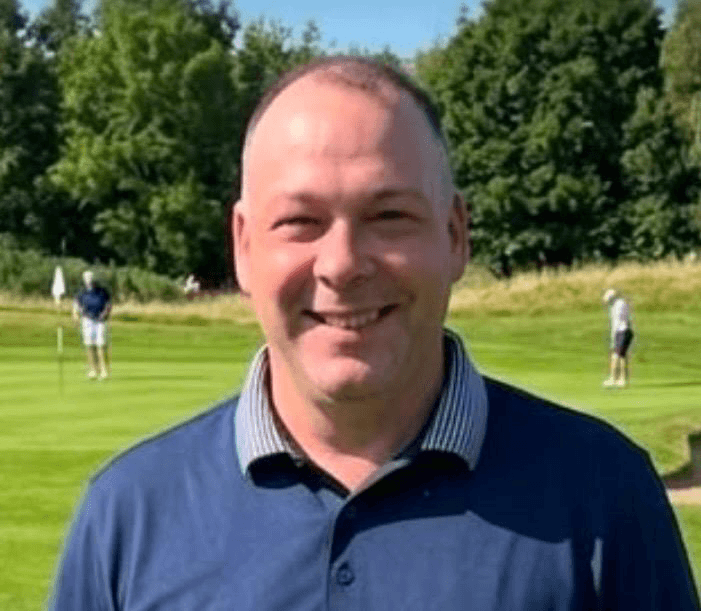
Paul Jones
Paul Jones is a horse racing author and trends analyst. He joined Weatherbys in 1987 and in 2000 created the Cheltenham Festival Betting Guide, writing its first 16 editions. He is a columnist for At The Races and has written more than 40 books, among them Fifty Years in the Betting Jungle, which he ghostwrote for bookmaker Gary Wiltshire. His latest, 100 Punting Feats and Bad Beats, compiled with Graham Wheldon, collects 100 betting tales in aid of the children’s charity Action for A-T.
In this episode
Talking points
- The man behind the Betting Guide: how Paul created the Weatherbys Cheltenham Festival Betting Guide in 2000 and wrote its first 16 editions — and how race trends are actually built from the stats.
- Take Cheltenham back to three days: a traditionalist’s case for three days and eight races a day, cutting the filler races — and why the Festival should stay midweek, not move to a Saturday.
- You have to follow the Irish: why anyone betting on jump racing has to be right on top of Willie Mullins, Gordon Elliott and Henry de Bromhead, and how Mullins wins a handicap first before going Grade 1.
- The six-horse accumulator: the ante-post Cheltenham acca that is Paul’s best ever result — landed when Billaway got up on the line and Elimay held on in the last races, and what it paid for.
- Gary Wiltshire’s £1.4 million day: the story Paul tells from ghostwriting Gary’s book — standing at Ascot laying Fujiyama Crest as Frankie Dettori completed the Magnificent Seven, and grafting across three meetings a day to win it back.
- 100 betting tales for charity: Paul’s new book, 100 Punting Feats and Bad Beats — stories from punters, bookmakers, poker players and broadcasters (Roy among them), published by Weatherbys in aid of the children’s charity Action for A-T.
Transcript
Roy: Hello guys, welcome to the Odds-On podcast brought to you by bestbettingsites.co.uk. My name’s Roy, joined this week by, well, to quote his X/Twitter profile, a person who’s into their horses, the ones that jump mainly. Music, At The Races columnist, book ghostwriter, I am talking to Paul Jones. Paul, welcome to the Odds-On podcast.
Paul: Welcome. We should say that’s X and Twitter, not an X-Twitter, so I’m on there, okay. But yeah.
Roy: Well, it’s… Yeah, political… Politically correct. Yeah, more and more people are saying X this day and age.
Paul: Okay
Roy: I probably won’t. Paul, we’ve never met. We spoke on the phone just once or twice. And, we first came in contact when you wrote this… This little gem here, Or should we say you ghostwrote this book for… The larger-than-life bookmaker Gary Wiltshire. You get your little credit down here. This is one of a few books you’ve produced,
Paul: Mm-hmm
Roy: How did that come around?
Paul: Yes, well… Basically, I’ve written lots of books for Weatherbys about the Cheltenham Festival trends, etc. Stopped doing that did my own website stuff, and then when my dad was 89, we basically had a conversation which went some of the lines of, Do you want me to write your book, Dad? It might be something nice for you to hand on to your family and friends, etc. And so I ended up ghostwriting his life story, and the idea was we’d keep it secret. And then at his funeral hand it out to all the guests. So that’s what happened. And then some of the guests there thought, oh, this is a really nice idea. And then another guy said, oh, could you do something similar for me? So I then did his life story. And then another one came from that. And then my friends got to hear about I was sort of doing these ghostwriting autobiographies. And Gary Wiltshire got in touch with a friend of mine called Kevin Ackman and said, I really want to write another book. It’s been 50 years I’ve been in the bookmaking game. I’d like to tell my betting tales over 50 years. Can you recommend anyone? And Kevin said, well, I know Paul has moved into doing ghostwriting and autobiographies. And Gary and I knew each other from a long way back because when I was the editor of gg.com, which is now gg.co.uk, after they sold the domain name for millions to some Chinese thing. You’ll get loads of Chinese cartoons come up if you put gg.com in now. So we knew each other going a long way back. And Gary said, “Would you write the book for me?” I said, yeah, yeah, OK, we’ll do it. When do you need it knocking out By? Six weeks! So I thought, you must be kidding. Particularly in my busiest time of the year, but we got it done, and it was published by Weatherbys, and it’s got a lot of good feedback, and I enjoyed doing it. And off the back of that one, I’ve done another one for another bookmaker called Alan ‘Ginger’ Newman. Who’s been a bookmaker since 1958 at the greyhound tracks in London. And he’s the best friend of Michael Tabor. And he still goes down to Romford on a Saturday or Friday night and, and does a book there. So that’s how the sort of ghostwriting autobiographies came around.
Roy: Right, so let’s cover a few things over there. Michael Tabor is known now as a very famous racehorse owner, part of the Coolmore partnership. But his roots go back to, well he owns the BetVictor website now, But he goes back to having a string of betting shops in London. Arthur, Arthur Price, I think they were called.
Paul: Prince. Arthur Price or Price Prince?
Roy: Prince, probably Arthur Prince, yeah.
Paul: Can’t quite remember.
Roy: Something else you mentioned there, Weatherbys. I think we need to explain to our people. Weatherbys is a big organisation, heavily involved in horse racing, is horse racing, but there seems to be several branches and arms. Can you give us a little bit of history of Weatherbys?
Paul: Well, Weatherbys has been going for over 250 years, mean that they look after the General Stud Book and more these days they take the entries for all the races, they deal with all the prize money giving out, they deal with all the jockey, all the silks, the colours, the naming, and They’ve got marketing arms. They do basically all the race cards for the British racecourses, They’ve got their own banking. So it’s an institution, a racing institution. And basically, they are that they are the secretaries to the British Horse Racing Board, the BHA pay them to administer British horse racing. And I was lucky enough to work for them between 1987 and 2001.
Roy: That’s a good innings, and on the back of that they’re publishing books which you now play, play a hand in.
Paul: Yeah, well, at the first, mean I was… It was in 2000 when I said to my manager at the time, I think we should write a book about the Cheltenham Festival, see if we can… Pick some winners by using race trends. And he said all right then, go and do it, I don’t think, you have to go through a lot of red tape these days. But basically, that was what it was like then. So I did it and it proved pretty popular. And I ended up doing it for, the next 15 years as well. It’s called the Cheltenham Festival Betting Guide. Trying to find winners of the Cheltenham Festival by using race trends, going into depth, into that and then, so I did that up until 2016. So the first two years I did it as an employee; the next 14 as a freelance. And then I stopped doing that. And it’s still going strong today. It’s still their bestseller. Paul Ferguson has written the last eight editions. And, you know, it’s still selling really well.
Roy: The Cheltenham Festival in horse racing. An institution, We have… Royal Ascots, we have the Derby meeting, whatever I don’t know, me personally, and I think you’re going to agree jump racing, Horses come back year after year. You get to see them progress from running in bumper races to over hurdles to chase, you know you’re going to follow a horse for six, seven years, The jumps racing. All the good ones are sent off to stud at the end of their three-year-old campaign. And to be honest, not many horses race beyond the age of four. I take it you are, like myself, a jumps man?
Paul: Yes, very much so. I keep on top of the best of the flat. I have to. I’m a columnist for At The Races, where I do their trends copy for the big meetings, basically, your festivals, your Royal Ascots and Arc de Triomphes etc. So I keep my hand in on the top stuff. I’d be lying if I said I watched, the flat racing Monday to Friday, but I’d watch the big midweek festivals and I’d watch Saturday, and keep on top of the good stuff. But yeah, jump racing’s have always been it for me, even when I was going back to… My very younger days when I used to go to lots of different point-to-point tracks. But yeah, I’ve always looked forward to the Cheltenham Festival and Grand National and the big meetings and the big Saturdays, yeah. So basically, here in October, we’re entering the best part of the punting year for me now.
Roy: Yeah, I mean, I’ve seen the figures for bookmakers, well, the limited figures that they release and the Cheltenham Festival and all its key races are always Right up there. Volume-wise, the Grand National gets all the fiver and tenner and the once-a-year punters. So it probably makes sense why Weatherbys…
Paul: It says it all that the race after the Cheltenham Gold Cup, which is just a hunter chase, admittedly the best hunter-chaser of the season, That gets in the top 10 betting races of the whole year simply because it follows the Cheltenham Gold Cup.
Roy: So that’s the case of people pressing on with their winnings or chasing their losses, I guess.
Paul: Yes, absolutely. Just backing these amateurs, bumping around. In a hunter chase, yeah, it’s still one of the 10 biggest betting races of the year, which just shows you the popularity of the Cheltenham Festival
Roy: The book that you were behind for so many years, I mean, what was your angle? Were you simply trying to pinpoint winners, or were you looking at the gambling angles, trying to get prices bigger than probability, etc.?
Paul: You were just producing trends based on statistics, based on facts. So there weren’t, you know, it was also produced two or three weeks in advance, so you weren’t looking for any on-the-day angles as such. So basically you would look at a race like the Supreme Novices’ Hurdle, and I’d go through it and be something like, just for example, Well, over the last 14 winners, came from the bumper field, that didn’t come through the flat, or through point-to-points. And you come up with about five or ten different stats from that, put them all together, and see which horses sort of come out best. And basically you leave it up to the reader to make their own judgment call from that. You give the facts, and then they do what they want with them, with the facts.
Roy: A number of years ago, the Cheltenham Festival went from three days to four. Not everyone was happy, and there’s been lots of rumbling in the last 18 months or so. Should Cheltenham become five days, should some of it take place over the weekend?
Paul: Oh, okay. So I’d go no to both. Or I suppose I’m a traditionalist. If I had my way, I think I’d go back to three days and make it eight races a day. I think one of the best days we ever had at the Cheltenham Festival was when they had an abandoned day due to high winds, and then you had nine races on the next day where they transferred some of the best races. And that was phenomenal; it was just, you know, big race after big race after big race. And that’s the way I’d like to see it. Eight, eight races over three days and cut four of the races completely that really don’t need to be there. But no, they’ve already knocked five days on the head, thank goodness. They’ve not knocked Wednesday to Saturday on the head yet. I think they’re still looking at that. I’d be disappointed with that, to be honest with you. I’d like to keep it all midweek.
Roy: Can I ask why you wouldn’t want to Cheltenham festival day on a Saturday?
Paul: I just think it gets lost.
Roy: I mean, every…
Paul: And It’s the obvious things, like the Derby; the Derby’s not what it was. On a Saturday compared to what it was on a Wednesday. I think part of that, although times have moved on, is people… They could get half an hour off work to watch. They’re allowed half an hour off work to watch the Derby. You can’t do that on a Saturday unless you work in a retail store or whatever. And I think always it always gave people an excuse just to have a little extra half an hour in the afternoon. And it was a big thing on that Wednesday, because nothing happens on a Wednesday during the day, really, sports-wise. Now, you know, they’ve even changed the time of the race so it fits around putting a live football match on. Yeah, I mean… Again, I’m a traditionalist, sorry.
Roy: Yeah, you are that. I’m just kind of wondering. Yeah, throughout the… 20th century, the Derby took place on a Wednesday; it was an institution. Probably the Melbourne Cup’s still got a bit of that going on. They say it’s a race that stops a nation. But do you really think this day and age, if it was to be revamped and goes back to a Wednesday race, that employers would say? Yeah, sure. Take a two-hour lunch break.
Paul: No, not in this day and age. I don’t think employers in this day and age would do that. I remember, I don’t know what it’s like in other areas, We had a something here called Factory Fortnight. In where I live in Northamptonshire, and that’s still going but I don’t think that’s kind of sort of work mentality happens anymore and I don’t think employers would be too impressed if people took half an hour off to see if Aidan O’Brien can win it for the 18th time or whatever.
Roy: Aidan O’Brien, Irish racehorse trainer, That was one of my next questions. Do you specialise in British horses racing, or sorry horses trained in the British Isles, or do you do the whole spectrum of the Irish jumping scene as well?
Paul: Well, for jump racing you’re… Jump racing, you have to be absolutely 100% on top of the Irish because they are the dominant force by some way. Willie Mullins is the best trainer. By an incredible amount, then you’ve got Gordon Elliott and Henry de Bromhead, and I’d say they’re probably second and third. I’d have them ahead of the best of the British, like your Dan Skeltons, Paul Nicholls, Nicky Henderson. So yes, you absolutely have to be right on top of the, of the best of the Irish. And the good thing is there’s less Irish racing than British racing, so you can be.
Roy: Yeah, I’m Just wondering; maybe I’m a bit sceptical. I hear this a lot, the Ballydoyle maestro, Willie Mullins. They have a lot of horses, and they have a lot of high spending owners And they don’t keep many handicappers in their stable let’s be honest
Paul: No.
Roy: Does the fact you’ve got that ammunition at your disposal make you a good trainer? Have you got stats there that can say some guy with a…
Paul: Well, I think so. You’ve got more horses you can work against, so you get a better idea. I mean, Willie Mullins is making a habit of winning handicaps at the Cheltenham Festival before they go on to be grade one horses. I mean, State Man will be an obvious example. He won a County Hurdle before he won the Champion Hurdle, and yeah, so If they can see a mark that can be exploited, they’ll do that first before moving on to grade one company. Maybe not so much the O’Leary horses, the Michael O’Leary horses. He’s, He’s always said he’s never really that interested in the big handicaps, only the grade ones. You know and famously he took Tiger Roll out of the Grand National once to prove his point, even though he would have been chasing a hat-trick in the race. But yes, I mean… They just know where they stand. You know, they’ve got the best horses and they weren’t they won’t keep many horses that are they are rated under 140 for the next season. They’ll just move on and then replace them with the next batch of expensive horses from France.
Roy: Yeah, and you’ve touched on what I was thinking there, as, Speaking as a former greyhound trainer with… A kennel full of very cheap dogs. I’d like to think I was a very good trainer and I got the best out of my dogs. Unfortunately, they weren’t 10, 15, 25,000 quid purchases. Yeah, I’m just wondering if you might maybe give me a trainer or two that that you’ve noticed, with limited resources, with horses that might have been previously exposed, that you think has the ability, if they were given the tools and right now are underestimated.
Paul: Oh, I think Faye Bramley could be one. She’s connected to the McCoy. McCoy sort of owns the premises where, where she trains, and she’s picked up some horses from other yards That I know might have had a few problems, might not have done too much, but and she’s got hold of them and she’s impressed with what she’s done with those so far. So I’d probably nominate her at the top, Faye Bramley.
Roy: Whereabouts, is, Sorry, Faye Bramley, she be, where’s she located?
Paul: Oh, now you’ve got me to be honest. I would have thought if she’s, McCoy, she’ll… Oof. I wouldn’t like to say, to be absolutely honest. Mate I’m a bit embarrassed to know. I don’t know, actually. I don’t know which actual training centre, where she trains.
Roy: Okay, I would know that wasn’t
Paul: It would be in the south.
Roy: Yeah, that wasn’t a trick question anyway. I just think we have this like… Lucinda Russell, For example, we just associate her with the northern tracks, you know. The demise of Paul Nicholls, not demise that’s very rough, but we need to be practical here, he’s Not got the horses And so he’s not getting the results that he enjoyed 20 years ago when he enjoyed phenomenal success. Any reason for that? I mean, is it just a fashion thing that the owners move on?
Paul: Losing owners. Owners moved on, you know, he’s lost, I mean, his main patron was Johnny de la Hey, for the last few seasons and he’s lost all of his horses over the last, well, yeah, he announced I think in the spring, most of those are going to Dan Skelton and other ones. And then there’s the Halls, who he had a couple of really good novices or bumper horses who had gone on to be novices. And he’s lost them too. Unfortunately, he’s lost some of his biggest owners because they’ve just passed on. And it’s difficult to replace them, particularly in this day and age. You know with the way things are.
Roy: And Dan Skelton, meteoric. I think is probably the best way to describe how he’s gone from there to there.
Paul: Raven.
Roy: You know, is he going to be our Willie Mullins? Will we start winning more than our fair share?
Paul: Oh, yeah.
Roy: I’m going to say more than our fair share, more than 50% of the races at the Cheltenham Festival, with half of them coming over from his yard.
Paul: I don’t think we’ll get to… Quite that level because, it’s easier to let me say this, it’s easier to win grade ones than it is handicaps. You might think that’s a silly thing to say, given they’re harder races, quality of horse, But you know, the grade ones will attract maybe six to 12, 13 runner races, whereas the handicaps you’re going to be getting 20, 24, blah, blah, blah. So they are harder to win. And Dan Skelton at the moment is The handicap king. And he’s not quite had the Grade 1 horses as yet, but he’s getting them now. And we’re going to see his number of Grade 1 winners start to rise significantly. I’m sure of that. Yeah, I think he’s got about around 300 horses now. So a complete numbers game.
Roy: Sorry. He… He… Currently has 300 horses or will do for the…
Paul: Yeah around that, I’m talking about around that, amongst different stables yeah.
Roy: Okay, maybe I’m old-fashioned, but… I used to live near Toby Balding.
Paul: It’s the same in Australia. There’s this partnership in Australia that’s got over 400.
Roy: I mean, I used to live near Toby Balding’s stable years and years ago in Fyfield in Hampshire. And He was kind enough to give me a tour around the yard one day and Every horse by name… And as a string walked by, he would know each and every horse, I can’t see how any trainer can… Understand, know, relate, when they’ve got 300 horses in their care. Maybe that’s me. Listen, let’s move on from there. We’ve concentrated on the Cheltenham Festival. Grand National has changed.
Paul: Mm-hmm.
Roy: Dramatically. Good or bad, I’m guessing you think they’ve gone a little bit too far
Paul: I would say that changes had to be made. The fences, I don’t have a problem With the fences, in making them easier, taking out the tricks like on Becher’s Brook, et cetera. I don’t really have a problem with that that that. That makes sense. I do have a problem that they reduced the number of runners too much, from 40 down to 32. I thought that was a… A bit too much of a cut. I’d like to have seen that maybe around 35. And it’s a great spectacle, 32 runners. And because the fences are easier, 25 of them are still in contention with about a mile-and-a-half to run. So it’s become a harder race to… Predict as a punter you know. Normally you can think 40 runners, right, I’m, I’m fairly confident I can get rid of half of these, I’m quite confident I can get rid of another 25% of these, and you’re left with a short list or at seven or eight. And you’d be pretty hopeful you could find the winner from that. Obviously, not many people go into the Grand National have one bet. You might have two, three, four bets. And you’d have quite a good sort of ratio if you think you know what you’re doing in betting on the Grand National. Now you could say it’s anyone’s race, having said that, the favourite has won it last year. But Yeah, it’s certainly more open.
Roy: Your own betting activities, have you landed a monumental touch on the Grand National or Gold Cup or similar down the years?
Paul: La of at… Yeah, Grand National winners, Gold Cup winners, Less so. I think my best ever win was a six-horse accumulator at the Cheltenham Festival, Three or four years ago now? Three years ago. I think five were trained by Willie Mullins and, I needed, Billaway and Elimay to win basically two of the last races. And somehow… Patrick Mullins got Billaway up on the line to win the Foxhunters having been 20 lengths behind at the last. So I’d given up at that point. And then Elimay, she only just got home in the Mares’ Chase at the end. So That’s my… Best ever result on anything, let alone Cheltenham Festival or Grand National.
Roy: Can you divulge some figures?
Paul: Sorry?
Roy: Can you give us some indication of how big your…?
Paul: It paid for my daughter’s wedding. That’s all I’ll say. And she’s my only daughter. And she said, Dad, I’m your only daughter, So therefore, you’re going to go to town on me. So I was incredibly lucky, that six months earlier, I managed to land this six-horse accumulator; the horses, I was actually on at ante-post prices, rather than the week itself, a month beforehand, so it was just one of those times when it fell right.
Roy: Ante-post, interesting point there, and this was due to the Willie Mullins effect, but ante-post kind of went out the window, didn’t it, when… When he had so many horses, multi-entered in so many races. And now, what’s the phrase now?
Paul: It did.
Roy: All in run or not?
Paul: So.
Roy: No.
Paul: Non-runner no bet.
Roy: Non-runner no bet.
Paul: Yes. Fair enough. I mean… They’ve made some very welcome changes in the Cheltenham Festival over the. Last year. They’ve got rid of certain races, so now when you’re thinking you’ve got a two-and-a-half-mile novice chaser, you’re thinking okay he’s got the choice of three races, he can go for the Arkle over two miles, The two-and-a-half-mile Turners, I think it’s now called, and the three-mile Broadway. And it could go for any of those. And a lot of that would depend on what else the owner or the trainer has got. In those races, and try and pick out the easiest race as well. Now they’ve got rid of the two-and-a-half mile race completely; it’s fairly easy to work out if they’re going to go for the two mile Arkle, or the Three Mile Broadway. That said, there was a horse this year called Romeo Coolio, who most people thought should have been in the Ark and ended up in the Broadway. But I think that was… More to do with the owners than the trainer, who had he his way, I don’t think he’d have gone near Cheltenham with him at all. So it’s helped with these some of these changes, and there’s some other changes as well, which it was, is certainly for the good.
Roy: Right, let’s talk first of all Gary Wiltshire, because this is a book he kindly sent me, and I read. A Lovely, lovely chap. No no question
Paul: Have fun.
Roy: Larger than life is regularly bounded around, and that is actually Gary after he had his gastric
Paul: Super.
Roy: Band surgery.
Paul: Thanks, Gary is
Roy: What was it like working?
Paul: 14 stones lighter.
Roy: Unbelievable.
Paul: Believe it or not. He went from 37 down to 23.
Roy: What? Goodness me. Yeah, I mean, what’s your recollections of working with him? That wasn’t his first book, was it? He did one before with his famous Frankie Dettori…
Paul: No, he did a really successful first book called, Winning It Back. Because he famously lost over a million pounds on one race when Frankie Dettori had his magnificent seven. He basically laid the last winner, Who should have been 16/1, but because all these doubles, trebles, accumulators were rolling up, He ended up going off at 2/1, Fujiyama Crest. And Gary said no, Can’t have this. It’s a 16/1 chance. So he was always going next price Above anyone else in the ring. They were going 2/1, He was going 9/4, 9/4, He was going 5/2. And he went… He went to that day with not much money in his satchel and basically just kept taking bets and kept taking bets And, of course, the horse went and won, and he lost, I think it was £1.4 million. So then he wrote a story about how he had to try and win it back, the £1.4 million back. Actually, what I can say about Gary now is that it’s the 30th anniversary of that this year. That’s coming up In the autumn, in October, Champions Day. And ITV have done a one-hour documentary with him over the summer on the day for him, how it went for him. So that’s going to be aired, I think, on the eve of Champions Day on ITV.
Roy: Oh, fantastic, and Gary was a former BBC guy as well, wasn’t he? He was pundit with John Parrott, the snooker player, in the betting ring.
Paul: Well, like you said, it…
Roy: I thought he was…
Paul: He’s been living off that £1.4 million loss for the next 30 years because he’s getting so much coverage from it. And from that, he became the BBC betting expert, with John Parrott in the ring. You know So yeah, he laughs at himself. That day was the making of him losing all that money.
Roy: What, I’ve got to tell you, my favourite Gary story was I’d… Gone to a point-to-point meeting. I think it’s probably Larkhill, and he was there. Later that day I went to a matinee greyhound meeting, Some reason tells me it’s Milton Keynes, No, no, I went horse racing beforehand. So let’s just say it was at Wincanton or Warwick or somewhere like that, And that evening, just to… Complete the full house, I went dog racing to Milton Keynes, Gary was stood at all three. That’s how he grafted to get it all back.
Paul: Wow.
Roy: He Yeah, he stood at bookmaker at three meetings on the same day.
Paul: Worked his socks off to get it back. Worked his socks off to pay all the bookmakers back. Basically, there weren’t many punters he was paying out at 9/4. He was paying the layers who were laying off with him. You know, you like, He owed Coral a lot of money. He owed Stephen Little a lot of money. He owed William Hill a lot of money. So he was getting to pay those bookmakers back.
Roy: Now your latest work is… As opposed to ghosting Gary’s, you’ve compiled this one. Can you remind me what it’s called?
Paul: Yeah, so it’s a book called ‘100 Punting Feats and Bad Beats’. And it’s been published by Weatherbys, so it’s available via the Weatherbys shop website. And basically This is a book I’ve co-compiled with Graham Wheldon, who I used to work at Weatherbys with, and he’s a retired professional punter, plays a lot of poker in Vegas, does some Racing Post bits, and he’s got a very different set of… Connections to what I’ve got. And I said what would be a good idea if we get your set of People and get my set of people and put a book together where they tell their stories about either a big punting feat they’ve had, where they’ve won a lot of money or a very clever bet, or a horrendous bad beat. And we compile them all together and see if Weatherbys will publish it. Weatherbys have agreed to publish it, and we’re doing it for a charity called Action for A-T. And AT is basically… Just, we’ll work out how you pronounce this because it’s very like, Ataxia Telangiectasia, And… I’ll call it AT from now on. And basically, it’s a rare, incurable disease that’s found early in children. And by their teens, they’re in wheelchair bound. And then life expectancy is under 30. So basically, they’re benefiting from this book. And because, because of the charity in mind, we’ve got 100 people who’ve said, yes, count me in. I’ll donate a betting tale, including yourself, Roy. You’ve got a nice story in there, too. And basically, we think it’s very entertaining. And it’s going to do the charity a lot of good, too. And what we’re hoping it’s going to do very well. Like I say, it’s called ‘100 Punting Feats and Bad Beats’ and it’s published by Weatherbys shop and A lot of people listening to this will know a lot of the names in there, if they like horse racing, if they like poker. And yeah, so we’ve got a good variety of mix of people in there.
Roy: Give us a quick, quick overview of who’s made a contribution.
Paul: I’ll separate them into sort of groups, like we’ve got your professional punters. We’ve got a group of those. Then we’ve got… Your on-course bookmakers, like your Gary Wiltshires, etc. Then you’ve got your poker players. You’ve got some quite big-name poker players in there who’ve donated a tale. Then you’ve got your off-course bookmakers like Paddy Power himself, Anthony Kaminskas of AK Bets, Ben Keith of Star Sports, They’re donating tales, some of those too. Then you’ve got your in-running punters, betting in running, on horse racing and other sports in there. You’ve got your… Racehorse owner, also known as punters going in there too. And then you’ve got the media. So you’ve got quite a lot of people from horse racing and sports in terms of… Presenters, broadcasters, Podcasters etc. And then we got some sportsmen in there, retired and current, And then we’ve got some people from a sort of regulatory background and like, the chief executive of the BHA etc. So we’ve got a very wide mix of people over a very wide age range, over a very wide variety of sports, so there should be something for everyone in this we think.
Roy: I love the sound of it. I think it’s a great cause, and I hope the book does really, really well. At the same time, I’m quite saddened because I know a lot of what’s going to appear in this book, In 25 years time, people are going to go… What are they talking about? And I don’t know the whole complexion’s changed; the betting ring is not what it was. Dog tracks were so vibrant with the betting ring, that’s gone, and generally speaking the betting shops are closing at an alarming rate. And now we’re all on our phones pressing buttons, the social aspects of gambling is falling by the wayside isn’t it?
Paul: Yes, yeah, I mean, and that’s just the way it goes. There is one of the contributors in the book called Stephen Darbyshire, and he’s a fierce advocate for going racing and betting with the on-course bookmakers in there. So, you know, he’s doing his bit his book to push there. But, you know, how many people, I mean, I must admit I’m guilty, but I don’t go racing anywhere near as much as I used to. But yeah, but the betting ring is where I like to bet when I was there. And obviously now if I go racing, to be honest with you, I’ll get on my phone and sort of see you, okay It’s a bigger price on the machine. That’s that, But there you go.
Roy: Yes, sad but true. I know the contribution I gave to you, I tried to… Drop in a bit of gambling slang, so a monkey, and a stripe, and a pony and a few references to what us gamblers referred to for a hundred quid or 25 quid or 500. Tic-tac How’s your tic-tac? Do you remember tic-tac at the betting?
Paul: I wouldn’t know. I think, what was it, Top of the Head 9/4? I just remember John McCririck. Top of the Head 9/4, ear hole. Was that 6/4? Can’t remember. But no, it’s not something I’ve ever sort of taken any great note of, actually. But Alan Newman, who’s wrote a story in the book, he was but he was a work, A tic-tac, as well as a bookmaker in there. And one of his stories is actually telling how he tic-tacked information over to his dad who was the bookmaker, although he wasn’t it basically his story, one of his stories in these put two in his chapter is like A race was called, the result was called of a race a greyhound race at Wimbledon. And he sort of went down to the stand just to have a drink. And they’d put the photo finish by the judges’ box. But they hadn’t called the winning time or the winning distance, just… The one two, so bookmakers could pay out on that And he thought, okay, well we’ll see how long this is going to take before they announce the winning distance and time. And he’s standing there, and it’s about three minutes. And he thought, I’ve got an idea here. So he got back in touch with his father and said, why don’t we bet on the winning distance? I’ve already seen what it is because it’s outside the judge’s box. And then we can price up what I think it is. He might not you know if it’s It could be very close between a short head or a head or whatever. But we’ll have what I think. We’ll keep that on side and we’ll push out all the others. And they did this for months. And every time they kept pulling it off. And then I won’t end the story, because people want to read the book and find out what but they basically got stung in the end by someone. But that that’s one of the tales in the book.
Roy: Great stuff. Remind us one more time. What’s the book called?
Paul: ‘100 Punting Feats and Bad Beats’.
Roy: I cannot wait to get hold of my copy. Paul, it’s been a pleasure talking to you. Thank you so much. Wish you the best of luck with the new book. And let’s talk again in the not-too-distant.
Paul: Thank you very much Roy. Thank you. Bye
Roy: Okay, that was the Odds-On podcast brought to you by bestbettingsites.co.uk with Paul Jones. What an interesting chap. Do go buy his book. Thanks, guys, and I’ll join you next time.
Read full transcript
Your hosts

Roy Brindley
Racing, Darts & F1Former greyhound trainer, Racing Post correspondent and a Sky Sports At The Races regular since 2012. Roy brings the paddock yarns, the pace maps and the each-ways that are worth considering.